
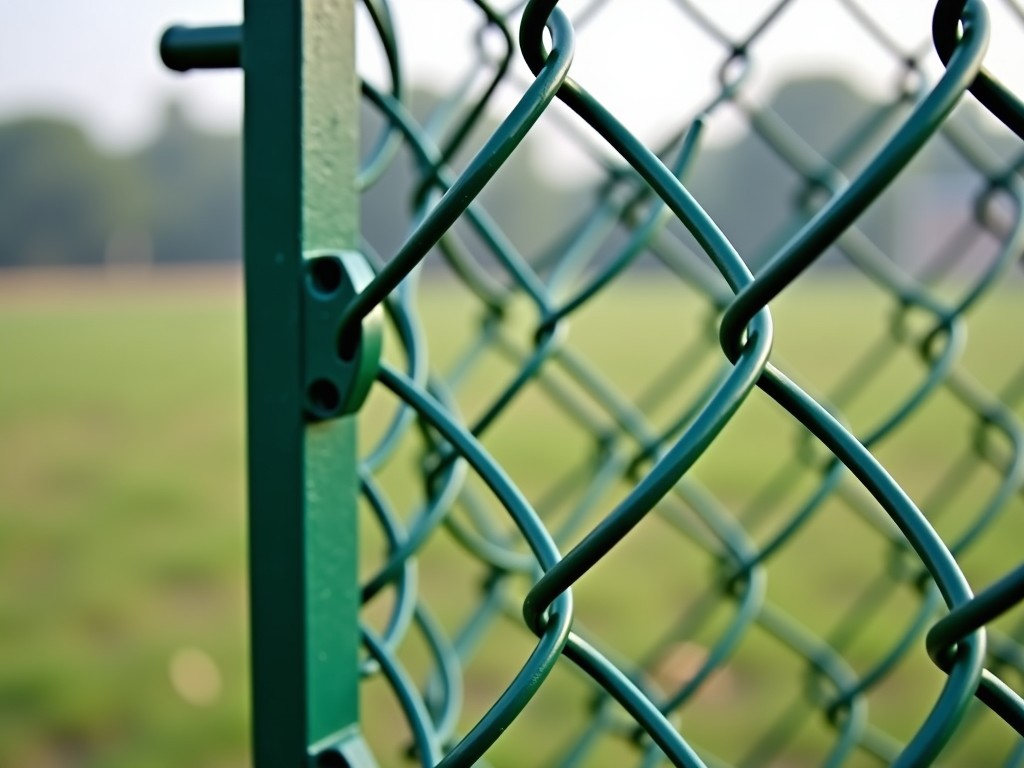
Wholesale Oem Wire Mesh Fence Manufacturer
The following pages describe the engineering basis for wire mesh fencing supplied to industrial buyers, contractors, and distributors. Technical details are presented to support specification,
Wholesale OEM Wire Mesh Fence Manufacturer
The following pages describe the engineering basis for wire mesh fencing supplied to industrial buyers, contractors, and distributors. Technical details are presented to support specification, procurement, and installation decisions. No promotional language replaces measurable characteristics.
Product Overview
Wire mesh fence systems consist of intersecting wires forming a regular aperture pattern, welded or woven at each junction. The primary load‑bearing element is the wire diameter, which together with aperture size determines the open area percentage and structural stiffness. Panels are typically supplied in standard lengths of 2 m to 3 m with post‑attachment points spaced at 600 mm intervals for rapid field assembly.
Material Options
Selection of base material and surface treatment governs corrosion resistance, mechanical strength, and service life in specific environments. The table below lists typical characteristics for the most commonly offered options; exact values can be adjusted according to project requirements.
| Material | Coating | Typical Tensile Strength (MPa) | Recommended Environment |
|---|---|---|---|
| Low‑carbon steel | Hot‑dip galvanized (Zn ≥ 55 µm) | 350‑450 | General outdoor, moderate humidity |
| Low‑carbon steel | PVC‑coated over Zn (Zn ≥ 45 µm, PVC ≥ 0.3 mm) | 340‑430 | High‑moisture, chemical splash zones |
| Stainless steel (AISI 304) | None (passive oxide layer) | 520‑620 | Marine, aggressive industrial atmospheres |
| Stainless steel (AISI 316) | None (passive oxide layer) | 500‑600 | Chloride‑rich, offshore or waste‑water treatment |
Mesh Specifications
Key geometric parameters define the functional performance of the fence panel: aperture size influences visibility and debris passage, while wire diameter governs resistance to impact and tensile load. Custom dimensions are achievable within the limits of the welding or weaving equipment.
| Parameter | Typical Range | Increment Step |
|---|---|---|
| Wire diameter (mm) | 2.0 – 5.0 | 0.2 |
| Aperture width (mm) | 25 – 150 | 5 |
| Aperture height (mm) | 25 – 150 | 5 |
| Panel length (mm) | 1000 – 3000 | 250 |
| Panel height (mm) | 800 – 2400 | 200 |
Customization Capabilities
Manufacturers can adjust wire grade, coating thickness, aperture geometry, and panel framing to meet specific load cases, aesthetic requirements, or installation constraints. Tooling changes allow for non‑standard post‑hole patterns, integrated tension wires, or anti‑climb features without altering the core mesh production process. Lead time for custom tooling typically ranges from 2 to 4 weeks depending on complexity.
Applications
In perimeter security for logistics centers, the mesh provides a clear visual barrier while allowing airflow and light transmission, reducing the need for additional lighting or ventilation systems. For agricultural enclosures, smaller apertures prevent livestock intrusion while resisting UV‑degradation when coated with UV‑stabilized PVC. In high‑tension industrial zones, thicker wires and stainless‑steel grades deliver the required impact resistance against moving equipment or debris. Each application leverages a distinct combination of aperture size, wire diameter, and coating to satisfy functional criteria such as load rating, corrosion life, and maintenance interval.
Quality Assurance
Inspection procedures verify dimensional tolerances, coating adhesion, and weld integrity before shipment. Aperture dimensions are measured using calibrated gauges with a tolerance of ±0.5 mm. Coating thickness is assessed via magnetic induction for zinc layers and ultrasonic methods for polymer layers, targeting the minimums stated in the material table. Tensile tests on random wire samples confirm conformity to the specified strength range. Final visual inspection checks for protrusions, missed welds, or surface defects that could compromise safety or longevity.
Frequently Asked Questions
- Can dimensions be customized beyond the standard ranges listed?
- Yes, special tooling can produce apertures outside the typical range or non‑rectangular panel shapes, subject to engineering review.
- What information is required before a quotation can be issued?
- Required data include wire diameter, aperture size, panel dimensions, material/coating selection, quantity, and any special features such as integrated tension bars or custom post holes.
- Which materials are available for corrosive environments?
- Hot‑dip galvanized steel, PVC‑over‑galvanized steel, and stainless‑steel grades 304 and 316 are offered, with coating thicknesses adjusted per exposure class.
- How is quality inspected for bulk orders?
- Each production lot undergoes dimensional checks, coating thickness measurements, and tensile sampling per ISO 9001‑based procedures; certificates of conformance are provided on request.
- What packaging methods protect the fence during export?
- Panels are bundled with protective edge guards, placed on pallets, and wrapped with stretch film; corner boards and moisture‑barrier sheets are added for overseas shipments.
- What is the typical production lead time?
- Standard items ship within 10‑15 working days after order confirmation; customized tooling adds 2‑4 weeks as noted.
- How are samples arranged for evaluation?
- Sample panels (up to 1 m²) can be dispatched via express freight; costs are credited against the first production order if placed within 30 days.