
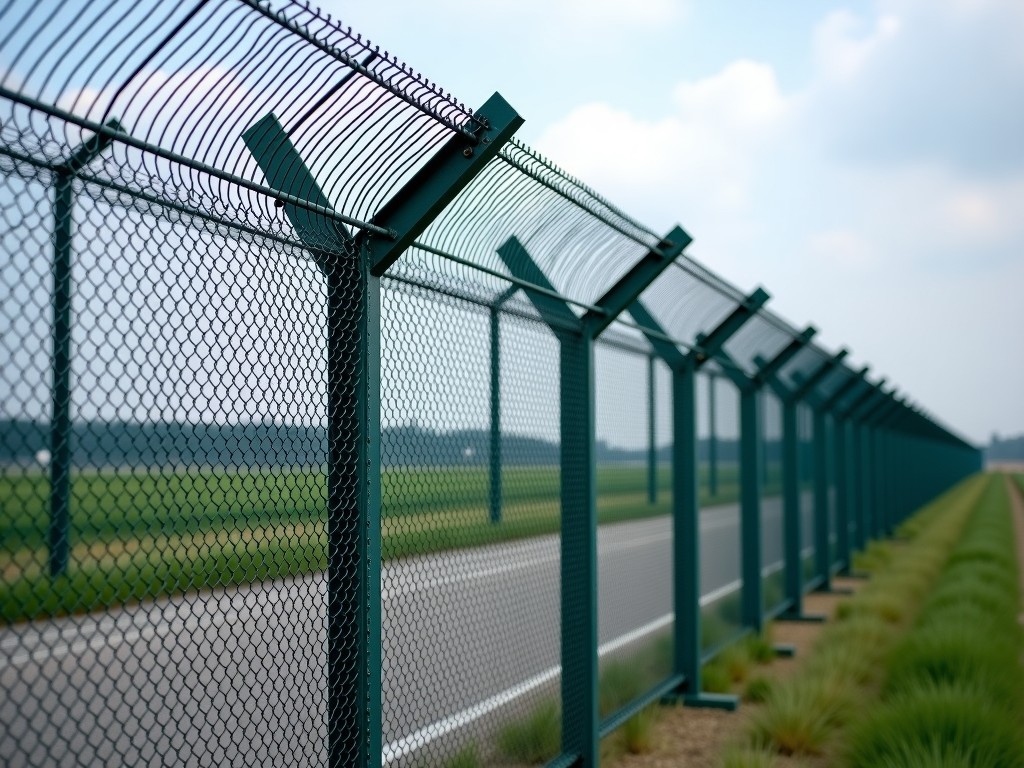
Wholesale Odm Razor Wire Mesh Factory
Razor wire mesh combines high‑tensile steel wire with sharp barbs to create a perimeter barrier that resists cutting and climbing. The product is supplied as rolled panels or flat sheets, ready for
Wholesale ODM Razor Wire Mesh Factory
Razor wire mesh combines high‑tensile steel wire with sharp barbs to create a perimeter barrier that resists cutting and climbing. The product is supplied as rolled panels or flat sheets, ready for integration into fencing systems, temporary enclosures, or permanent security installations.
Material and Construction
The core wire is typically cold‑drawn low‑carbon steel with a diameter ranging from 2.0 mm to 3.2 mm, selected based on required tensile strength (usually 450–600 MPa). The wire is helically wrapped around a central support strand, forming a diamond‑shaped aperture that measures between 50 mm and 100 mm across the flat dimension.
Barbs are pressed from the same wire stock, featuring a length of 12–18 mm and a tip angle of 30–45°, which provides effective deterrence while maintaining structural integrity. Surface treatment options include hot‑dip galvanization (minimum zinc coating 60 g/m²) or PVC coating (thickness 0.3–0.5 mm) to enhance corrosion resistance in humid or marine environments.
Typical Specifications
| Parameter | Typical Value | Unit |
|---|---|---|
| Wire Diameter | 2.0 – 3.2 | mm |
| Tensile Strength | 450 – 600 | MPa |
| Aperture Width | 50 – 100 | mm |
| Barb Length | 12 – 18 | mm |
| Zinc Coating (HDG) | ≥ 60 | g/m² |
Applications
In perimeter security for industrial facilities, the mesh is installed atop existing fences to increase climb resistance without requiring extensive civil works. The open aperture design allows for clear visibility, enabling surveillance cameras to monitor the protected zone while the barbs deter unauthorized access.
Temporary construction sites benefit from the product’s roll‑form format, which can be unrolled and tensioned with standard barbed‑wire staples or clamps, providing a rapid‑deployment barrier that withstands wind loads up to 150 km/h when properly anchored.
Agricultural operations use razor wire mesh to protect livestock enclosures from predators; the small aperture prevents animals from slipping through, while the galvanized coating ensures longevity in outdoor exposure.
Quality Control Philosophy
Each production lot undergoes tensile testing on a sample length of 1 m to verify that the ultimate load meets the specified range. Coating thickness is measured with a magnetic inductance gauge at five random points per roll, ensuring compliance with the minimum zinc or PVC thickness.
Visual inspection checks for uniform barb formation and absence of wire breaks; any deviation beyond 2 mm in barb length or missing barb triggers rejection. The final product is also subjected to a 48‑hour salt‑spray test (ASTM B117) to confirm corrosion resistance for outdoor applications.
Customization Options
- Wire diameter adjustable from 1.8 mm to 4.0 mm for varying load requirements.
- Aperture size customizable between 30 mm and 150 mm to balance visibility and security.
- Barb geometry (length, angle, spacing) can be tailored to specific threat levels.
- Surface finish options: hot‑dip galvanized, electro‑galvanized, or PVC‑coated in various colors.
- Panel dimensions: standard roll widths of 1.0 m, 1.2 m, or 1.5 m; lengths up to 50 m per roll.
Packaging and Shipping
Rolls are wrapped in polyethylene film to protect against moisture, then placed on corrugated pallets with edge protectors. Each pallet is secured with steel straps and labeled with product code, batch number, and handling instructions. For containerized shipments, a maximum of 20 pallets fits a 40‑ft container, allowing efficient bulk delivery to distributors worldwide.
Frequently Asked Questions
- Can dimensions be customized? Yes, wire diameter, aperture, barb length, and coating type are all adjustable per project specifications.
- What information is required before quotation? Required details include desired wire diameter, aperture size, coating preference, roll width, length, and destination for freight calculation.
- How is quality inspected? We perform tensile strength tests, coating thickness measurements, barb uniformity checks, and salt‑spray corrosion tests on each lot.
- What packaging methods are available? Standard packaging is polyethylene‑wrapped rolls on pallets; custom crating or vacuum‑sealed options are available upon request.
- What is the typical production lead time? Lead time ranges from 10 to 25 working days depending on order complexity and current capacity.