
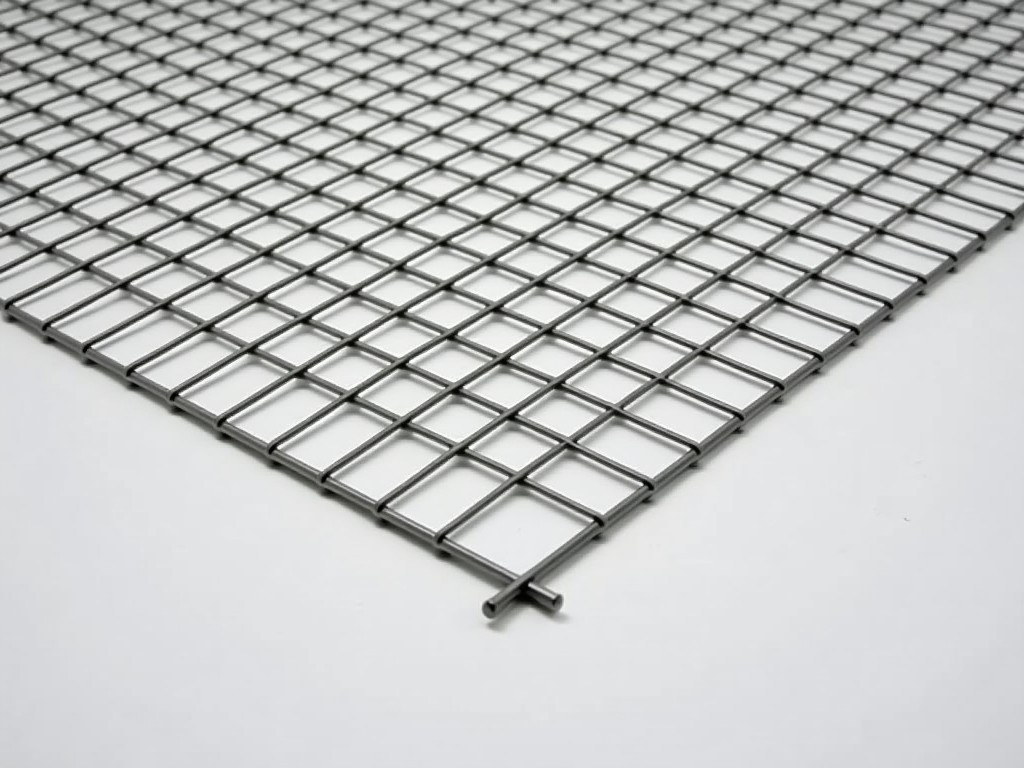
Wholesale Galvanized Welded Wire Mesh Panel For Sale
Galvanized welded wire mesh panel consists of low‑carbon steel wires that are electrically resistance‑welded at each intersection and then coated with a zinc layer through hot‑dip galvanization. The
Wholesale Galvanized Welded Wire Mesh Panel
Galvanized welded wire mesh panel consists of low‑carbon steel wires that are electrically resistance‑welded at each intersection and then coated with a zinc layer through hot‑dip galvanization.
The resulting product offers a uniform mesh opening, consistent wire diameter, and a protective coating that inhibits rust formation in outdoor environments.
Material and Construction
Wire diameters typically range from 2.0 mm to 5.0 mm, selected based on required tensile strength and opening size.
The welding process creates a fused joint that maintains the mechanical properties of the parent wire, ensuring the panel behaves as a continuous grid under load.
Hot‑dip galvanization applies a zinc coating whose weight is measured in grams per square meter, commonly 270 g/m² for general structural use.
This coating thickness provides a barrier that sacrifices zinc to protect the underlying steel, extending service life in corrosive atmospheres.
Standard Specifications
Typical dimensions and performance values are summarized below; actual dimensions can be adjusted to meet project specifications.
All listed values are based on standard production tolerances unless otherwise noted.
| Property | Value | Unit |
|---|---|---|
| Wire Diameter | 2.0 – 5.0 | mm |
| Mesh Opening | 10 – 150 | mm |
| Panel Width | up to 2500 | mm |
| Panel Length | up to 6000 | mm |
| Tensile Strength | ≥450 | MPa |
| Zinc Coating | 270 | g/m² |
Mechanical Performance
Tensile strength of the steel wire typically exceeds 450 MPa, allowing the mesh to support uniform loads without permanent deformation.
Elongation at break remains above 10 %, providing some flexibility to absorb impact forces.
The welded joints retain at least 90 % of the wire’s tensile strength, ensuring the panel does not fail at intersections under shear.
Typical Applications
These panels are selected where a rigid, open‑area barrier is needed while maintaining visibility and airflow.
Common uses include concrete reinforcement, animal enclosures, security fencing, and industrial partitioning.
- Concrete slab reinforcement for crack control
- Livestock fencing with predator exclusion
- Perimeter security for warehouses and utilities
- Machine guarding and safety barriers
- Gabion baskets for retaining walls
Quality Assurance
Each production lot undergoes dimensional inspection using calibrated calipers to verify wire diameter and opening size within ±0.1 mm.
Coating adhesion is evaluated per ASTM A123, requiring a minimum zinc weight of 270 g/m² and no visible peeling after bend testing.
Weld strength is sampled by pull‑off tests, with acceptance criteria set at 80 % of the parent wire’s tensile strength.
Customization Options
Customers can specify alternative wire diameters, opening sizes, or panel dimensions to suit specific load or spacing requirements.
Additional coating options such as PVC over‑coat or galvanneal are available for enhanced chemical resistance or paint adhesion.
Lengths can be cut to standard modules (e.g., 2 m × 2 m) or supplied as continuous rolls for on‑site fabrication.
Packaging and Shipping
Panels are stacked flat, separated by corrosion‑inhibiting interleaving paper, and secured with steel straps on wooden pallets.
Each pallet is wrapped in stretch film and fitted with corner protectors to prevent shifting during transit.
For export shipments, a moisture‑barrier liner is added inside the wrap to guard against condensation.
Request for Quote
To obtain a formal quotation, provide the required wire diameter, mesh opening, panel dimensions, quantity, and any special coating or certification needs.
Our technical team will review the specifications and return a detailed price sheet with lead‑time information within one business day.
Request a Quote