
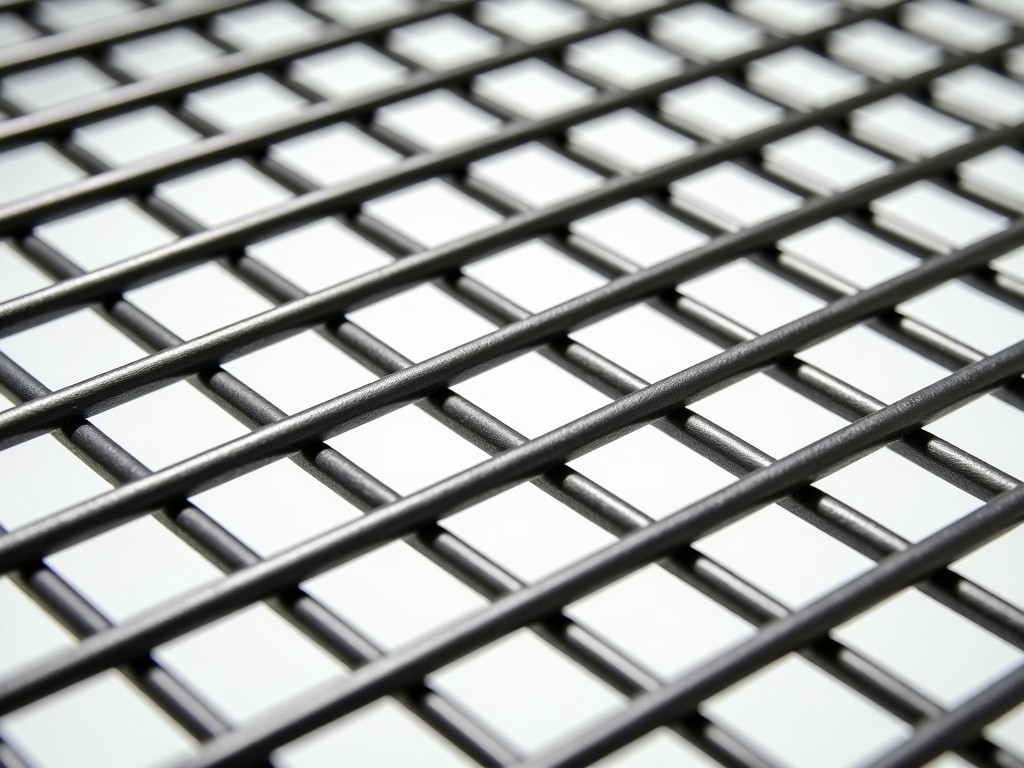
Wholesale Galvanized Expanded Metal Wire Mesh Exporter
This page explains the engineering characteristics of galvanized expanded metal wire mesh supplied in bulk for industrial projects. Understanding mesh geometry, coating specifications, and mechanical
Wholesale Galvanized Expanded Metal Wire Mesh Exporter
This page explains the engineering characteristics of galvanized expanded metal wire mesh supplied in bulk for industrial projects. Understanding mesh geometry, coating specifications, and mechanical performance helps procurement teams evaluate suitability before requesting a quotation.
Product Overview
Expanded metal is produced by simultaneously slitting and stretching a solid metal sheet, creating a uniform pattern of diamond‑shaped openings. The process yields a mesh with high strength‑to‑weight ratio, integral rigidity, and no weld points that could become failure sites under load.
Technical Specifications
| Parameter | Typical Range | Unit |
|---|---|---|
| Nominal Strand Width | 1.5 – 4.0 | mm |
| Opening Size (Short Diagonal) | 6 – 50 | mm |
| Opening Size (Long Diagonal) | 10 – 80 | mm |
| Wire Diameter (Base Metal) | 0.8 – 3.0 | mm |
| Mass per Unit Area | 0.8 – 6.5 | kg/m² |
| Zinc Coating Thickness | 12 – 27 | µm |
| Tensile Strength (Base Metal) | 350 – 550 | MPa |
Material and Coating
The base material is typically low‑carbon steel (Q195/Q235) selected for its ductility during expansion and consistent weldability if secondary fastening is required. After expansion, the mesh passes through a hot‑dip galvanizing line where a metallurgical zinc‑iron alloy layer forms, providing sacrificial protection. Coating thickness is measured per ISO 1461; values above 12 µm ensure a minimum service life of 15 years in moderate atmospheric conditions.
Manufacturing Considerations
Expansion ratio (the increase in sheet area) directly influences open area percentage and structural stiffness. Higher ratios produce lighter mesh with greater transparency, suitable for filtration or ventilation, while lower ratios yield denser panels for load‑bearing applications such as walkway infill or machine guarding. Process tolerances are maintained within ±0.2 mm for strand width and ±0.3 mm for opening dimensions, verified by optical gauging on each coil.
Typical Applications
- Reinforcement of concrete partitions where crack control and load distribution are required.
- Ventilation grilles in HVAC systems; the open area exceeds 60 % while maintaining rigidity under differential pressure.
- Safety barriers around machinery; the mesh resists impact without creating sharp edges.
- Architectural façades where a uniform metallic texture and corrosion resistance are design criteria.
- Filter media for coarse particle separation in water treatment pretreatment stages.
Customization Options
Buyers can specify strand width, opening geometry, coil width, and length to match project‑specific handling equipment. Custom patterns such as hexagonal or rectangular openings are achievable by altering the die geometry during expansion. Additionally, pre‑galvanized or post‑galvanized finishes can be selected based on exposure severity and subsequent fabrication steps like bending or welding.
Quality Assurance
Each production lot undergoes dimensional inspection using laser scanning, coating thickness measurement via magnetic induction, and tensile testing of extracted samples. Documentation includes mill test certificates, galvanizing compliance reports, and batch traceability labels. Non‑conforming material is segregated and re‑processed before shipment.
Packaging and Export
Mesh is wound onto corrosion‑resistant steel cores, wrapped in UV‑stabilized polyethylene film, and secured with steel strapping. For overseas shipments, containers are fitted with moisture‑absorbent desiccant packs and the cargo is blocked and braced to prevent shifting. Standard export packaging supports 20‑ft and 40‑ft container loads, with gross weights up to 24 tons per container.
Frequently Asked Questions
- Can dimensions be customized? Yes, strand width, opening size, coil width, and length are adjustable per drawing or sample.
- What information is required before quotation? Required data include intended opening dimensions, strand width, coating class, quantity, delivery destination, and any secondary processing (e.g., cutting, bending).
- What materials are available? Base metals include low‑carbon steel, stainless steel (grades 304/316), and aluminum alloys; galvanizing applies to steel substrates.
- How is quality inspected? Dimensional checks, coating thickness (per ISO 1461), tensile strength, and visual inspection are performed on each lot.
- What packaging methods are available? Standard coil packaging with polyethylene wrap and steel strapping; custom palletizing or crate options exist upon request.
- How are export shipments protected? Desiccant, blocking, bracing, and waterproof container lining mitigate corrosion and mechanical damage during transit.
- What is the typical production lead time? Lead time ranges from 10 to 25 working days depending on order complexity and current plant load.
- How are samples arranged? Sample coils (up to 5 kg) can be dispatched via express freight; charges are creditable against a subsequent order.
For technical consultation or to request a formal quotation, please use the contact form below.
Submit Inquiry