
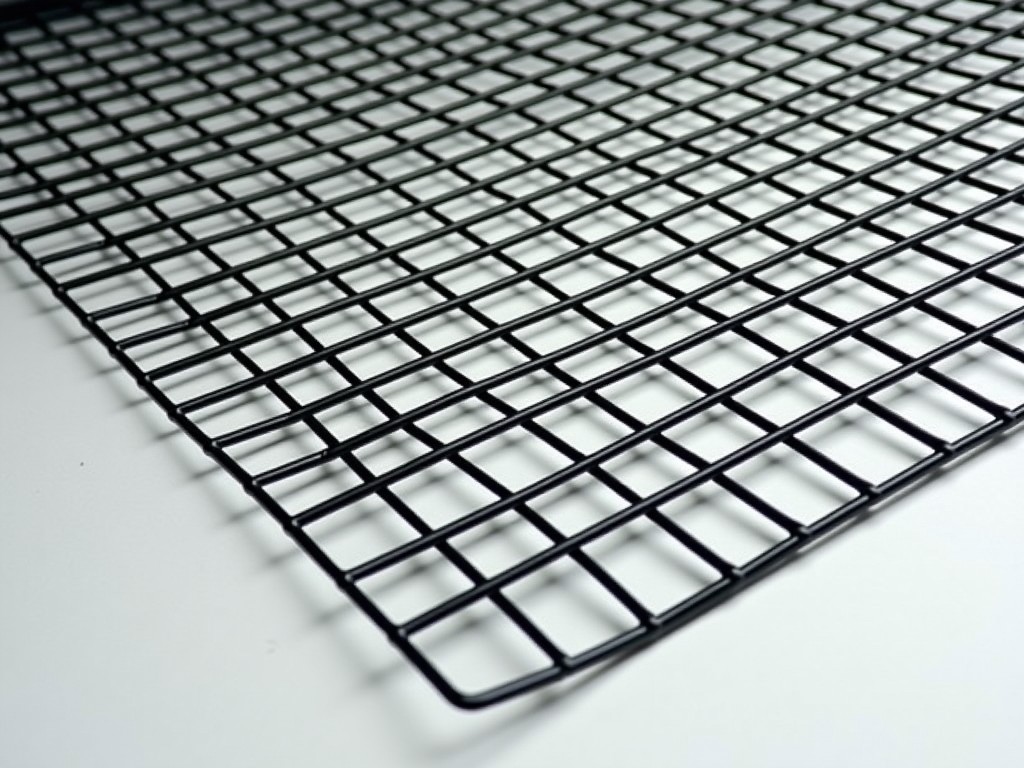
Wholesale Coated Wire Mesh Panels Supplier
Coated wire mesh panels consist of a welded or woven wire grid that receives a protective layer—typically zinc, polymer, or epoxy—applied to the base steel to resist corrosion and extend service life
Wholesale Coated Wire Mesh Panels Supplier
Coated wire mesh panels consist of a welded or woven wire grid that receives a protective layer—typically zinc, polymer, or epoxy—applied to the base steel to resist corrosion and extend service life in harsh environments.
Material and Coating Options
Base wire is usually low‑carbon steel (SAE 1008) with a tensile strength of 350–450 MPa; for applications requiring higher corrosion resistance, stainless steel grades 304 or 316 are used, offering tensile strengths of 500–750 MPa and inherent resistance to oxidation.
Coating choices include hot‑dip galvanized zinc (average thickness 80–120 g/m², equivalent to 6–10 µm), polyvinyl chloride (PVC) extrusion (0.5–1.0 mm uniform layer), and fusion‑bonded epoxy powder (60–80 µm film). Each coating adds a barrier that reduces rust penetration rates to less than 0.01 mm/year in salt‑spray testing.
Typical Specifications
| Parameter | Range / Typical Value | Notes |
|---|---|---|
| Wire Diameter | 1.2 mm – 4.0 mm | Selected based on load requirements |
| Mesh Aperture (Opening) | 10 mm – 100 mm (square or rectangular) | Customizable per project |
| Panel Size | Up to 2.4 m × 3.0 m (standard) | Larger sizes available as fabricated assemblies |
| Coating Type | Hot‑dip Zn, PVC, Fusion‑bonded Epoxy | Thickness varies as noted above |
| Tensile Strength (Base Wire) | 350–750 MPa (depending on grade) | Higher for stainless steel |
| Corrosion Resistance (Salt Spray) | >500 hrs (Zn), >1500 hrs (PVC), >2000 hrs (Epoxy) | ASTM B117 equivalent |
Applications
In precast concrete manufacturing, welded wire mesh panels with epoxy coating act as internal reinforcement that controls cracking and distributes tensile stresses; the coating prevents alkali‑silica reaction and protects the steel from the high‑pH environment of fresh concrete.
For agricultural fencing, PVC‑coated mesh provides a smooth, non‑abrasive surface that reduces injury to livestock while resisting UV degradation and chemical exposure from fertilizers, giving a service life exceeding 15 years in open‑field conditions.
Machinery safety guards often use stainless‑steel wire mesh with a thin epoxy layer; the combination offers high impact resistance, maintains visibility, and withstands cleaning solvents and temperature cycles typical in food‑processing plants.
Manufacturing and Quality Control
Panels are produced by either resistance spot welding of intersecting wires or by weaving on high‑speed looms; after forming, the mesh undergoes cleaning, pretreatment, and then the selected coating is applied via hot‑dip, extrusion, or powder‑spray lines calibrated to uniform thickness.
Quality control includes dimensional verification (±2 mm on panel size, ±0.1 mm on wire diameter), coating thickness measurement using magnetic or eddy‑current gauges, and adhesion testing (cross‑cut test per ASTM D3359) to ensure the coating remains intact under flexing.
Customization Options
Customers can specify wire diameter from 1.2 mm to 4.0 mm, aperture opening from 10 mm to 100 mm, and panel dimensions up to 2.4 m × 3.0 m; edge finishes include flattened edges, rolled edges, or PVC‑capped borders to facilitate handling and installation.
Additional services such as cutting to length, bending into custom shapes, drilling mounting holes, and applying logos or identification marks are available upon request, allowing the mesh to integrate directly into assemblies without further fabrication.
Packaging and Logistics
Panels are stacked in bundles of 5–10 units, wrapped in UV‑stable polyethylene film, and placed on heat‑treated wooden pallets; corner protectors and steel straps prevent shifting during transit, and each pallet is labeled with product code, coating type, and quantity.
A standard 20‑foot container accommodates up to 24 pallets (approximately 120 m² of mesh), while 40‑foot containers double that capacity; shipping documents include material safety data sheets (MSDS) for coatings and origin certification.
Frequently Asked Questions
- Q: Can the wire diameter and aperture be customized for a specific load requirement? Yes—wire diameter ranges from 1.2 mm to 4.0 mm and aperture from 10 mm to 100 mm, allowing the mesh to meet load‑bearing and filtration specifications.
- Q: What information is needed to receive a quotation? Please provide the desired wire grade, diameter, aperture size, panel dimensions, coating type, order quantity, and any secondary operations such as cutting or hole drilling.
- Q: Which coating offers the best resistance to chemical exposure in a fertilizer plant? Fusion‑bonded epoxy provides the highest barrier against acidic and alkaline chemicals, with salt‑spray performance exceeding 2000 hours in ASTM B117 testing.
- Q: How is coating thickness verified during production? Thickness is measured inline using magnetic induction for zinc and eddy‑current sensors for non‑metallic coatings, with each batch sampled at least three times per shift.
- Q: What is the typical production lead time for a standard order? Lead time ranges from 10 to 18 working days depending on coating selection and order size; expedited options are available for urgent projects.
Get a Quote
To discuss your project requirements, share the specifications listed above, and receive a detailed quotation, please contact our sales team.
Request Quote