
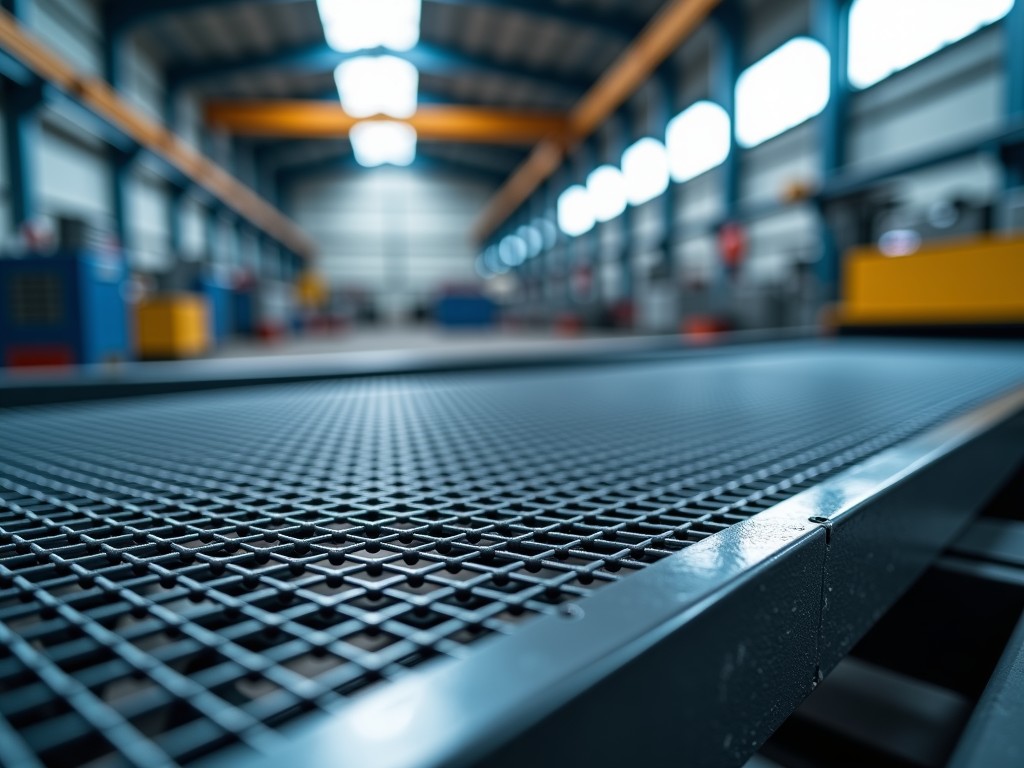
Oem Wire Net Top Factory
A wire net top is a prefabricated mesh panel formed from intersecting wires, typically used as a covering, sieving surface, or protective layer on equipment such as containers, hoppers, and conveyor
OEM Wire Net Top Factory – Custom Wire Mesh Solutions
A wire net top is a prefabricated mesh panel formed from intersecting wires, typically used as a covering, sieving surface, or protective layer on equipment such as containers, hoppers, and conveyor systems. The product is defined by its opening size, wire diameter, and tensile strength, which determine flow rate, load capacity, and durability. OEM manufacturers tailor these parameters to match the specific process requirements of downstream equipment.
Technical Specifications
Typical wire net tops are supplied in rolls or cut-to-size panels. Key parameters include mesh opening, wire diameter, material grade, tensile strength, and surface treatment. The following table lists common ranges that can be adjusted according to project needs.
| Parameter | Typical Value | Unit | Notes |
|---|---|---|---|
| Mesh Opening | 0.5 – 50 | mm | Square or rectangular aperture; customizable |
| Wire Diameter | 0.2 – 3.0 | mm | Determines tensile strength and rigidity |
| Material | Low carbon steel, stainless steel 304/316, galvanized steel | – | Selection based on corrosion resistance and load |
| Tensile Strength | 300 – 600 | MPa | Typical for steel wire; varies with grade |
| Weight per Area | 0.5 – 5.0 | kg/m² | Depends on opening and wire size |
| Roll Width | 500 – 2000 | mm | Standard widths; custom widths available |
| Roll Length | 10 – 100 | m | Length can be spliced for longer runs |
Material Selection
Low carbon steel provides high tensile strength at low cost but requires protective coating for outdoor use. Stainless steel grades 304 and 316 offer inherent corrosion resistance, suitable for food processing, chemical, and marine environments. Galvanized steel combines steel strength with a zinc coating that resists rust in moderate humidity. The choice of material directly affects service life, maintenance frequency, and compliance with industry hygiene standards.
Manufacturing Process
Production begins with wire drawing to achieve the specified diameter, followed by either weaving (for woven mesh) or resistance welding (for welded mesh) to form the uniform aperture pattern. After forming, the mesh is cut to width and length, and edges are treated—common options include folded hem, rolled edge, or welded frame—to prevent fraying and facilitate installation. Surface treatment such as hot-dip galvanizing, electro‑galvanizing, or powder coating is applied based on the selected material and end‑use environment.
Throughout the line, dimensional checks are performed on opening size and wire diameter using optical gauges. Tensile samples are pulled from each batch to verify strength meets the specified MPa range. Coating thickness is measured with magnetic gauges to ensure corrosion protection meets the required microns. These inline controls reduce variability and allow early detection of deviations before final packaging.
Applications
Wire net tops are selected when a precise open area is needed for flow control, when a barrier must contain particles while allowing air or liquid passage, or when a lightweight yet stiff covering is required for safety guards. The following examples illustrate typical uses and the engineering reasons behind them.
- Food industry sieves – openings of 0.8‑2 mm allow fine powders to pass while retaining larger granules, improving product uniformity.
- Agricultural drying trays – 2‑5 mm openings provide adequate airflow for moisture removal while supporting the weight of produce.
- Conveyor belt covers – welded mesh with 3‑4 mm wire diameter prevents product fall‑through and resists impact from moving loads.
- Industrial filtration housings – stainless steel 316 mesh with 0.5‑1 mm opening resists corrosive chemicals and maintains filtration efficiency over long runs.
- Safety guards on machinery – rolled edge mesh with 1.5‑2 mm wire offers high visibility and sufficient stiffness to deflect debris.
Quality Control & Testing
Each production lot undergoes visual inspection for surface defects, followed by automated aperture measurement using laser scanning to confirm opening tolerance within ±0.05 mm. Mechanical testing includes tensile strength elongation tests on wire samples per ASTM A370. For coated products, adhesion is evaluated by cross‑cut tape test and salt‑spray exposure per ASTM B117 to verify corrosion resistance. Documentation of all test results is provided with the shipment.
Customization Options
OEM wire net tops can be tailored to match the exact interface of customer equipment. Adjustable parameters include opening geometry, wire diameter, material grade, edge finish, surface coating, roll dimensions, and packaging format. The table below summarizes the typical ranges that can be customized; values outside these ranges are available upon request after engineering review.
| Customizable Parameter | Available Range | Unit | Remarks |
|---|---|---|---|
| Mesh Opening Shape | Square, rectangular, hexagonal, slotted | – | Shape influences flow direction and particle retention |
| Wire Diameter | 0.15 – 4.0 | mm | Outside standard range requires special drawing dies |
| Material | Carbon steel, stainless 304/316/321, galvanized, pre‑coated alloys | – | Material affects magnetic properties and weldability |
| Edge Finish | Folded hem, rolled edge, welded frame, no edge | – | Selected based on installation method and safety requirements |
| Surface Treatment | Hot‑dip galvanizing, electro‑galvanizing, powder coating, passivation | – | Coating thickness typically 10‑80 µm depending on process |
| Roll Width | 300 – 2500 | mm | Custom widths may require slitting or rewinding |
| Roll Length | 5 – 150 | m | Longer lengths supplied as spliced rolls with UV‑stable tape |
Frequently Asked Questions
- Can dimensions be customized? Yes, opening size, wire diameter, width, and length are adjustable per drawing or sample.
- What information is required before quotation? Required data include desired aperture, wire diameter, material grade, edge finish, surface treatment, roll dimensions, and quantity.
- What materials are available? Low carbon steel, stainless steel 304/316, galvanized steel, and specialty alloys upon request.
- How is quality inspected? Visual inspection, laser aperture measurement, tensile testing, coating adhesion, and salt‑spray tests are standard.
- What packaging methods are available? Rolls are wrapped in polyethylene film, placed on pallets, and secured with strapping; custom crates or boxes are available.
- How are export shipments protected? Pallets are fumigated, covered with waterproof sheeting, and corner‑protected to meet ISPM‑15 standards.
- What is the typical production lead time? Lead time ranges from 2 to 4 weeks depending on complexity and current capacity; confirmed at quote.
- How are samples arranged? Sample panels up to 300 mm × 300 mm can be shipped via express courier; charges are credited against the first order.
Contact Us
For technical discussions, quotation requests, or to arrange a sample, please reach out to our engineering team. We will review your specifications and provide a detailed response within one business day.