
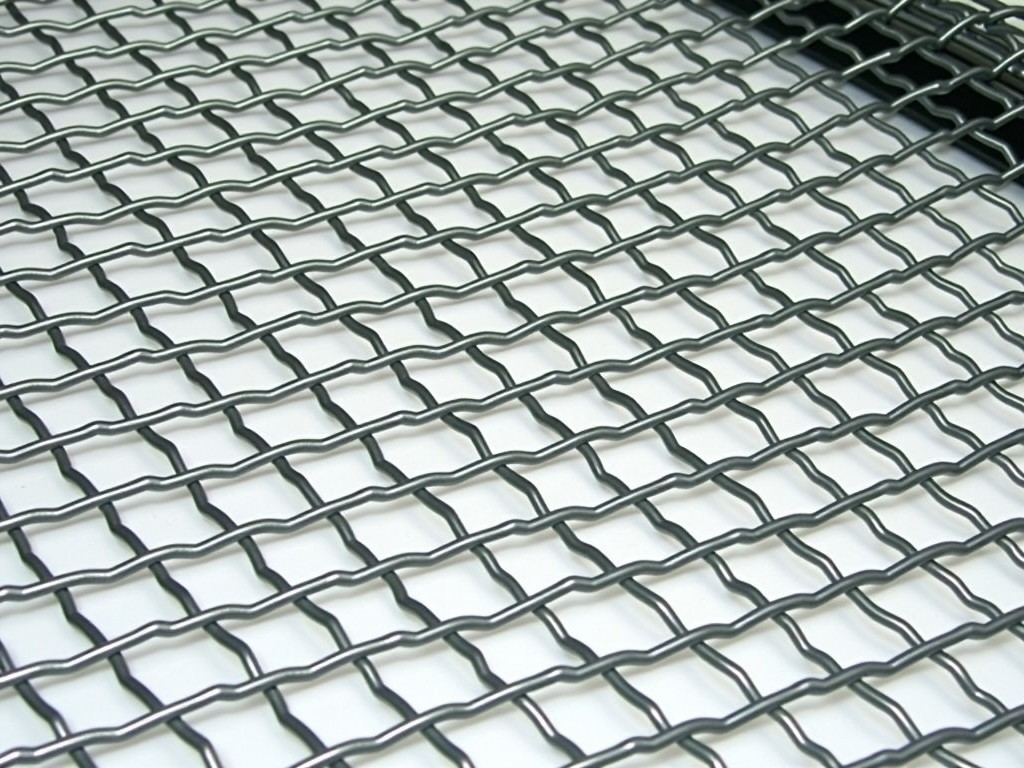
Factory Direct Heavy Duty Gabion Wire Mesh Supplier
Gabion wire mesh forms the structural backbone of gabion baskets, which are rectangular containers filled with stone to create gravity‑retaining structures. The mesh must resist corrosion, maintain
Factory Direct Heavy Duty Gabion Wire Mesh Supplier
Gabion wire mesh forms the structural backbone of gabion baskets, which are rectangular containers filled with stone to create gravity‑retaining structures.
The mesh must resist corrosion, maintain opening integrity under load, and provide sufficient tensile strength to withstand the lateral pressure of backfill and dynamic forces from water or traffic.
Technical Specifications
Typical values for heavy‑duty gabion wire mesh are shown below; actual figures can be adjusted to project requirements.
| Parameter | Typical Value | Unit |
|---|---|---|
| Wire Diameter | 3.0 | mm |
| Tensile Strength | 550 | MPa |
| Mesh Opening | 50 × 50 | mm |
| Coating Type | Hot‑dip Galvanized (Zn ≥ 200 g/m²) | – |
| Coating Thickness | ≈ 25 | µm |
| Elastic Modulus | 200 | GPa |
Material Options
- Hot‑dip galvanized steel wire (Zn ≥ 200 g/m²) – standard corrosion protection for most civil‑engineering sites.
- PVC‑coated galvanized wire – adds a polymeric barrier for aggressive soils or aquatic environments.
- Stainless‑steel wire (AISI 304 or 316) – used where chloride exposure or aesthetic finish is required.
Applications and Design Rationale
In retaining walls, gabion baskets rely on their mass and interlocking stone fill to resist lateral earth pressure; the mesh’s flexibility accommodates differential settlement without cracking, unlike rigid concrete walls.
For riverbank erosion control, the mesh’s permeability allows water to pass while retaining soil, encouraging vegetative growth through the openings, which further reinforces the structure over time.
When employed as traffic noise barriers, the high mass density of the stone fill combined with the damping characteristics of the wire mesh reduces sound transmission, providing a cost‑effective alternative to concrete panels.
Customization Parameters
- Basket dimensions (length × width × height) – adjustable in 100 mm increments to match site‑specific layouts.
- Wire diameter – selectable from 2.0 mm to 4.0 mm to achieve required tensile class (e.g., T40, T60).
- Mesh opening – typical 50 mm × 50 mm or 75 mm × 75 mm; special sizes available upon request for drainage or fill‑size constraints.
- Coating – choice of galvanization class (e.g., Class A, Class B), PVC thickness (0.3 mm–0.5 mm), or stainless‑steel grade.
- Edge finishing – twisted, welded, or laced ends for ease of on‑site assembly and handling.
Quality Control Philosophy
Incoming wire is inspected for diameter tolerance (±0.05 mm) and tensile strength per ASTM A370; each coil is tagged with heat number for traceability.
Coating thickness is measured using magnetic induction probes per ASTM B499, with acceptance limits of ≥ 200 g/m² for Zn and ≥ 0.3 mm for PVC. Visual inspection under 10× magnification checks for weld continuity and absence of sharp edges.
Finished panels undergo a proof load test (typically 1.5× design load) on a random sample basis; statistical process control charts monitor key parameters to detect drift before it affects product conformity.
Packaging and Shipping
Mesh rolls are wound on corrugated cores, wrapped in UV‑stabilized polyethylene film, and secured with steel straps to prevent deformation during transit.
Frequently Asked Questions
- Can dimensions be customized? Yes, length, width, height, wire diameter, and mesh opening can be adjusted to project drawings; provide detailed sketches or CAD files for quotation.
- What information is required before quotation? Required inputs include: basket dimensions, wire diameter or tensile class, mesh opening, coating type, quantity, and delivery destination.
- What materials are available? Hot‑dip galvanized steel, PVC‑coated galvanized steel, and stainless‑steel (AISI 304/316) wires are stocked; special alloys are available upon request.
- How is quality inspected? Incoming wire checks, coating thickness measurement, tensile sampling, and visual weld inspection are performed per ASTM standards; full traceability is maintained.
- What packaging methods are available? Standard packaging includes film‑wrapped rolls on cores, palletized bundles with corner protectors, and container‑ized shipments with desiccant protection.
- How are export shipments protected? Rolls are sealed in moisture‑barrier film, pallets are fumigated if required, and all cargo is secured with lashing to prevent shifting.
- What is the typical production lead time? Lead time ranges from 2‑4 weeks for standard specifications; custom coatings or non‑standard sizes may extend to 6 weeks, confirmed at quote stage.
- How are samples arranged? Free sample sections (up to 1 m²) can be dispatched upon receipt of a formal request; shipping charges are collected unless otherwise agreed.
Request a Quote
To obtain a detailed quotation or discuss technical requirements, please contact our engineering team via the link below.
Contact Us for a Quote