
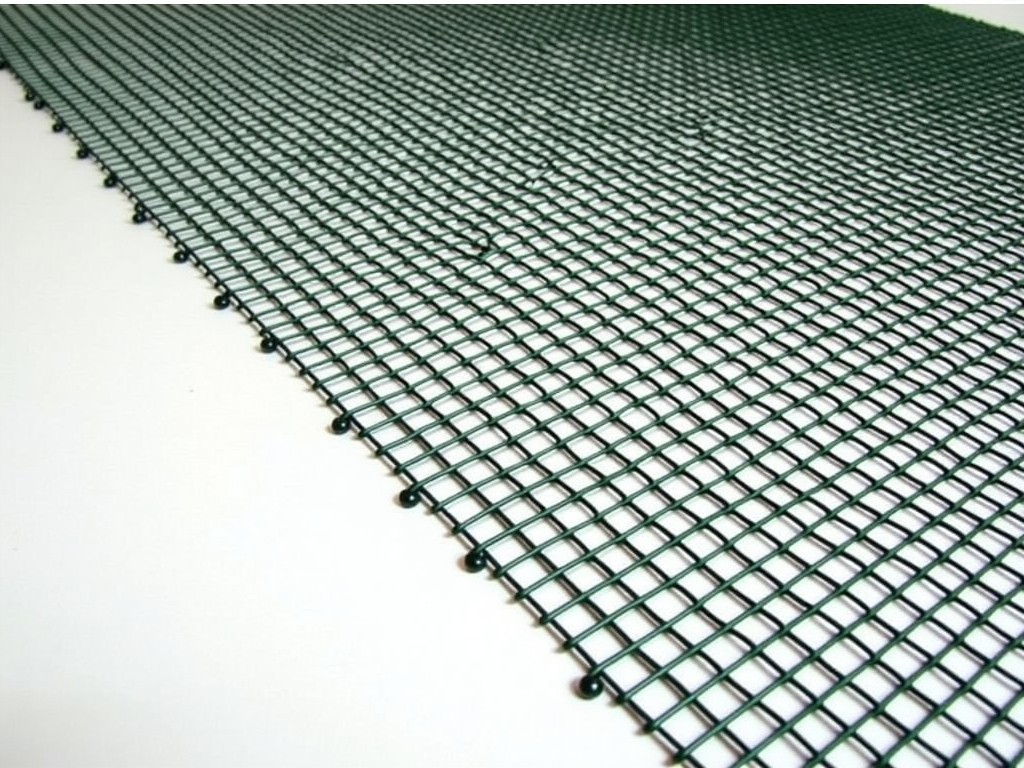
Direct Factory Pvc Coated Welded Wire Mesh Panels Exporter
PVC coated welded wire mesh panels are produced by electrically welding low‑carbon steel wires at each intersection, then applying a uniform polyvinyl chloride layer through extrusion or dip‑coating.
Direct Factory PVC Coated Welded Wire Mesh Panels Exporter
PVC coated welded wire mesh panels are produced by electrically welding low‑carbon steel wires at each intersection, then applying a uniform polyvinyl chloride layer through extrusion or dip‑coating. The coating thickness typically ranges from 0.25 mm to 0.5 mm, providing a barrier against corrosion while maintaining flexibility. This process yields a product that retains the tensile strength of the steel core while gaining resistance to moisture, chemicals, and UV exposure.
Material and Construction
The base wire is usually cold‑drawn steel with a tensile strength of 450 MPa to 550 MPa, selected for consistent elongation and weldability. Welding parameters are controlled to achieve a fusion zone depth of approximately 0.6 mm, ensuring mechanical integrity at each node. After welding, the panel passes through a PVC extrusion die where the coating is applied at a line speed of 5 m/min, resulting in a continuous sheath with minimal pinholes.
Key Technical Characteristics
- Mesh opening options: 12.5 mm, 25 mm, 50 mm, 75 mm (square or rectangular)
- Wire diameter range: 1.2 mm to 4.0 mm (cold‑drawn steel)
- Panel dimensions: standard widths 0.9 m to 2.4 m, lengths up to 6 m (custom lengths available)
- PVC coating thickness: 0.25 mm, 0.35 mm, 0.5 mm (customizable)
- Weight per square meter: varies from 2.8 kg/m² (1.2 mm wire, 12.5 mm opening) to 9.6 kg/m² (4.0 mm wire, 50 mm opening)
Typical Specifications
| Parameter | Typical Value | Adjustable Range |
|---|---|---|
| Mesh Opening (mm) | 25 | 12.5 – 100 |
| Wire Diameter (mm) | 2.0 | 1.2 – 4.0 |
| Panel Width (m) | 1.2 | 0.9 – 2.4 |
| PVC Coating Thickness (mm) | 0.35 | 0.25 – 0.5 |
| Tensile Strength of Wire (MPa) | 500 | 450 – 550 |
Industrial Applications
In agricultural fencing, the PVC coating prevents rust caused by soil moisture and fertilizer runoff, extending service life beyond 15 years in temperate climates. For concrete reinforcement, the mesh provides crack‑control while the coating isolates the steel from alkaline environments, reducing corrosion‑induced spalling. In machine guarding, the smooth PVC surface minimizes abrasion risks to operators and facilitates cleaning in food‑processing zones.
Quality Control Philosophy
Each production batch undergoes tensile testing on a sample of welded joints to verify minimum shear strength of 1.8 kN per node. Coating adhesion is assessed by cross‑hatch tape testing per ASTM D3359, targeting a rating of 4B or better. Dimensional inspection uses laser scanning to confirm opening tolerances within ±0.5 mm and squareness deviation under 0.2° over a 2 m length.
Customization Options
Customers may specify alternative wire grades such as galvanized‑steel core for enhanced barrier properties, or request a double‑layer PVC coating for increased chemical resistance. Panel edges can be supplied with flattened safety borders or with integrated hook‑strip systems for rapid installation. Logistical packaging options include flat‑stacked pallets with corner protectors or rolled coils for large‑area applications.
Packaging and Shipping
Panels are interleaved with polyethylene sheets to prevent surface abrasion during transit. Pallet loads are secured with polyester strapping and corner boards, meeting ISPM 15 standards for export. For overseas shipments, moisture‑desiccant packs are added to container interiors to maintain relative humidity below 60 % during sea freight.
Frequently Asked Questions
- Can dimensions be customized? Yes, width, length, mesh opening, and wire diameter are adjustable per project requirements.
- What information is needed for a quotation? Required details include panel size, mesh opening, wire diameter, coating thickness, quantity, and any special edge treatments.
- How is coating quality verified? Through adhesion tape testing, thickness measurement with micrometers, and visual inspection for pinholes.
- What packaging methods protect the coating? Interleaving polyfilm, edge protectors, and moisture‑absorbing packs prevent mechanical and environmental damage.
- What is the typical lead time? Standard orders ship within 3‑4 weeks after confirmation; custom specifications may extend to 5‑6 weeks.