
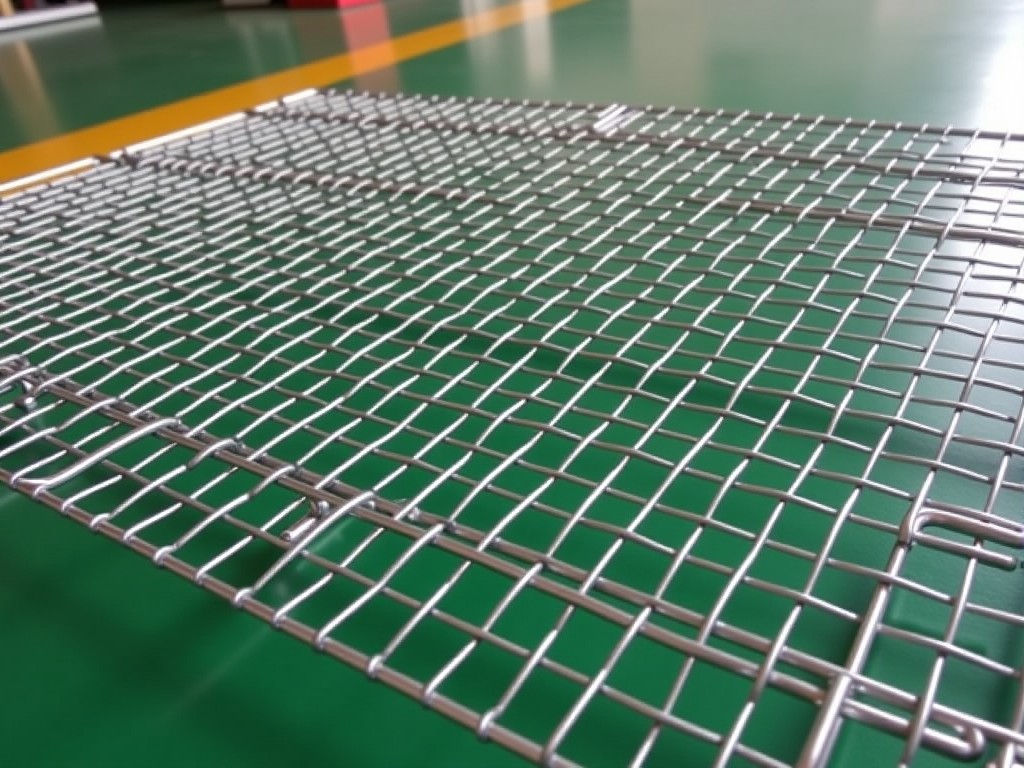
Direct Factory Durable Wire Net Supplier
Wire nets are engineered grids formed by intersecting metal wires at regular intervals, providing a balance of open area and structural capacity. This page outlines the technical parameters that
Direct Factory Durable Wire Net Supplier
Wire nets are engineered grids formed by intersecting metal wires at regular intervals, providing a balance of open area and structural capacity. This page outlines the technical parameters that procurement engineers evaluate when specifying a durable wire net sourced directly from the manufacturer.
Material and Construction
Wire nets are produced from cold‑drawn steel wire that undergoes drawing to achieve precise diameters and uniform mechanical properties. The wire is then welded or knotted at intersections to form a stable mesh geometry. Common base materials include low‑carbon steel, high‑strength steel, and austenitic stainless steel grades such as 304 and 316.
Aperture and Opening Options
The aperture, defined as the clear distance between adjacent wires, determines the open area ratio and influences flow characteristics. For filtration applications, apertures between 5 mm and 20 mm provide high open area while retaining structural rigidity. Security fencing typically uses apertures of 50 mm to 100 mm to balance visibility and climb resistance.
Mechanical Performance
Tensile load capacity per meter of width is calculated from wire diameter, tensile strength, and mesh geometry. A 2 mm diameter wire with 500 MPa strength in a 25 mm square mesh yields approximately 12 kN/m before yield. Elongation at break generally ranges from 10 % to 20 % for low‑carbon steel, allowing energy absorption under impact loads.
| Parameter | Typical Range | Notes |
|---|---|---|
| Wire diameter | 0.8 mm – 5.0 mm | Selected based on load requirements |
| Aperture size (opening) | 5 mm – 100 mm | Square or rectangular openings |
| Tensile strength of wire | 400 MPa – 620 MPa | Cold‑drawn steel wire |
| Coating thickness (galvanized) | 10 µm – 25 µm Zn | Equivalent to 60‑150 g/m² |
| Corrosion resistance (salt spray) | 200 h – 1000 h | Depending on coating and alloy |
Customization Options
Length and width are cut to customer‑specified dimensions, with standard roll widths up to 3 m and custom lengths limited only by handling equipment. Edge treatments include selvage (looped wire), welded border, or PVC‑capped edges to prevent fraying. Additional surface treatments such as powder coating (thickness 60‑120 µm) or PVC extrusion (0.5‑1.5 mm) are available for enhanced chemical resistance.
Industrial Applications
In concrete construction, wire nets act as tensile reinforcement in shotcrete and precast panels, distributing loads and reducing cracking. In aggregate processing, the mesh serves as a screen media where aperture size controls particle separation efficiency. For perimeter security, the combination of high tensile strength and small aperture prevents tool penetration while maintaining visibility for surveillance.
Quality Control and Testing
Each production lot undergoes dimensional verification using laser gauges with ±0.1 mm tolerance on wire diameter and aperture. Visual inspection identifies welding defects, coating uniformity, and edge integrity. Mechanical samples are pull‑tested at a rate of 100 mm/min to confirm tensile strength meets the specified range, with a minimum of five specimens per lot.
Packaging and Logistics
Wire nets are wound onto steel or wooden cores with diameters ranging from 150 mm to 300 mm, depending on roll weight. The rolls are wrapped in UV‑stabilized polyethylene film, placed on pallets, and secured with polyester strapping. For export, additional corner protection and moisture‑absorbent desiccants are added to meet ISPM‑15 standards.
Frequently Asked Questions
Can dimensions be customized? Yes, length, width, and aperture size are adjusted per drawing or specification.
What information is required before quotation? Wire diameter, aperture, material grade, coating type, roll width, and total quantity.
Which materials are available? Low‑carbon steel, high‑strength steel, stainless steel 304/316, and optional PVC or powder‑coat finishes.
How is quality inspected? Dimensional checks, visual inspection, and pull‑testing on samples per lot.
What packaging methods are available? Rolls on cores with polyethylene film, palletized, and optional wooden crates for overseas shipments.