
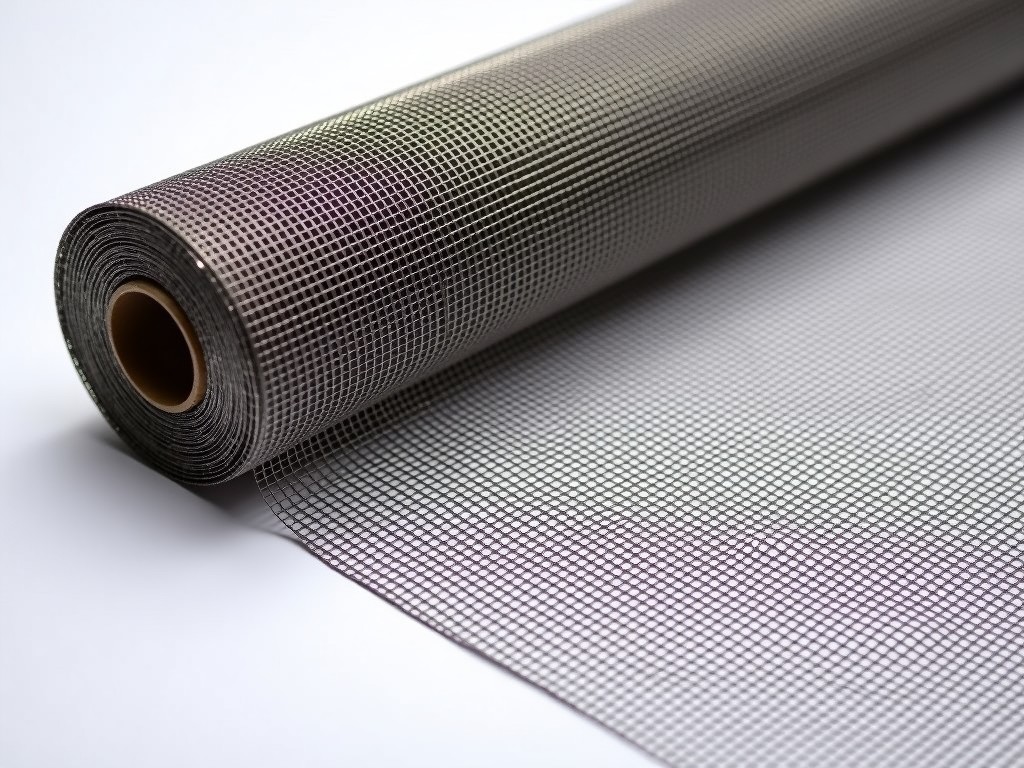
Custom Stainless Steel Wire Mesh Screen Rolls Supplier
Stainless steel wire mesh screen rolls are produced by weaving or welding stainless steel wire into a uniform opening pattern, then winding the sheet into a roll for continuous processing. The roll
Custom Stainless Steel Wire Mesh Screen Rolls
Stainless steel wire mesh screen rolls are produced by weaving or welding stainless steel wire into a uniform opening pattern, then winding the sheet into a roll for continuous processing. The roll format enables efficient handling in high‑volume operations such as filtration, sieving, and protective screening.
Material Characteristics
The base alloy is typically AISI 304 or 316L stainless steel, offering a chromium content of 18‑20% and nickel content of 8‑12% (304) or 10‑14% with molybdenum 2‑3% (316L). These compositions provide resistance to oxidation in ambient atmospheres and to chloride‑induced pitting in wet environments.
Wire diameters available range from 0.10 mm to 2.00 mm, with opening sizes (clearance between adjacent wires) from 0.20 mm up to 50 mm, depending on the weave pattern. Tensile strength of the wire exceeds 500 MPa for 304 and 550 MPa for 316L, ensuring the mesh retains dimensional stability under tension.
Weave Patterns and Opening Tolerances
- Plain weave: wires cross at 90°, offering symmetrical flow characteristics and predictable pressure drop.
- Twill weave: each warp wire passes over two then under two weft wires, providing increased strength and finer filtration capability.
- Dutch weave: thicker warp wires with finer weft wires, creating a robust barrier for high‑pressure differential applications.
- Welded mesh: resistance‑spot welded at each intersection, eliminating wire movement and suitable for high‑vibration environments.
Customization Options
Roll width, length, and core diameter are adjusted to match the specifications of downstream equipment such as rotary screeners, conveyor‑mounted strainers, or cartridge housings.
- Width: 50 mm to 2000 mm (custom widths available upon request).
- Length: 5 m to 200 m per roll, with spliceless options for continuous processing.
- Core: cardboard, plastic, or steel cores with diameters from 25 mm to 150 mm.
- Edge treatment: plain, hemmed, or reinforced with a stainless steel strip to prevent fraying.
- Surface finish: annealed, passivated, or electropolished for enhanced corrosion resistance.
Typical Specifications Table
| Parameter | Range / Typical Value | Notes |
|---|---|---|
| Wire Diameter | 0.10 mm – 2.00 mm | Selected based on required opening size and mechanical load. |
| Opening Size (Clear Opening) | 0.20 mm – 50 mm | Depends on weave pattern and wire diameter. |
| Alloy | AISI 304, 316L (others on request) | 316L preferred for marine or chemical exposure. |
| Tensile Strength of Wire | ≥ 500 MPa (304), ≥ 550 MPa (316L) | Ensures resistance to elongation under tension. |
| Roll Width | 50 mm – 2000 mm | Custom widths available; tolerances ±2 mm. |
| Roll Length | 5 m – 200 m | Longer lengths achievable with spliceless cores. |
Applications
In food processing, the mesh is used for sifting powders and granules where hygiene and corrosion resistance are critical; the smooth surface prevents product buildup and facilitates cleaning.
Chemical plants employ 316L mesh rolls as pre‑filters in corrosive slurry streams, benefiting from the alloy’s resistance to pitting and crevice corrosion.
Automotive manufacturers integrate welded mesh screens in coolant filtration modules, where the spot‑welded joints maintain integrity under vibration and temperature cycling.
Architectural applications include decorative façades and infill panels, where the mesh provides both visual transparency and structural support while enduring outdoor weathering.
Quality Assurance
Each roll undergoes dimensional verification of wire diameter and opening size using optical microscopy and laser scanning, ensuring conformance to the agreed tolerance band (±5 % for opening dimensions).
Tensile tests on random wire samples confirm that the material meets the specified minimum strength, while surface analysis verifies the passivation layer thickness (≥0.5 µm for electropolished finishes).
Visual inspection detects any welding defects, wire breaks, or edge irregularities; rolls with defects exceeding the defined AQL are segregated for rework.
Packaging and Shipping
Rolls are wrapped in polyethylene shrink film to protect against moisture and particulate contamination during transit.
For lengths exceeding 50 m, a rigid cardboard or plastic core is inserted and the assembly is placed in a corrugated carton with corner protectors.
Export shipments comply with ISPM‑15 standards for wood packaging, and each package includes a label with lot number, material grade, dimensions, and handling instructions.
Frequently Asked Questions
Can the wire mesh be supplied with a specific opening tolerance?
Yes. Opening tolerances are typically held to ±5 % of the nominal size; tighter tolerances (±2 %) are available for precision filtration applications upon request.
What information is needed to obtain a quotation?
We require the desired alloy (304 or 316L), wire diameter, opening size, weave pattern, roll width, length, core type, and any edge or surface finish specifications.
How is the mesh inspected for quality?
Inspection includes dimensional checks (wire diameter, opening size), tensile strength testing of wire samples, surface finish verification, and visual defect identification per AQL standards.
What packaging options are available for long rolls?
Long rolls can be supplied on spliceless cores with protective shrink wrapping, or placed in durable cartons with corner reinforcement for added protection during handling.
Ready to Discuss Your Requirements?
Provide your project specifications and our technical team will return a detailed quotation, including lead time and any necessary tooling considerations.
Request a Quote