
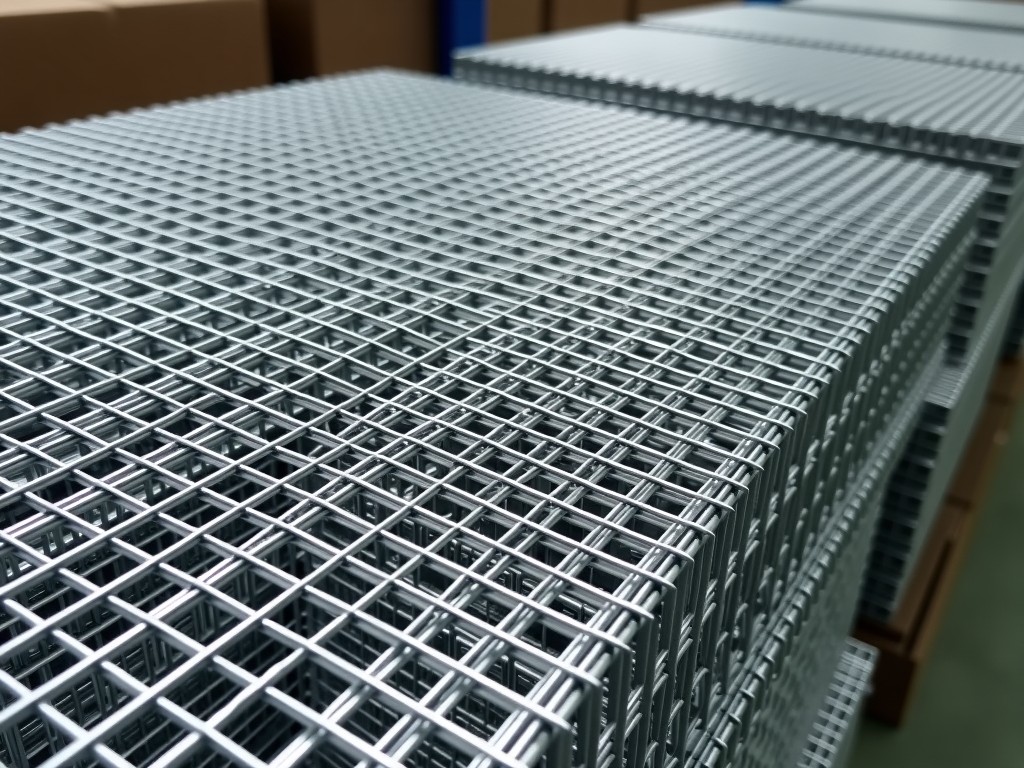
Custom Odm Galvanized Wire Mesh Manufacturer
Industrial buyers often need wire mesh that meets specific dimensional, mechanical, and corrosion‑resistance criteria while being produced to their exact design. An ODM (Original Design Manufacturer)
Custom ODM Galvanized Wire Mesh Manufacturer
Industrial buyers often need wire mesh that meets specific dimensional, mechanical, and corrosion‑resistance criteria while being produced to their exact design. An ODM (Original Design Manufacturer) partner takes the client’s specifications—wire gauge, opening size, roll dimensions, and coating requirements—and handles tooling, fabrication, and finishing, delivering a ready‑to‑install product without the buyer investing in dedicated equipment.
Understanding ODM Galvanized Wire Mesh
In an ODM arrangement, the manufacturer assumes responsibility for product development based on the buyer’s technical drawings or performance targets. This reduces lead time for custom geometries because the supplier already possesses the necessary extrusion, weaving, and galvanizing lines. The buyer retains ownership of the intellectual property and can request changes to mesh pattern, edge treatment, or coating thickness without redesigning the production flow.
Material Composition and Coating Thickness
The base wire is typically low‑carbon steel (C ≤ 0.10 %) with a tensile strength ranging from 350 MPa to 550 MPa, depending on the drawn gauge. Galvanization applies a zinc layer whose weight is expressed in grams per square metre (g/m²). Common coating grades for industrial mesh are G60 (≈ 60 g/m²) and G90 (≈ 90 g/m²), which provide sacrificial protection in mildly corrosive environments. For harsher conditions, a zinc‑aluminum alloy (e.g., Zn‑5 %Al) can be specified, increasing durability to roughly 120 g/m² equivalent.
| Parameter | Typical Value | Notes |
|---|---|---|
| Wire Diameter | 0.5 mm – 3.0 mm | Custom gauges available upon request |
| Opening Size (Aperture) | 5 mm – 100 mm square or rectangular | Defined by pitch and wire diameter |
| Zinc Coating Weight | 60 g/m² (G60) – 90 g/m² (G90) | Higher weights increase service life |
| Roll Width | 0.5 m – 2.5 m | Standard widths; custom slitting possible |
| Roll Length | 10 m – 500 m | Dependent on wire diameter and coating |
Manufacturing Process Overview
The process begins with drawing steel rod to the specified wire diameter, followed by cleaning to remove oxides. The wire is then woven on a loom or welded into the desired mesh pattern. After forming, the mesh passes through a hot‑dip galvanizing bath where it is immersed in molten zinc at approximately 450 °C, ensuring metallurgical bonding. Post‑galvanizing, the mesh may be subjected to a light tension‑leveling pass to achieve uniform flatness before winding onto cores or cutting to length.
Customization Options
- Wire diameter from 0.4 mm to 4 mm, affecting load capacity and flexibility
- Opening shapes: square, rectangular, hexagonal, or custom profiles
- Edge treatments: selvedge, folded, or welded borders for safety
- Coating types: hot‑dip zinc, zinc‑aluminum alloy, or pre‑galvanized wire
- Roll dimensions: width, length, and core diameter tailored to handling equipment
- Surface finishes: passivation, chromate‑free sealing, or PVC over‑coat for additional abrasion resistance
Typical Industrial Applications
In mining, galvanized mesh serves as screen media for ore separation, where the zinc coating resists abrasion from slurry and extends screen life compared to bare steel. In agricultural fencing, the mesh provides containment while the coating mitigates rust from soil moisture and fertilizer runoff. Construction projects use the mesh as reinforcement in shotcrete or as safety barriers on scaffolding, benefiting from its uniform tensile strength and predictable corrosion behavior. The ability to specify exact aperture size allows OEMs to integrate the mesh directly into filtration housings or ventilation grills without additional adapters.
Quality Assurance and Testing
Each production lot undergoes dimensional verification using laser gauges to confirm wire diameter and aperture tolerance (± 0.02 mm for fine meshes). Coating weight is measured by the gravimetric strip method per ASTM A90/A90M. Tensile samples are pulled to validate strength within the specified range. Visual inspection checks for uniform zinc adhesion, absence of bare spots, and proper edge finish. All test results are retained traceable to the batch number and supplied with the shipment documentation.
Comparison: Hot‑Dip Galvanizing vs. Electro‑Galvanizing
| Aspect | Hot‑Dip Galvanizing | Electro‑Galvanizing |
|---|---|---|
| Coating Thickness | 45 µm – 120 µm (typical) | 5 µm – 25 µm |
| Adhesion Mechanism | Metallurgical alloy layer (Fe‑Zn) | Pure zinc deposit, weaker bonding |
| Corrosion Resistance (hours to white rust) | > 500 h (ASTM B117) | ≈ 100 h |
| Surface Appearance | Matte, spangled finish | Bright, smooth finish |
| Typical Cost Impact | Moderate (higher zinc usage) | Lower (less zinc) |
Frequently Asked Questions
- Can dimensions be customized?
- Yes. Wire gauge, opening size, roll width, and length are all adjustable to match your equipment and process requirements.
- What information is needed for a quotation?
- Provide drawing or sketch with wire diameter, aperture, roll dimensions, coating grade (e.g., G60, G90, Zn‑Al), and any special edge treatment. Quantity and delivery timeline also help.
- Which materials are available?
- Low‑carbon steel wire is standard. Higher carbon or alloy wires can be sourced upon request for increased tensile strength.
- How is quality inspected?
- Each lot undergoes dimensional checks, coating weight measurement (ASTM A90), tensile testing, and visual inspection. Reports are supplied with shipment.
- What packaging methods are available?
- Mesh is wound on cardboard or plastic cores, wrapped in polyethylene film, and placed on pallets. Custom crating or corrosion‑inhibitor interleaving can be arranged.
- How are export shipments protected?
- Pallets are strapped and corner‑protected. For overseas shipments, we apply vapor‑corrosion inhibitors and use seaworthy packaging to prevent moisture ingress.
- What is the typical production lead time?
- Lead time ranges from 2 to 4 weeks for standard specifications, depending on coating grade and order size. Complex customizations may extend this period.
- How are samples arranged?
- We can send a small cut‑sample (typically 300 mm × 300 mm) with coating certification. Sample shipping costs are usually borne by the requester.