
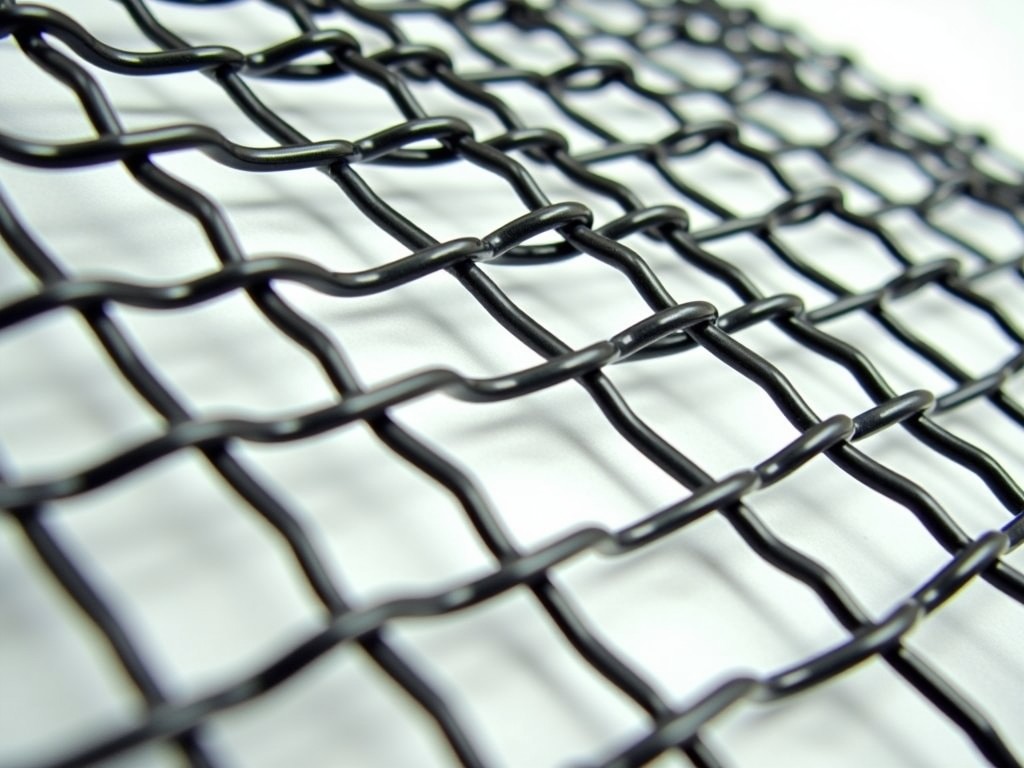
China Wholesale Metal Wire Mesh Fence Supplier
Metal wire mesh fence consists of intersecting steel wires forming a uniform grid, typically produced by weaving or welding and then coated for corrosion resistance. The product is supplied in roll
Metal Wire Mesh Fence – Wholesale Supplier from China
Metal wire mesh fence consists of intersecting steel wires forming a uniform grid, typically produced by weaving or welding and then coated for corrosion resistance. The product is supplied in roll form, allowing rapid installation for perimeter protection, containment, and reinforcement applications.
Material Composition and Properties
The base wire is usually low‑carbon steel (grade Q195 or Q235) with a diameter ranging from 1.2 mm to 4.0 mm. Galvanization follows either hot‑dip (Zn coating 50–300 g/m²) or electro‑galvanizing (10–25 g/m²). For higher corrosion resistance, a PVC or PE coating of 0.3–0.5 mm thickness can be applied over the zinc layer.
- Wire diameter: 1.2 mm – 4.0 mm (customizable)
- Mesh opening: 12 mm × 12 mm to 100 mm × 100 mm (square or rectangular)
- Tensile strength of wire: 350–550 MPa (depending on grade)
- Coating thickness (hot‑dip Zn): 50–300 g/m²
Typical Specification Table
| Parameter | Typical Range | Notes |
|---|---|---|
| Wire Diameter | 1.2 mm – 4.0 mm | Selected per load requirement |
| Mesh Opening | 12 mm – 100 mm (square) | Rectangular options available |
| Roll Height | 0.5 m – 3.0 m | Standard lengths 10 m – 50 m per roll |
| Tensile Strength (wire) | 350–550 MPa | Depends on steel grade |
| Coating Type | Hot‑dip Zn, Electro‑Zn, PVC/PE | Customizable per environment |
Manufacturing Process Overview
Wire is first drawn to the target diameter, then either woven on a loom or welded at intersections. After forming the mesh, the sheet passes through a cleaning line before entering the galvanizing bath (hot‑dip) or electro‑plating line. Optional polymer coating is applied via extrusion or dip‑coating, followed by curing. Final inspection includes visual checks and dimensional verification before rolling.
Applications and Functional Benefits
The open grid provides visibility while restraining animal movement, making it suitable for livestock enclosures and wildlife barriers. In construction, the mesh acts as temporary fencing, concrete reinforcement, and debris containment. Its high tensile strength and corrosion resistance allow long‑term outdoor exposure with minimal maintenance.
- Livestock and poultry fencing
- Wildlife exclusion zones
- Construction site perimeter security
- Concrete formwork and reinforcement
- Sports field and playground boundaries
Customization Options
Buyers can specify wire diameter, opening size, roll dimensions, coating type, and edge finish (knuckle, twisted, or barbed). Length tolerances are typically ±2 % and width tolerances ±5 mm, depending on the weaving equipment.
- Wire diameter: 1.2 mm – 4.0 mm (step 0.2 mm)
- Mesh opening: 12 mm – 100 mm (increments of 2 mm)
- Roll height: 0.5 m – 3.0 m (custom lengths)
- Coating: hot‑dip Zn (50‑300 g/m²), electro‑Zn (10‑25 g/m²), PVC (0.3‑0.5 mm)
- Edge finish: plain knuckle, twisted, or PVC‑capped
Quality Control Philosophy
Each production lot undergoes tensile testing on a sample of wire (ASTM A370), coating thickness measurement (magnetic inductometer), and visual inspection for defects such as missed welds or coating holidays. Dimensional checks are performed on every fifth roll using laser gauges to ensure opening size and roll width remain within tolerance.
Packaging and Logistics
Finished rolls are wrapped in polyethylene film, placed on pallets, and secured with steel strapping. For export, pallets are loaded into 20‑ft or 40‑ft containers with moisture‑absorbent desiccants. Standard pallet dimensions are 1.1 m × 1.1 m, with a maximum load of 2 t per pallet.
Frequently Asked Questions
- Can dimensions be customized? Yes – wire diameter, opening size, roll height, and coating are all adjustable per project requirements.
- What information is required before quotation? Required details include wire diameter, mesh opening, roll length, coating type, quantity, and destination port.
- Which materials are available? Low‑carbon steel (Q195/Q235) with hot‑dip zinc, electro‑zinc, or PVC/PE coatings.
- How is quality inspected? Tensile strength, coating thickness, visual defect checks, and dimensional verification per lot.
- What packaging methods are available? Polyethylene‑wrapped rolls on steel‑strapped pallets; optional crate packing for high‑value orders.