
China Durable Galvanized Wire Mesh Company
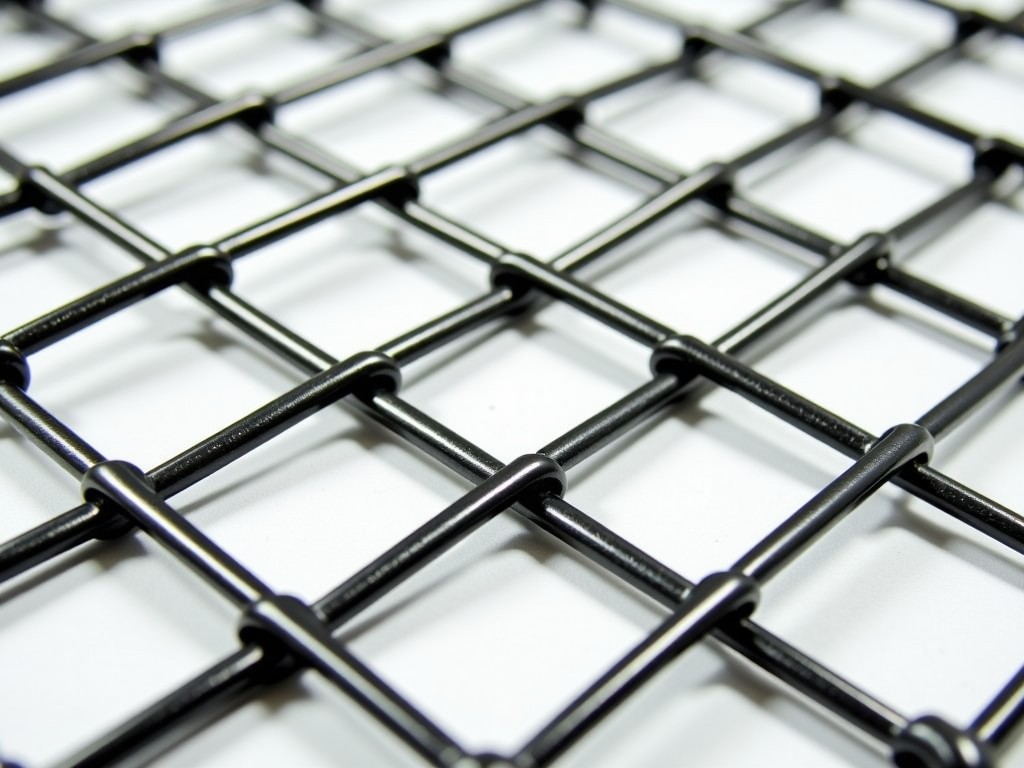
Galvanized wire mesh is produced by drawing low-carbon steel wire to precise diameters, weaving it into a uniform grid, and then applying a zinc coating through hot-dip galvanizing. The coating
China Durable Galvanized Wire Mesh
Overview
Galvanized wire mesh is produced by drawing low-carbon steel wire to precise diameters, weaving it into a uniform grid, and then applying a zinc coating through hot-dip galvanizing. The coating thickness directly influences the mesh’s service life in outdoor or humid environments.
Typical zinc coating weights range from 200 to 350 grams per square meter, providing a barrier that retards rust formation for several years depending on exposure.
Material Characteristics
The base wire is usually cold‑drawn SAE 1008 or equivalent, with a tensile strength of 380 to 420 MPa before coating. After galvanizing, the zinc layer adds negligible tensile contribution but significantly improves corrosion resistance.
Mesh aperture (opening size) can be specified from 6 mm to 100 mm, with wire diameters ranging from 0.8 mm to 4.0 mm. The combination of wire diameter and aperture determines the open area percentage, which affects flow rates in filtration or screening applications.
Manufacturing Process
Wire is first drawn to the target diameter, then cleaned and fluxed before immersion in a molten zinc bath at approximately 450 °C. The dwell time controls the coating weight; typical dwell times produce 275 g/m² coating.
After withdrawal, the mesh is air‑cooled or water‑quenched, then passed through a tension‑leveling station to ensure uniform flatness. Final inspection includes visual checks for coating continuity and dimensional verification of aperture and wire size.
Typical Applications
In construction, galvanized mesh serves as reinforcement for concrete slabs, providing crack control while resisting corrosion from alkaline environments.
Agricultural uses include animal enclosures and crop protection barriers, where the zinc coating withstands exposure to fertilizers and moisture.
Industrial screening equipment employs the mesh for separating granules, powders, or liquids; the open area percentage is selected to match desired throughput and particle size cut‑off.
Quality Assurance
Each batch undergoes coating weight measurement using the gravimetric method, with acceptance criteria of ±10 % of the target value.
Tensile tests on a sample of wire verify that the base metal retains at least 95 % of its pre‑galvanizing strength.
Visual inspection under 10× magnification checks for zinc‑coating defects such as bare spots or excessive dross.
Customization Options
Customers can specify wire diameter, aperture size, roll width, and length. Coating weight can be adjusted between 200 g/m² and 400 g/m² for environments requiring longer service life.
Additional treatments such as PVC coating or powder coating are available upon request for applications needing extra chemical resistance or color coding.
- Wire diameter: 0.8 mm – 4.0 mm (custom increments)
- Aperture: 6 mm – 100 mm (square or rectangular)
- Roll width: up to 2 m
- Length: per customer requirement, up to 500 m per roll
Packaging & Logistics
Mesh rolls are wrapped in polyethylene film, placed on wooden pallets, and secured with steel straps. This protects the zinc coating from abrasion during transit.
For export, pallets are fitted with corner protectors and shrink‑wrapped to meet ISPM‑15 standards. Documentation includes material test certificates and coating weight reports.
Specification Table
| Parameter | Typical Value | Customizable Range |
|---|---|---|
| Wire Diameter | 1.6 mm | 0.8 mm – 4.0 mm |
| Aperture (Opening) | 25 mm × 25 mm | 6 mm – 100 mm |
| Zinc Coating Weight | 275 g/m² | 200 g/m² – 400 g/m² |
| Tensile Strength (Base Wire) | 400 MPa | 380 MPa – 420 MPa |
| Open Area (for 25 mm aperture, 1.6 mm wire) | ≈ 56 % | Varies with geometry |
Frequently Asked Questions
Can dimensions be customized?
Yes, wire diameter, aperture size, roll width, and length are all adjustable to match project specifications.
What information is required before quotation?
Please provide the desired wire diameter, aperture dimensions, coating weight, roll width, total length, and any additional surface treatments.
How is quality inspected?
Each lot is checked for coating weight via gravimetric testing, tensile strength of the base wire, and visual examination for coating continuity.
What packaging methods are available?
Standard packaging uses polyethylene film wrap, palletizing, and steel strapping. Export‑grade packaging includes ISPM‑15 compliant pallets and shrink‑wrap.
How are export shipments protected?
Pallets are corner‑protected, strap‑secured, and shrink‑wrapped to prevent shifting and coating damage during transit.
For technical data sheets, sample requests, or project‑specific quotations, please contact our engineering team.
Request a Quotation