
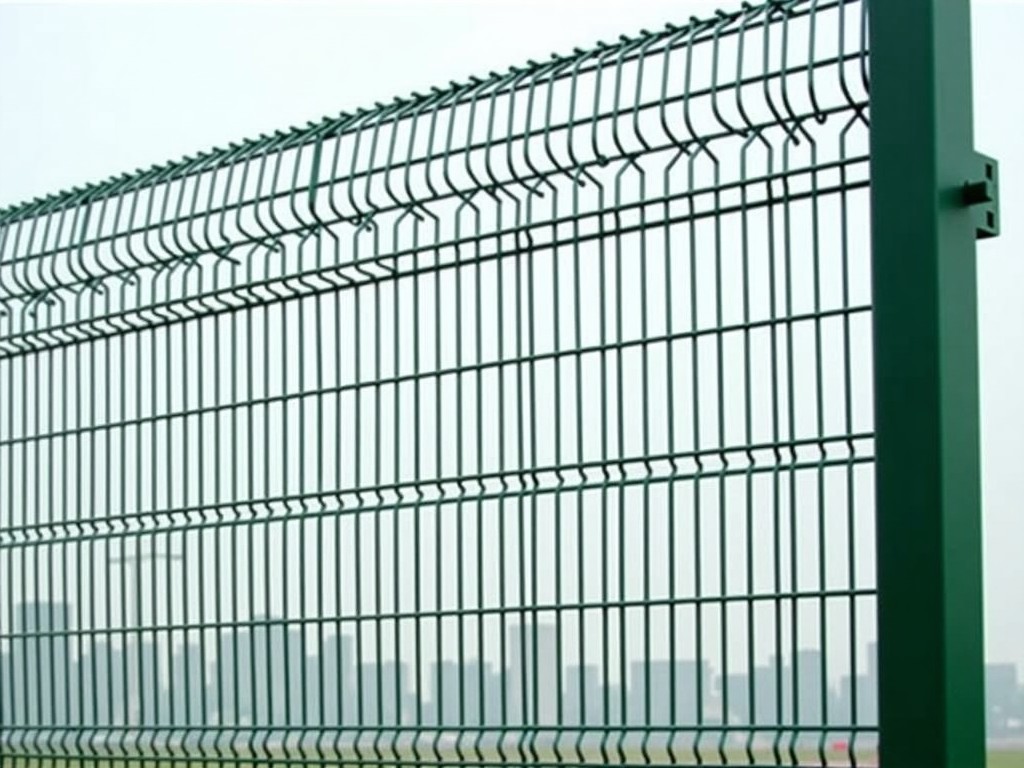
China Custom Wire Mesh Fence Panels Company
Wire mesh fence panels are fabricated by welding or weaving steel wire into a grid pattern, then forming the mesh into rigid sheets that can be installed as perimeter barriers, security enclosures,
Custom Wire Mesh Fence Panels from China Manufacturer
Overview
Wire mesh fence panels are fabricated by welding or weaving steel wire into a grid pattern, then forming the mesh into rigid sheets that can be installed as perimeter barriers, security enclosures, or agricultural fencing. The structural performance depends on wire diameter, opening size, and post‑weld treatment.
Material Options
The base material is low‑carbon steel wire, selected for its weldability and tensile strength. Typical tensile strength ranges from 350 to 550 MPa, depending on the wire grade.
- Wire diameter: 2.0 mm to 6.0 mm (customizable)
- Opening (mesh) size: 25 mm × 25 mm up to 100 mm × 100 mm
- Coating: hot‑dip galvanized zinc (60‑120 g/m²) or PVC‑coated layer (0.2‑0.5 mm thickness)
Customization Parameters
Panels are produced to project‑specific dimensions. The following table shows typical adjustable ranges; exact values are confirmed during quotation.
| Parameter | Adjustable Range | Note |
|---|---|---|
| Panel height | 800 mm – 3000 mm | Limited by handling equipment |
| Panel width | 600 mm – 2500 mm | Standard transport width 2400 mm |
| Wire diameter | 2.0 mm – 6.0 mm | Affects load capacity |
| Opening size | 25 mm × 25 mm – 100 mm × 100 mm | Determines visibility and climb resistance |
| Coating type | Hot‑dip galvanized, PVC, powder | Specify thickness per ISO 1461 or ASTM D1186 |
Manufacturing Considerations
Production begins with wire drawing to the specified diameter, followed by either welding at each intersection (for welded mesh) or weaving (for woven mesh). After forming the mesh, panels are cut to length, then passed through a cleaning line before coating. Proper tension control during welding ensures uniform opening size and prevents distortion.
Coating is applied in a continuous hot‑dip line; zinc bath temperature is maintained around 450 °C to achieve the prescribed coating weight. For PVC coating, the mesh passes through a fluidized bed where powder adheres and is cured at 180‑200 °C.
Quality Control Process
Each batch undergoes dimensional inspection using laser gauges to verify height, width, and opening tolerance (±2 mm). Wire tensile strength is sampled per lot and tested to ASTM A370.
- Coating thickness measured with magnetic induction probe (ISO 1461)
- Visual inspection for weld defects, missed wires, or coating holidays
- Pull‑out test on a sample panel to confirm joint strength (minimum 1.5 kN per weld)
Typical Applications
In industrial facilities, wire mesh fence panels serve as perimeter security where visibility is required for CCTV monitoring. The open mesh reduces wind load compared with solid barriers, lowering structural stress on support posts.
Agricultural installations use smaller opening sizes (25‑50 mm) to contain livestock while allowing airflow and light. The panels can be mounted on wooden or steel posts with standard brackets.
Temporary construction sites often select PVC‑coated panels for corrosion resistance in humid environments, with quick‑release clamps for fast installation and removal.
Frequently Asked Questions
Can dimensions be customized?
Yes. Panel height, width, wire diameter, and opening size are adjusted according to project drawings. Provide the required measurements and any load specifications.
What information is required before quotation?
We need the intended panel size, wire diameter, mesh opening, coating type, quantity, and delivery destination. If the panel will support a specific load (e.g., wind pressure), include that data.
What materials are available?
Base wire is low‑carbon steel. Coating options include hot‑dip galvanized zinc (per ISO 1461), PVC coating, and powder coating. Custom alloys can be sourced upon request.
How is quality inspected?
Dimensional checks, tensile sampling, coating thickness measurement, and visual inspection are performed on every lot. Test reports are available with shipment.
What packaging methods are available?
Panels are stacked flat, separated by corrugated cardboard, and secured with steel straps. For export, panels are placed in wooden crates or metal skids with moisture‑barrier film.
Request a Quote
To begin a technical review, send your project specifications to our engineering team. We will return a detailed quotation, including lead time and packaging options.
Contact Us