
China Custom Razor Wire Mesh Manufacturer
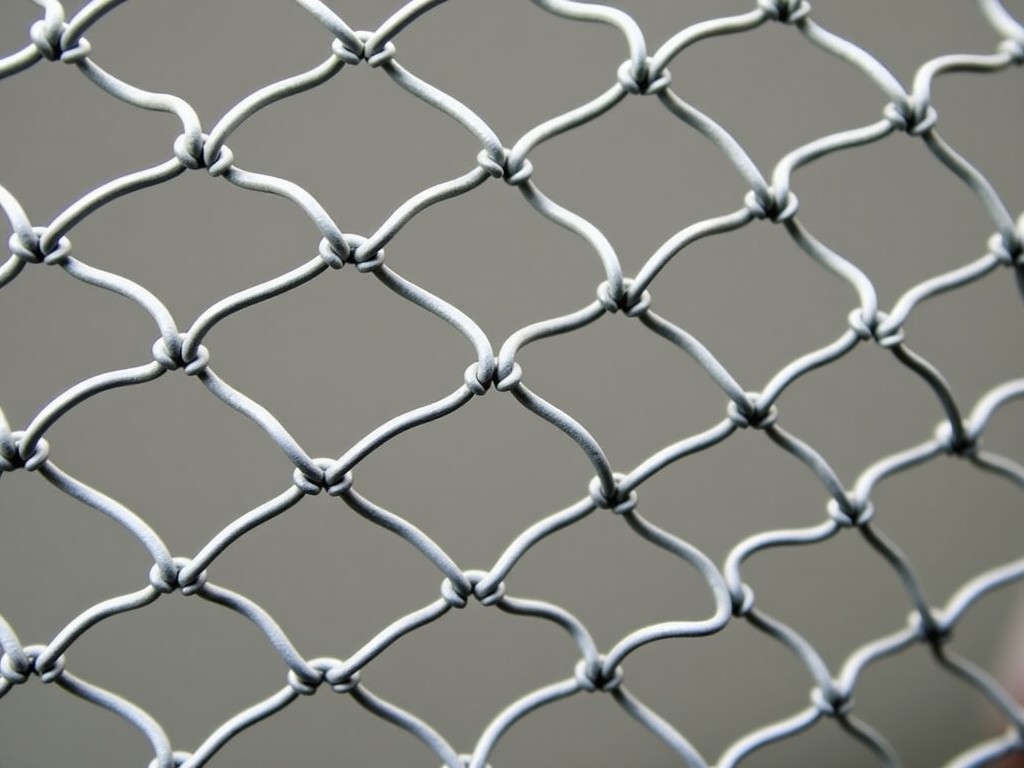
Razor wire mesh consists of high‑tensile steel wires formed into a helical coil with sharp barbs spaced at regular intervals. The geometry creates a continuous barrier that resists cutting and
China Custom Razor Wire Mesh Manufacturer
Razor wire mesh consists of high‑tensile steel wires formed into a helical coil with sharp barbs spaced at regular intervals. The geometry creates a continuous barrier that resists cutting and climbing while maintaining flexibility for installation on uneven terrain. Customization allows the wire diameter, coil pitch, barb length, and coating to match specific security levels and environmental conditions.
Core Technical Characteristics
Key parameters include wire gauge (typically 2.0 mm to 3.5 mm diameter), mesh opening (distance between adjacent coils, usually 50 mm to 150 mm), coil height (overall barrier height), and tensile strength of the base steel (often ≥ 550 MPa). These values determine the resistance to deformation under impact and the longevity of the barrier in outdoor exposure.
| Parameter | Typical Range | Notes |
|---|---|---|
| Wire Diameter | 2.0 mm – 3.5 mm | Selected based on required tensile strength |
| Mesh Opening (Coil Pitch) | 50 mm – 150 mm | Affects visibility and ease of installation |
| Coil Height | 1.8 m – 3.0 m (customizable) | Determines overall barrier height |
| Tensile Strength | ≥ 550 MPa | Typical for low‑alloy high‑strength steel |
| Coating Type | Hot‑dip galvanized, Galfan, PVC, Stainless steel | Chosen per corrosion environment |
Material Options
The base wire can be produced from low‑carbon steel, high‑strength alloy steel, or austenitic stainless steel depending on corrosion risk and load requirements. Surface treatments range from standard hot‑dip zinc coating (≈ 60 g/m²) to zinc‑aluminum alloy (Galfan) for extended life, or polymer coatings for aesthetic or extra chemical resistance.
- Low‑carbon steel with hot‑dip galvanization – economical for mild climates
- High‑strength alloy steel with Galfan coating – suited for coastal or industrial atmospheres
- Austenitic stainless steel (grade 304 or 316) – preferred where chloride exposure is high
- PVC‑coated steel – available in various colors for visual integration
Customization Parameters
Beyond material selection, the geometry of the razor wire mesh can be tuned to meet site‑specific security criteria. Adjustable features include coil diameter (which influences stiffness), barb length and spacing (affecting deterrence), and overall roll length (determining continuous installation length).
- Coil diameter: 45 mm – 80 mm (controls flexibility vs rigidity)
- Barb length: 15 mm – 30 mm (longer barbs increase cut resistance)
- Barb spacing: 25 mm – 100 mm (closer spacing yields higher obstacle density)
- Roll length: 5 m – 50 m per roll (custom lengths reduce splices)
- End treatments: looped, straight, or welded terminals for anchoring
Industrial Applications
Razor wire mesh is deployed where a physical deterrent must resist tampering while allowing rapid deployment. Its high tensile strength and sharp geometry make it suitable for perimeter security of critical infrastructure, correctional facilities, military bases, and high‑value storage sites. The product’s flexibility enables installation on sloped terrain, uneven walls, or temporary fencing systems.
- Critical infrastructure perimeter: Provides a climb‑resistant barrier that delays intrusion attempts, giving security forces response time.
- Correctional facility walls: The sharp barbs deter cutting tools and reduce the likelihood of successful escape.
- Military forward operating bases: Rapid‑deploy rolls can be uncoiled and secured to create immediate perimeter defense.
- Warehouse and logistics yards: Protects high‑value cargo against pilferage when combined with surveillance systems.
Quality Control & Testing
Manufacturing follows a documented inspection plan that checks dimensional tolerances, coating adhesion, and mechanical properties before shipment. Each lot undergoes visual inspection for defects, mandrel bend testing to assess ductility, and pull‑out tests on sample barbs to verify anchoring strength.
Packaging & Logistics
Finished rolls are wrapped in UV‑stabilized polyethylene film to prevent surface abrasion during transit. Rolls are then placed on pallets with corner protectors and secured with steel straps for container loading. For long‑distance shipments, moisture‑absorbing desiccants are included to maintain coating integrity.
Lead Time & Sampling
Standard production lead time ranges from 3 weeks to 6 weeks depending on order complexity and current capacity. Sample sections (typically 1 m length) can be provided upon request to verify coating finish, barb sharpness, and flexibility before full‑scale production.
Frequently Asked Questions
- Can dimensions be customized? Yes, wire diameter, coil pitch, barb length, spacing, and overall height are all adjustable per project specifications.
- What information is required before quotation? Required details include desired wire gauge, coating type, dimensions (height, length), quantity, delivery destination, and any special end‑treatment needs.
- What materials are available? Low‑carbon steel, high‑strength alloy steel, and austenitic stainless steel (grades 304/316) with galvanized, Galfan, PVC, or bare finishes.
- How is quality inspected? Each batch undergoes visual inspection, dimensional verification, coating adhesion testing (cross‑cut or pull‑off), and mechanical testing (tensile strength, barb pull‑out).
- What packaging methods are available? Standard packaging uses UV‑stabilized film wrapping, palletization, and steel strapping; custom crating or container‑specific solutions can be arranged.
- How are export shipments protected? Packing includes moisture barriers, desiccant packs, and corner boards to resist corrosion and mechanical damage during transit.
- What is the typical production lead time? Lead time varies from 3 weeks to 6 weeks depending on order size and customization level; exact timing is confirmed at order acknowledgement.
- How are samples arranged? Sample rolls (usually 1 m) are produced after specification approval and shipped via express courier, with costs credited against the first purchase order.