
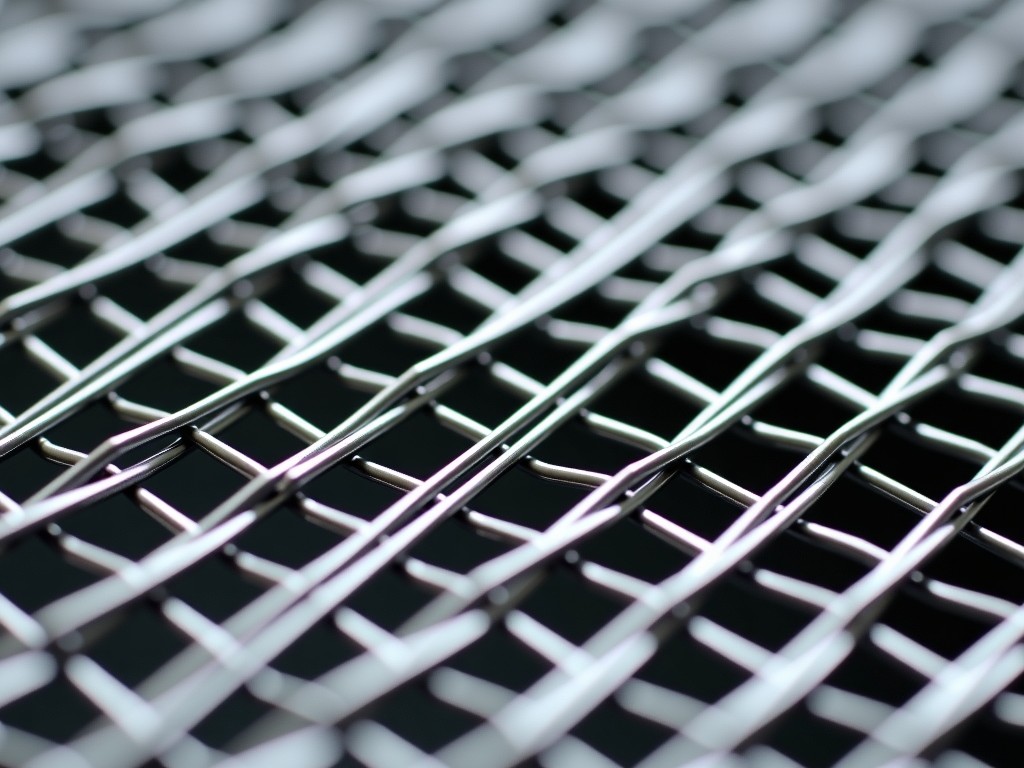
Ce Certified Wire Net Top Factory
Wire net tops are manufactured as reinforced mesh panels that serve as protective covering for bulk storage containers, pallet cages, and material handling equipment. The CE certification indicates
CE Certified Wire Net Top Factory
Wire net tops are manufactured as reinforced mesh panels that serve as protective covering for bulk storage containers, pallet cages, and material handling equipment. The CE certification indicates conformity with European safety, health, and environmental protection requirements, specifically addressing mechanical strength and corrosion resistance under defined load conditions.
Technical Specifications
Standard panels are produced from low‑carbon steel wire with a diameter range of 2.0 mm to 4.0 mm, welded at intersections to form a square or rectangular aperture. Aperture sizes typically range from 25 mm × 25 mm to 50 mm × 50 mm, providing a balance between visibility and containment efficiency.
The wire undergoes a hot‑dip galvanizing process (minimum zinc coating 55 µm) or alternatively a pre‑galvanized finish, delivering a corrosion‑resistance rating suitable for indoor and sheltered outdoor environments. Tensile strength of the base wire is ≥ 350 MPa, ensuring the panel retains shape under uniform loads up to 1.5 kN/m² without permanent deformation.
Typical Applications
In logistics warehouses, wire net tops prevent loose items from falling during stacking while allowing visual inspection and airflow. Manufacturing facilities use them as safety guards around conveyor belts, where the open mesh reduces dust accumulation compared with solid sheets.
Agricultural operations employ the nets as protective covers for feed silos and grain bins, where the corrosion‑resistant coating withstands exposure to moisture and mild chemical vapors. The CE mark assures that the product meets the Machinery Directive 2006/42/EC for safety components used in industrial equipment.
Quality Assurance and Certification
Each production batch undergoes dimensional verification using laser‑scanned gauges, with tolerances held to ± 0.5 mm on wire diameter and ± 1 mm on aperture spacing. Mechanical testing includes a uniform load test per EN 1090‑3, where the deflection at maximum load must not exceed 2 mm.
Surface coating thickness is measured by magnetic induction, confirming compliance with EN ISO 1461 for hot‑dip galvanizing. The CE marking is affixed only after a factory production control audit verifies that the welding process meets EN ISO 15614‑1 standards for arc welding of steel.
Customization Options
- Wire diameter: 2.0 mm, 2.5 mm, 3.0 mm, 3.5 mm, 4.0 mm (custom sizes available upon request)
- Aperture patterns: square 20 mm–60 mm, rectangular 20 mm×40 mm, hexagonal configurations
- Panel dimensions: width up to 2000 mm, length up to 3000 mm; custom cutting to fit specific containers
- Finish: hot‑dip galvanized, pre‑galvanized, powder‑coated (RAL colors), or stainless steel (AISI 304/316) for corrosive environments
- Edge treatment: folded hem, welded frame, or PVC‑coated safety edges
Specification Table
| Parameter | Typical Value | Customizable Range |
|---|---|---|
| Wire Diameter | 3.0 mm | 2.0 mm – 4.0 mm |
| Aperture Size | 30 mm × 30 mm | 20 mm – 60 mm (square or rectangular) |
| Panel Thickness (including wire) | ≈ 6 mm | 4 mm – 8 mm depending on diameter |
| Tensile Strength of Wire | ≥ 350 MPa | 300 MPa – 550 MPa (higher grades available) |
| Zinc Coating (hot‑dip) | 55 µm min. | 40 µm – 100 µm |
| Maximum Uniform Load | 1.5 kN/m² | Up to 3.0 kN/m² with reinforced framing |
Frequently Asked Questions
Can the wire net tops be supplied with custom dimensions?
Yes. Panels can be cut to specific widths and lengths up to the maximum coil size, and custom apertures are achievable by adjusting the welding pitch during production.
What information is required for a quotation?
Required details include wire diameter, aperture size, overall dimensions, desired finish (galvanized, powder‑coated, stainless), quantity, and any special edge treatments.
How is quality inspected before shipment?
Each lot undergoes dimensional checks, tensile strength sampling, and coating thickness measurement. A test certificate EN 10204‑3.1 is provided upon request.
What packaging methods are used for export?
Panels are stacked flat, separated by corrugated cardboard, and secured with steel straps on pallets. For overseas shipments, moisture‑barrier wrapping and corner protectors are added.
Contact Us
For technical data sheets, sample requests, or project‑specific pricing, please reach out to our engineering team.
Request Quote