
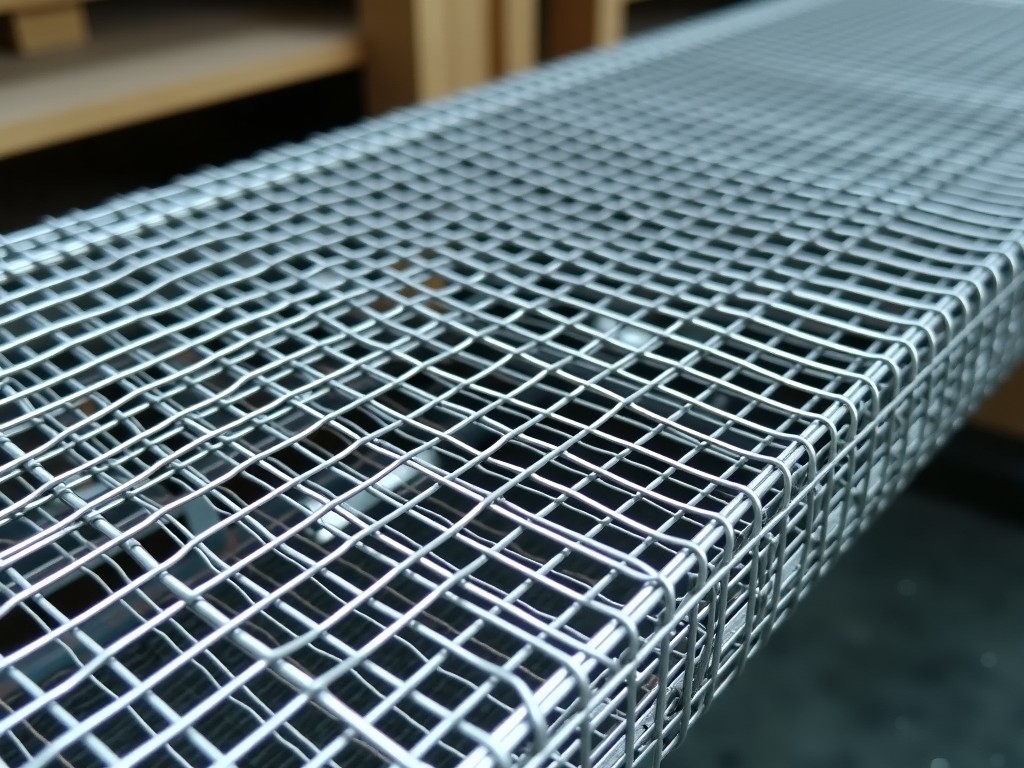
Bulk Wire Net Wholesale Top Supplier
Bulk wire net, also known as welded wire mesh or wire netting, consists of intersecting wires joined at each crossover by resistance welding. The product is supplied in large rolls or sheets for
Bulk Wire Net Wholesale – Technical Overview
Bulk wire net, also known as welded wire mesh or wire netting, consists of intersecting wires joined at each crossover by resistance welding. The product is supplied in large rolls or sheets for applications that require a uniform opening size, consistent tensile strength, and resistance to deformation under load.
Material Composition and Mechanical Properties
The base wire is typically low‑carbon steel (SAE 1008/1010) with a carbon content below 0.10 % to ensure good weldability. Depending on the environment, the wire may be hot‑dip galvanized (Zn coating ≥ 55 g/m²), electro‑galvanized, or coated with a PVC layer for additional corrosion protection.
- Tensile strength of the wire: 350–450 MPa (cold‑drawn).
- Yield strength: approximately 250 MPa.
- Elongation at break: 10–15 %.
- Opening size tolerance: ± 0.5 mm for standard meshes.
Standard Configurations and Dimensions
| Parameter | Typical Range | Notes |
|---|---|---|
| Wire diameter | 0.8 mm – 3.0 mm | Selected based on load requirement. |
| Aperture (opening) | 6 mm – 100 mm | Square or rectangular options. |
| Roll width | 0.5 m – 2.5 m | Custom widths available on request. |
| Roll length | 10 m – 100 m | Longer lengths supplied as spliced rolls. |
| Tensile strength of mesh | 150–300 kN/m (depends on wire & aperture) | Measured per EN 10223‑3. |
Manufacturing Process and Quality Assurance
- Wire is drawn to target diameter and cleaned.
- Wires are fed into a precision welding machine where intersecting points are resistance‑welded under controlled pressure and current.
- The welded sheet passes through a tension leveler to ensure flatness.
- Galvanizing or coating is applied post‑weld, followed by cooling and inspection.
- Final inspection includes visual defect check, aperture measurement with calibrated gauges, and tensile testing on sample coupons.
Typical Industrial Applications
In concrete reinforcement, the mesh provides uniform crack control and distributes tensile stresses across slabs and walls. The consistent aperture allows concrete to flow freely while maintaining adequate embedment length for the wires.
For fencing and enclosure systems, the welded joints resist separation under impact, and the galvanized coating extends service life in outdoor environments. The mesh can be tensioned between posts without sagging due to its inherent stiffness.
In filtration and separation, the precise opening size retains particles above a specified diameter while allowing fluid or air passage, making it suitable for screening aggregates, grain, or wastewater solids.
Customization Options
- Wire diameter adjustments from 0.5 mm to 4.0 mm.
- Non‑standard aperture shapes (hexagonal, oval) available upon request.
- Alternative coatings: hot‑dip Zn‑Al alloy, epoxy powder, or stainless steel (AISI 304/316).
- Edge treatments: folded, rolled, or welded fringe for easier handling.
- Custom roll lengths and widths to match specific conveying or installation equipment.
Packaging, Shipping, and Handling
Mesh rolls are wrapped in polyethylene shrink film to protect against moisture and mechanical damage during transit. Each roll is labeled with product code, wire diameter, aperture, coating type, and length. Palletized shipments use corner protectors and stretch film to prevent shifting. For long‑distance export, rolls are placed in sealed containers with desiccant packs to maintain coating integrity.
Frequently Asked Questions
- Can the wire net be supplied with custom lengths?
- Yes, rolls can be cut to specific lengths or spliced to meet project requirements; tolerances are typically ± 25 mm.
- What information is needed for a quotation?
- Please provide wire diameter, aperture size, coating type, roll width, estimated quantity, and delivery destination.
- How is weld integrity verified?
- Each batch undergoes pull‑out testing on a minimum of five weld points per square meter, with results recorded in the mill test certificate.
- Are there minimum order quantities?
- Standard stock items have no MOQ; custom specifications usually start at 500 kg.