
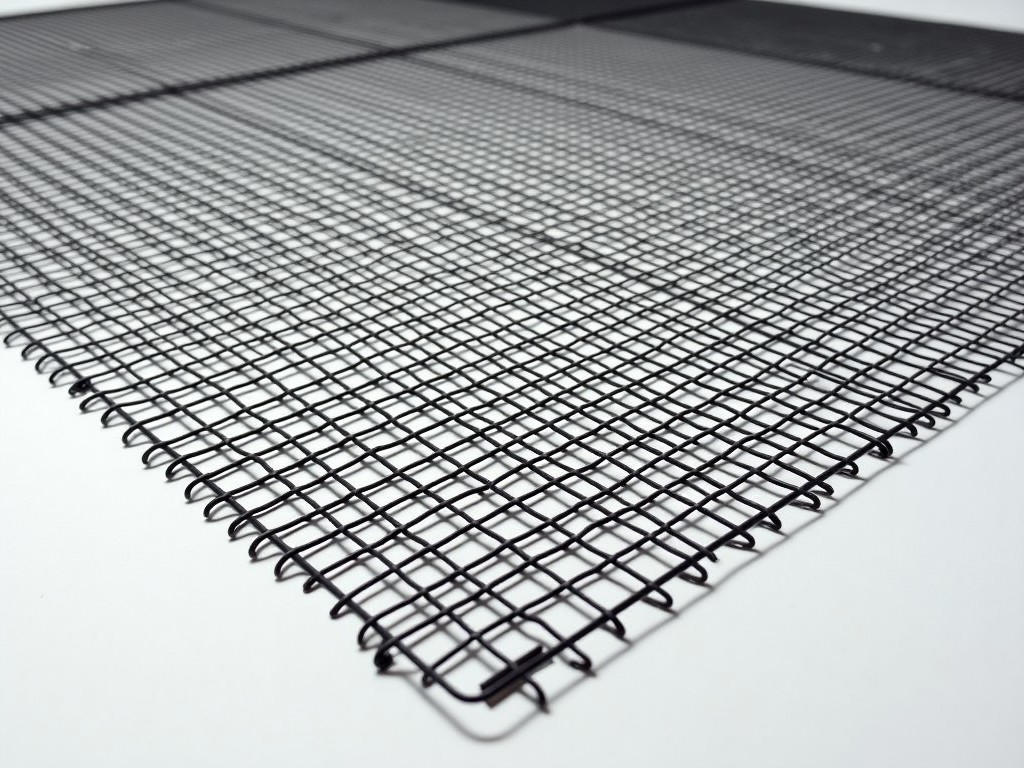
Bulk Wire Mesh Panels Custom Manufacturer
Wire mesh panels are fabricated assemblies of intersecting wires forming a regular grid of openings. They serve as screening, reinforcement, filtration, and containment elements where precise
Bulk Wire Mesh Panels – Custom Manufacturer
Wire mesh panels are fabricated assemblies of intersecting wires forming a regular grid of openings. They serve as screening, reinforcement, filtration, and containment elements where precise aperture control and mechanical strength are required.
Material Options
Base materials are selected according to environmental exposure, load requirements, and fabrication method. Low‑carbon steel offers high tensile strength and economical cost for dry indoor applications. Stainless steel grades 304 and 316 provide chromium‑nickel alloy resistance to oxidation and chloride attack, suitable for wet or chemically aggressive environments. Hot‑dip galvanized steel adds a zinc coating that extends service life in outdoor atmospheres.
Customization Capabilities
Every panel can be tuned to match process geometry and performance targets. Adjustable parameters include wire diameter, opening size, overall dimensions, edge finishing, and surface treatment.
- Wire diameter: selectable from 2 mm to 6 mm in 0.5 mm increments.
- Opening size (mesh): ranging from 3 mm square to 50 mm square, with rectangular options available.
- Panel width: up to 2 m standard; wider panels fabricated by butt‑joining with overlapping seams.
- Panel length: typically produced in coils or cut‑to‑length up to 6 m; custom lengths negotiated per project.
Edge options comprise plain cut, welded fringe, or framed with steel angles for added rigidity. Surface treatments include bare metal, powder coating, PVC coating, or hot‑dip galvanizing after fabrication to meet corrosion‑resistance specifications.
Manufacturing Considerations
Panels are produced either by weaving precrimped wires on a loom or by electric resistance welding of pre‑cut wires. Weaving yields flexible sheets with uniform tensile distribution, while welding provides rigid panels with high shear resistance at the joints. Tolerances on wire diameter are typically ±0.05 mm; opening dimensions are held within ±1 mm for meshes under 20 mm and ±2 mm for larger apertures.
Applications
In mining operations, panels with 10 mm–30 mm openings act as scalping screens that remove oversize rock before primary crushing, reducing wear on downstream equipment. Concrete reinforcement uses welded mesh with 4 mm wire and 100 mm square openings to distribute tensile stresses and control cracking in slabs and walls. Agricultural fencing employs galvanized panels with 50 mm×100 mm rectangular apertures to contain livestock while allowing visibility and airflow. Filtration systems in chemical plants rely on stainless‑steel meshes with sub‑5 mm openings to separate solids from liquids under pressure, where corrosion resistance and cleanability are critical.
Quality Assurance
Inspection begins with raw‑material certification, verifying chemical composition and mechanical properties. Dimensional checks use calibrated calipers and optical comparators to confirm wire diameter, opening size, and panel squareness. Tensile testing of representative samples ensures the wire meets the specified yield strength, typically 350 MPa for low‑carbon steel and 500 MPa for stainless‑steel grades. Coating thickness is measured with magnetic induction probes for galvanized layers and ultrasonic devices for polymer finishes. Visual inspection under standardized lighting identifies surface defects such as missed welds, protrusions, or coating holidays.
Technical Specifications
| Property | Value (Customizable) |
|---|---|
| Wire Diameter | 2 mm – 6 mm (standard increments) |
| Opening Size (Mesh) | 3 mm – 50 mm square; rectangular options |
| Panel Width | Up to 2 m (wider by joining) |
| Panel Length | Up to 6 m cut‑to‑length; custom lengths |
| Base Material | Low‑carbon steel, SS 304, SS 316, Hot‑dip Galvanized |
| Tensile Strength (Wire) | 350 MPa (low‑carbon) – 500 MPa (SS) |
| Coating Thickness (Galvanized) | 55 µm – 85 µm (typical) |
| Surface Finish Options | Bare, Powder‑coat, PVC‑coat, Post‑galvanize |
Frequently Asked Questions
Can dimensions be customized?
Yes. Wire diameter, opening size, width, and length are all adjustable to match the specific layout and performance criteria of your process.
What information is required before quotation?
We need the desired wire diameter, aperture geometry, overall panel dimensions, material grade, edge treatment, and any surface‑coating specification. Quantities and delivery schedule also affect pricing.
What materials are available?
Standard offerings include low‑carbon steel, stainless steel 304/316, and hot‑dip galvanized steel. Specialty alloys such as duplex stainless or aluminum are available upon request.
How is quality inspected?
Inspection includes material certification, dimensional verification, tensile testing of wire samples, coating thickness measurement, and visual examination for defects.
What packaging methods are available?
Panels are bundled with steel straps, placed on wooden pallets, and wrapped with UV‑stabilized polyethylene film. For export, crating with corner protectors and moisture‑barrier liners is provided.
What is the typical production lead time?
Lead time ranges from 2 weeks for standard specifications to 5‑6 weeks for customized alloys or special coatings, depending on order volume and current capacity.
Contact for Custom Quote
To discuss your project requirements, share the technical parameters listed above. Our engineering team will review the details and return a detailed quotation with lead‑time and packaging options.
Request a Quote