
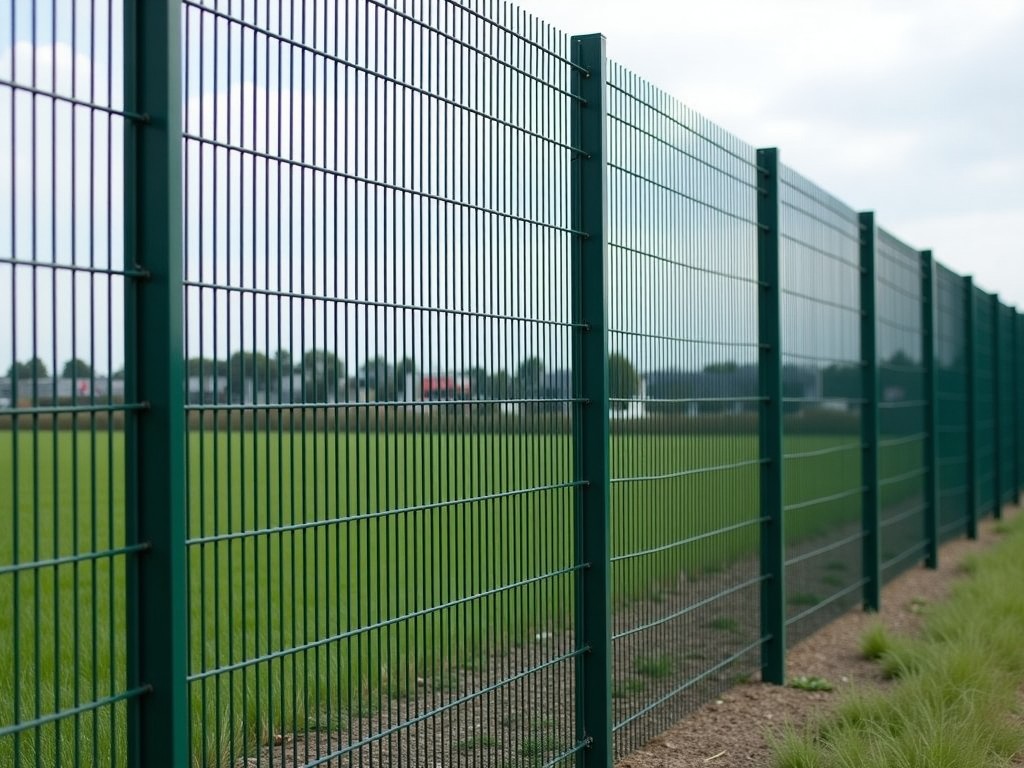
Bulk Wire Mesh Fence Custom Company
Bulk wire mesh fence consists of welded or woven steel wire forming a uniform aperture pattern, supplied in continuous rolls or prefabricated panels for large‑scale perimeter projects. The product
Bulk Wire Mesh Fence – Custom Solutions for Industrial Applications
Overview
Bulk wire mesh fence consists of welded or woven steel wire forming a uniform aperture pattern, supplied in continuous rolls or prefabricated panels for large‑scale perimeter projects.
The product functions as a physical barrier while maintaining visibility and airflow, which is essential for sites requiring surveillance, ventilation, or light transmission.
Typical specifications include wire diameters from 2.0 mm to 4.0 mm, aperture sizes ranging from 25 mm × 25 mm to 100 mm × 100 mm, and tensile strengths exceeding 350 MPa for low‑carbon steel.
Material and Coating Options
Base wire is selected according to environmental exposure and mechanical requirements. Low‑carbon steel offers cost‑effectiveness for indoor or mildly corrosive settings.
For outdoor installations, hot‑dip galvanization provides a zinc coating typically between 60 g/m² and 120 g/m², extending service life to 15‑20 years in moderate climates.
PVC‑coated variants add a polymer layer of 0.5 mm‑1.0 mm thickness, available in colors such as green, black, or gray to meet aesthetic or camouflage needs.
Stainless steel wire (grades 304 or 316) is chosen when chloride exposure or strict hygiene standards dictate superior corrosion resistance.
| Material | Typical Wire Diameter (mm) | Coating / Finish | Approx. Service Life (years) |
|---|---|---|---|
| Low‑carbon steel | 2.0‑4.0 | Plain / oil‑treated | 5‑8 (indoor) |
| Hot‑dip galvanized | 2.0‑4.0 | Zn 60‑120 g/m² | 15‑20 |
| PVC‑coated | 2.5‑3.5 | PVC 0.5‑1.0 mm | 12‑18 |
| Stainless steel 304 | 2.0‑3.0 | Plain (passivated) | 20‑25 |
Customization Parameters
Height is defined by the number of mesh rows and can be fabricated from 0.9 m up to 3.0 m without splicing, reducing on‑site joints.
Roll length is adjustable; standard spools hold 50 m of wire, but lengths up to 200 m are available upon request to match project layout and minimize waste.
Aperture geometry can be shifted from square to rectangular (e.g., 50 mm × 100 mm) to accommodate specific intrusion‑prevention or animal‑control requirements.
Edge treatments include knuckled (smooth) for safety, twisted for increased rigidity, or barbed tops for deterrence, each defined by wire gauge and bend radius.
Posts, tension wires, and fixing accessories are supplied as compatible kits, allowing the fence to be installed as a complete system.
Typical Applications
In mining and quarry sites, the fence provides a permeable barrier that contains debris while allowing ventilation and visual monitoring of blast zones.
Warehouse yards use the mesh to delineate loading docks and storage zones, offering impact resistance against forklift contact while preserving line‑of‑sight for inventory checks.
Agricultural operations deploy the fence to exclude livestock from crop fields; the small aperture prevents hoof penetration while permitting sunlight and rain.
Temporary construction perimeters benefit from the lightweight roll format, enabling rapid deployment and removal without heavy equipment.
Across these uses, the product’s combination of tensile strength, corrosion protection, and open area reduces long‑term maintenance costs compared with solid panel alternatives.
Quality Control and Testing
Each batch undergoes tensile testing on a representative wire sample, confirming that ultimate tensile strength meets or exceeds the specified 350 MPa for low‑carbon steel.
Coating thickness is verified via magnetic induction or gravimetric methods, ensuring galvanized layers fall within the 60‑120 g/m² range.
Aperture dimensions are inspected using calibrated gauges; tolerances are held to ±2 mm for square openings and ±3 mm for rectangular.
Visual inspection checks for weld consistency, wire uniformity, and absence of defects such as cracks or excessive oxidation before packaging.
Traceability is maintained through lot numbers stamped on each roll, linking raw‑material certificates to finished‑goods documentation.
Packaging and Logistics
Rolls are wound onto steel or plastic cores with diameters of 150 mm or 300 mm, depending on length, to prevent deformation during transit.
Protective wrapping consists of UV‑stabilized polyethylene film, followed by corner protectors and stretch‑film securing to pallets.
Standard pallet size is 1.1 m × 1.1 m, holding up to 12 rolls; pallets are strapped and labeled with product code, length, weight, and handling instructions.
For container shipment, 20‑foot units accommodate approximately 24 pallets, optimizing freight cost while maintaining product integrity.
All packages include a packing list and a material safety data sheet where applicable, facilitating customs clearance and site receipt.
Frequently Asked Questions
A: Yes, heights up to 3.0 m are produced as a single piece; taller configurations use overlapping sections with approved splice plates.
A: Desired height, length, wire diameter, aperture size, material/coating type, and any edge treatment or accessory requirements.
A: Tensile strength, coating thickness, aperture dimensions, and visual checks are performed on each lot, with results retained in the quality record.
A: Rolls are packed on pallets with polyethylene film, corner protection, and stretch‑film; custom crating is available upon request.
A: Lead times range from 2‑4 weeks for standard specifications; customized orders may require an additional week for tooling and setup.
Get Started
Provide your project dimensions, material preferences, and any accessory needs to receive a detailed quotation and lead‑time estimate.
Request a Quote