
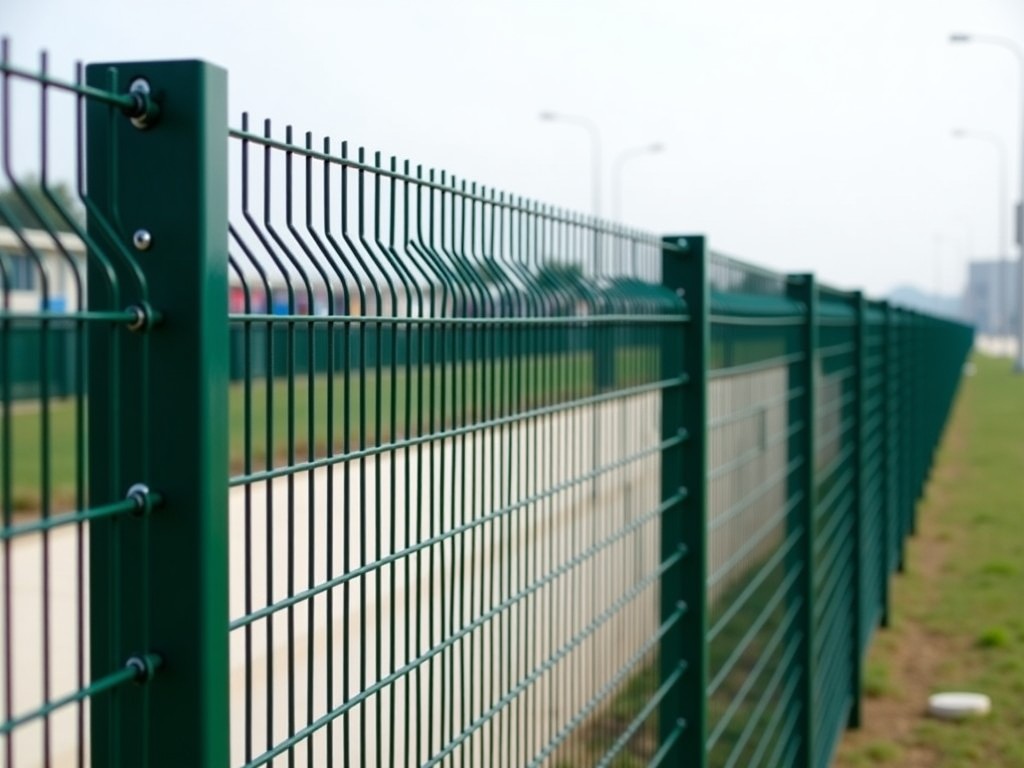
Bulk Oem Metal Wire Fence Supplier
Selecting a wire fence for large‑scale OEM projects requires clear data on tensile strength, coating durability, and dimensional tolerances. This page outlines the engineering parameters that
Bulk OEM Metal Wire Fence Supplier
Selecting a wire fence for large‑scale OEM projects requires clear data on tensile strength, coating durability, and dimensional tolerances. This page outlines the engineering parameters that influence performance and long‑term value.
Material Characteristics
The base wire is typically low‑carbon steel with a carbon content of 0.08‑0.13 %, providing a yield strength around 350 MPa before coating. Galvanization adds a zinc layer of 55‑85 g/m², which improves corrosion resistance in humid environments. For marine or chemical exposure, a PVC‑coated variant offers a polymer thickness of 0.3‑0.5 mm and a salt‑spray endurance exceeding 1,000 hours.
- Base steel: low‑carbon, 0.08‑0.13 % C
- Yield strength (pre‑coat): ≈350 MPa
- Galvanized zinc coating: 55‑85 g/m²
- PVC coating thickness: 0.3‑0.5 mm
Customization Options
OEM buyers often need specific opening sizes, wire diameters, and panel lengths to match equipment guards or perimeter barriers. Customization is driven by the required aperture, load‑bearing capacity, and installation method.
- Wire diameter: 1.2 mm to 4.0 mm (in 0.2 mm increments)
- Mesh opening: 12 mm × 12 mm up to 100 mm × 100 mm
- Panel width: 0.5 m to 3.0 m
- Panel length: 1.0 m to 6.0 m (custom lengths available)
- Coating types: hot‑dip galvanized, electro‑galvanized, PVC‑coated, powder‑coated
Typical Applications
Wire fences serve as protective enclosures where visibility, airflow, and light transmission are required. In automotive assembly lines, they guard robotic work cells while allowing sensor sightlines. In agricultural equipment, they contain livestock without compromising ventilation. In construction site perimeter systems, they provide a climb‑deterrent that meets OSHA 1926.502(b)(2) for temporary barriers.
Quality Assurance
Each production lot undergoes dimensional verification using calibrated calipers (±0.05 mm tolerance) and tensile testing per ASTM A370. Coating thickness is measured with a magnetic gauge (±1 µm). Visual inspection checks for uniform coverage, absence of pinholes, and proper weld integrity at panel joints.
Packaging and Logistics
Panels are stacked flat on pallets with interleaving cardboard sheets to prevent surface abrasion. Standard pallet size is 1.1 m × 1.1 m, holding up to 2 tonnes of product. For overseas shipments, heat‑treated wooden pallets comply with ISPM 15, and optional corrosion‑inhibiting vapor bags are available upon request.
Specification Table
| Parameter | Typical Range | Notes |
|---|---|---|
| Wire Diameter | 1.2 mm – 4.0 mm | Select based on load requirement |
| Mesh Opening | 12 mm – 100 mm | Square or rectangular options |
| Zinc Coating (Galvanized) | 55‑85 g/m² | Hot‑dip process |
| PVC Coating Thickness | 0.3‑0.5 mm | Available in black, green, grey |
| Tensile Strength (Wire) | 450‑550 MPa (post‑coat) | ASTM A370 test method |
Frequently Asked Questions
- Can dimensions be customized? Yes, wire diameter, opening size, panel width and length are adjustable to project specifications.
- What information is required before quotation? Required details include wire diameter, mesh opening, coating type, panel dimensions, quantity, and delivery destination.
- Which materials are available? Low‑carbon steel with hot‑dip galvanized, electro‑galvanized, PVC‑coated, or powder‑coated finishes.
- How is quality inspected? Dimensional checks, tensile testing, coating thickness measurement, and visual inspection per lot.
- What packaging methods are available? Flat‑stacked pallets with cardboard interleaving; optional vapor‑protected bags for export.
For technical data sheets, sample requests, or to discuss a specific OEM requirement, please use the link below.
Contact Technical Sales