
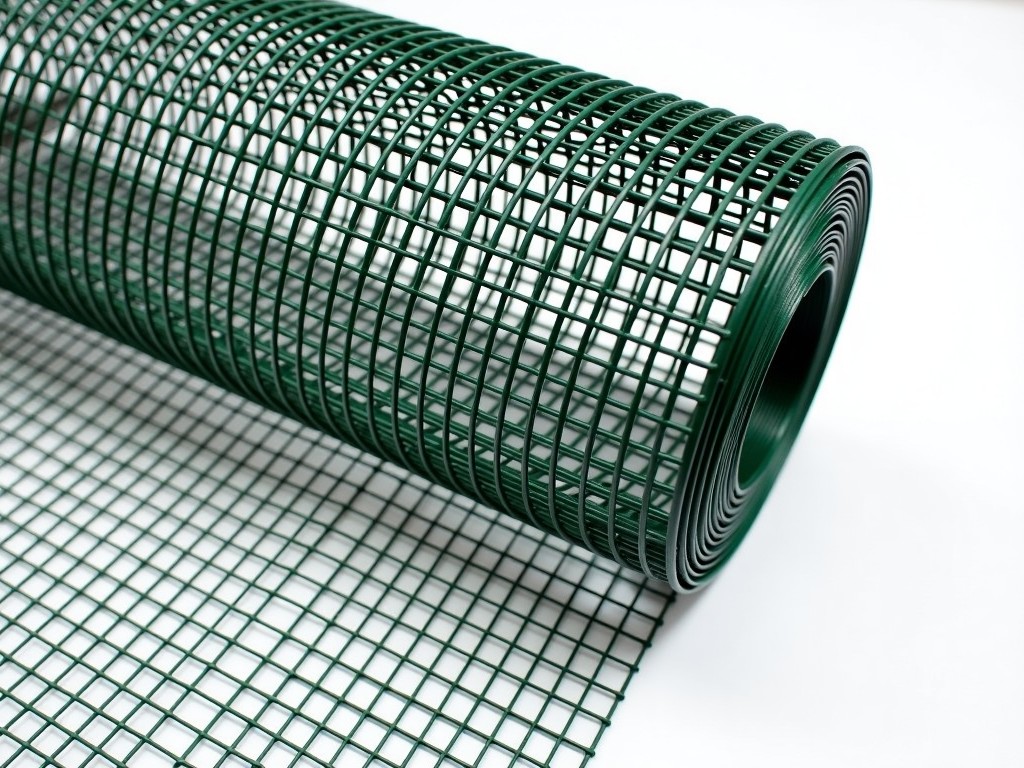
B2B Welded Steel Bird Wire Mesh Roll Supplier
Welded steel bird wire mesh roll is a prefabricated barrier formed by intersecting steel wires at right angles and fusing them at each junction through resistance welding. The resulting grid provides
B2B Welded Steel Bird Wire Mesh Roll Supplier
Welded steel bird wire mesh roll is a prefabricated barrier formed by intersecting steel wires at right angles and fusing them at each junction through resistance welding. The resulting grid provides a rigid, low‑maintenance screen that excludes birds while allowing airflow, light transmission, and limited visibility. Typical applications include protecting loading docks, agricultural storage facilities, solar panel arrays, and building façades where bird nesting or droppings pose operational or hygiene risks.
Key Engineering Characteristics
| Property | Typical Range | Unit |
|---|---|---|
| Wire diameter | 1.2 – 3.0 | mm |
| Aperture (opening) | 20×20 – 50×50 | mm |
| Tensile strength of wire | 350 – 550 | MPa |
| Zinc coating mass (hot‑dip) | 80 – 120 | g/m² |
| Roll width | 0.5 – 2.0 | m |
| Roll length | 10 – 50 | m |
Material Options and Treatment
The base wire is typically low‑carbon steel (C ≤ 0.25 %) selected for good weldability and sufficient ductility. For corrosion resistance, the mesh can be hot‑dip galvanized to achieve a coating thickness of 80–120 g/m², or electro‑galvanized for a thinner, more uniform layer. In environments with aggressive pollutants or marine exposure, an additional PVC or powder‑coat over the zinc layer may be specified, raising the overall coating weight to 200 g/m² or more while preserving the underlying weld integrity.
Applications in Industrial Settings
In warehouse loading docks, birds often seek shelter beneath overhangs, leading to droppings that contaminate goods and create slip hazards. A welded mesh barrier with 25 mm apertures installed at a 45° angle prevents entry while retaining visibility for forklift operators. Solar farms benefit from mesh rolls tensioned across panel rows to deter nesting without shading the photovoltaic surface; the open area ratio of a 30 mm square aperture is approximately 64 %, allowing sufficient irradiance. Agricultural grain silos use finer 20 mm meshes to exclude sparrows and starlings, reducing feed loss and limiting the spread of avian‑borne pathogens.
Customization Logic
Aperture size is selected based on the target bird species; a 20 mm opening excludes most passerines, whereas 50 mm may suffice for larger pigeons. Wire diameter is adjusted to meet wind load calculations: for a 2 m tall fence exposed to 150 km/h gusts, a 2.5 mm wire provides a safety factor of 2.5 against yield. Roll dimensions are customized to match installation constraints—narrow 0.5 m rolls facilitate manual handling in confined spaces, while 2 m wide rolls reduce the number of seams on large façades. Coating type is chosen after a site‑specific corrosion audit, considering factors such as salinity, industrial fallout, and expected service life.
Quality Control and Inspection
Each production lot undergoes tensile testing on a sample wire to verify minimum yield strength. Coating thickness is measured with a magnetic‑induction probe at five points per square meter, ensuring compliance with the agreed zinc mass. Aperture uniformity is checked using a calibrated gauge; deviation beyond ±10 % triggers a roll rejection. Finally, roll tension is assessed by measuring the force required to pull the mesh through a standard roller; excessive slack indicates insufficient weld density and warrants re‑welding of the affected section.
Packaging and Shipping
Rolls are wound onto a cardboard or plastic core with an inner diameter of 75 mm to prevent deformation. The outer surface is wrapped in UV‑stabilized stretch film, then placed on a pallet fitted with corner protectors. A moisture‑barrier sheet is added beneath the pallet for overseas shipments, and the entire unit is strapped with polyester bands. Labels include roll width, length, wire diameter, coating specification, and a QR code linking to the material test report.
Frequently Asked Questions
- Can dimensions be customized? Yes, wire diameter, aperture, roll width, and length are all adjustable according to project requirements.
- What information is required before quotation? Please provide the intended opening size, expected wind load, coating preference, and total linear meters needed.
- Which materials are available? Low‑carbon steel wire with hot‑dip galvanization, electro‑galvanization, or optional PVC/powder overcoat.
- How is quality inspected? Through tensile strength tests, coating thickness measurements, aperture uniformity checks, and roll tension assessments as described in the QC section.
- What packaging methods are available? Standard stretch‑film wrapped rolls on pallets, with optional moisture barrier and corrosion‑inhibiting VCI film for long‑term storage.
- How are export shipments protected? Pallets are fitted with corner protectors, strapped, and covered with a waterproof shrink‑wrap layer before container loading.
- What is the typical production lead time? Lead time ranges from 10 to 25 working days depending on order volume and coating complexity.
- How are samples arranged? Sample sections of 0.5 m × 0.5 m can be dispatched upon request, with shipping costs borne by the requester.
Request for Quotation
To obtain a detailed quote, share your project specifications via the contact form. Our technical team will review the data, confirm feasibility, and return a formal proposal including lead time, packaging details, and payment terms.
Submit Inquiry