
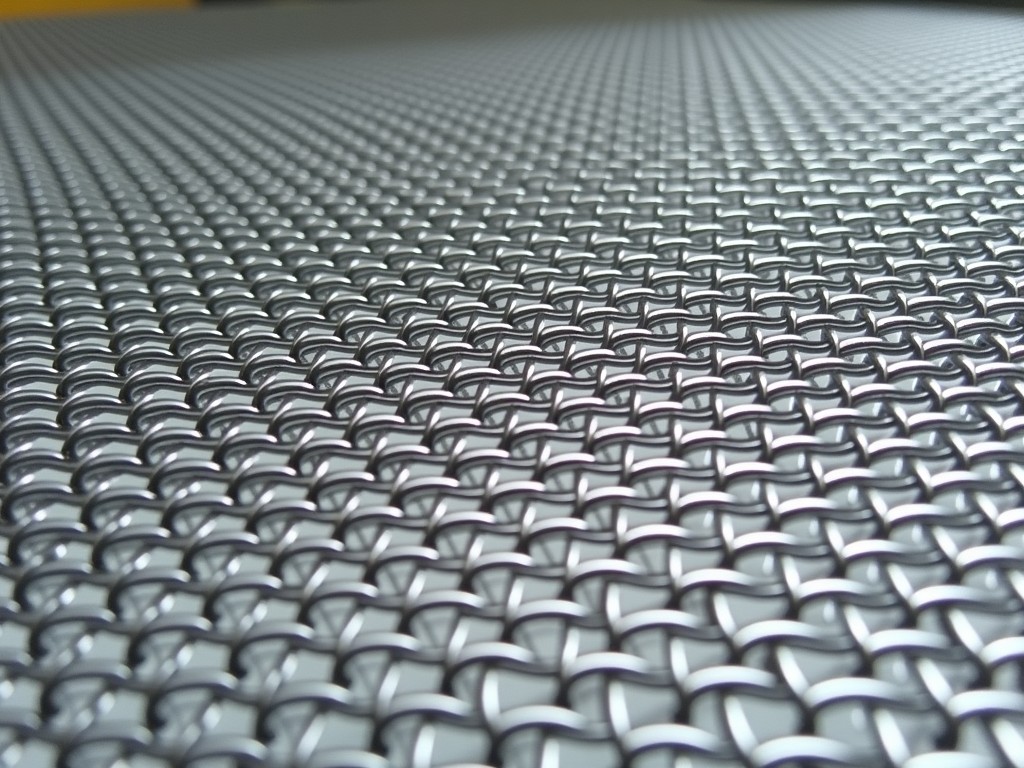
B2B High Quality Wire Mesh Panels Supplier
Wire mesh panels are fabricated by welding or weaving metal wires into a grid with defined opening dimensions. The panel’s structural performance depends on wire diameter, tensile strength of the
Wire Mesh Panels for Industrial Applications
Overview
Wire mesh panels are fabricated by welding or weaving metal wires into a grid with defined opening dimensions. The panel’s structural performance depends on wire diameter, tensile strength of the base material, and the spacing between wires. Engineers select mesh geometry to balance load-bearing capacity, airflow, and filtration efficiency for a given process.
Material Options
- Low‑carbon steel (ASTM A36) – typical yield strength 250 MPa, suitable for general‑purpose enclosures.
- Galvanized steel (zinc coating ~60 g/m²) – provides corrosion resistance in humid environments.
- Stainless steel grade 304 – offers resistance to oxidation and chemical exposure up to 400 °C.
- Stainless steel grade 316 – includes molybdenum for enhanced resistance to chlorides and marine atmospheres.
Manufacturing Process
Panels are produced on automated welding lines where resistance spot welds join intersecting wires at each node. Weld spacing follows the mesh pattern, ensuring uniform strength across the sheet. After welding, panels undergo flattening rollers to achieve dimensional tolerance of ±1 mm on length and width. Final cleaning removes oxides and prepares the surface for optional coating.
Typical Specifications
| Parameter | Range / Typical Value | Notes |
|---|---|---|
| Wire diameter | 1.0 mm – 6.0 mm | Selected based on load requirements. |
| Opening size (clear opening) | 5 mm – 100 mm | Customizable to process flow. |
| Panel thickness | Equal to wire diameter (single layer) | Double‑layer options increase rigidity. |
| Standard panel dimensions | 1000 mm × 2000 mm (custom lengths available) | Panels can be spliced with overlapping edges. |
| Tensile strength of wire | 350 MPa – 620 MPa (depends on grade) | Higher grades for structural support. |
Applications
- Machine guarding – the open area provides visibility while preventing contact with moving parts; wire diameter chosen to withstand impact loads.
- Ventilation panels in chemical plants – corrosion‑resistant grades maintain airflow without degrading in acidic vapors.
- Filter screens for food processing – precise opening sizes enable sieving of particulates while facilitating cleaning.
- Security fencing around substations – high tensile wire resists cutting and provides a clear barrier.
- Conveyor side guides – low‑friction surface and uniform opening prevent product snagging.
Customization Capabilities
- Wire diameter selection from 1.0 mm to 6.0 mm in 0.5 mm increments.
- Opening geometry – square, rectangular, or hexagonal patterns adjustable to process needs.
- Panel length and width cut to customer‑specified dimensions, with edge finishing options (flanged, folded, or welded).
- Surface treatments – hot‑dip galvanizing, powder coating, or passivation for stainless grades.
- Integration of mounting hardware – pre‑drilled holes or welded brackets for rapid installation.
Quality Control & Testing
Each production lot undergoes visual inspection for weld continuity and surface defects. Dimensional verification uses laser gauges to confirm opening size and panel squareness within ±0.5 mm. Mechanical testing includes tensile pull‑out tests on random welds to ensure minimum shear strength of 1.2 kN per joint. For corrosion‑protected panels, salt‑spray exposure follows ASTM B117 for 500 hours, with acceptable rust rating ≤ grade 1. Documentation of test results is provided with each shipment.
Packaging and Shipping
Panels are stacked flat on pallets with interleaving cardboard layers to prevent abrasion. Edge protectors are applied to corners, and the entire bundle is secured with polyester strapping. For export, pallets are fitted with heat‑shrink film and placed in ISPM‑15 compliant wooden crates. Tracking labels include part number, material grade, and heat‑treatment batch.
Frequently Asked Questions
- Can dimensions be customized? Yes, panel length, width, and opening size are adjusted according to project drawings; tolerances are held to ±1 mm on overall dimensions.
- What information is required before quotation? We need wire diameter, opening size, material grade, panel dimensions, quantity, and any required surface treatment or mounting features.
- What materials are available? Low‑carbon steel, galvanized steel, stainless steel 304 and 316; other alloys upon request.
- How is quality inspected? Visual weld inspection, dimensional laser measurement, tensile weld testing, and salt‑spray corrosion testing as applicable.
- What packaging methods are available? Flat‑stacked pallets with cardboard interleaving, edge protectors, strapping, and optional crating for overseas transport.
- How are export shipments protected? Pallets are wrapped in heat‑shrink film and placed in ISPM‑15 crates; corrosion‑inhibiting vapor bags can be added for sea freight.
- What is the typical production lead time? Lead time ranges from 2 to 4 weeks depending on material availability and order complexity; exact schedule is confirmed at quote.
- How are samples arranged? Sample panels (up to 300 mm × 300 mm) can be shipped via express courier; costs are credited against the first production order.