
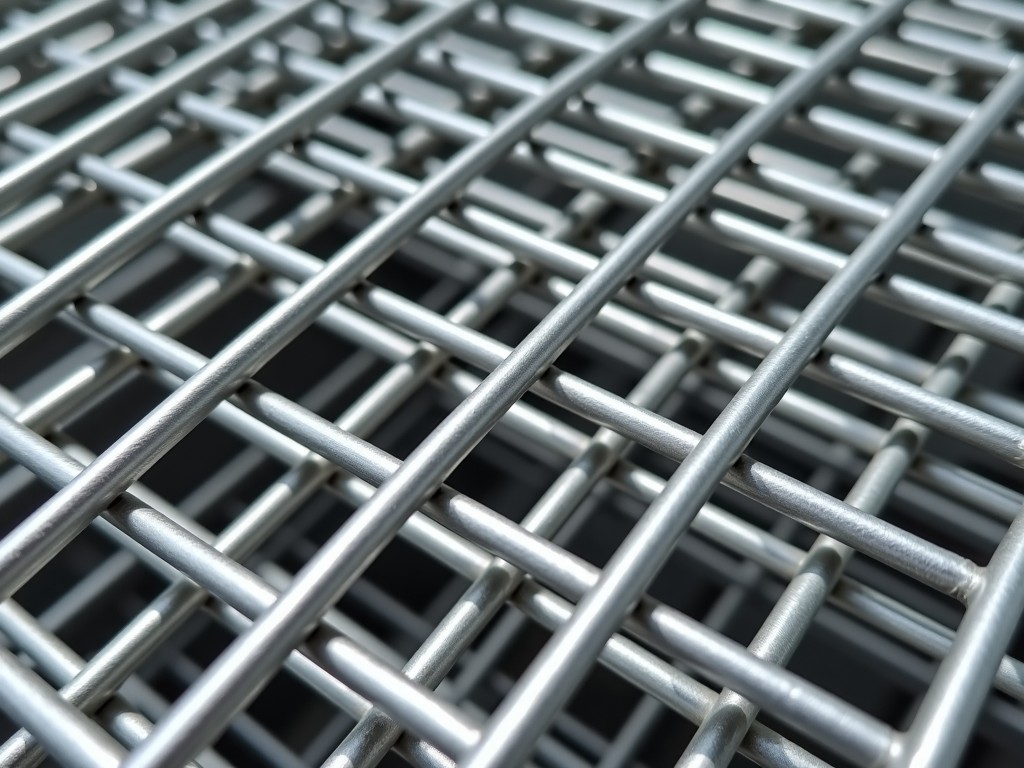
B2B High Quality Galvanized Wire Mesh Supplier
Galvanized wire mesh is produced by drawing low‑carbon steel wire to precise diameters, then applying a zinc coating through hot‑dip or electro‑galvanizing processes. The coating weight, measured in
B2B Galvanized Wire Mesh: Technical Overview
Galvanized wire mesh is produced by drawing low‑carbon steel wire to precise diameters, then applying a zinc coating through hot‑dip or electro‑galvanizing processes. The coating weight, measured in grams per square meter (g/m²), determines corrosion resistance in outdoor or humid environments.
Key Specifications
Typical product range includes wire diameters from 0.8 mm to 4.0 mm and aperture sizes from 6 mm × 6 mm up to 100 mm × 100 mm, selected according to load‑bearing and filtration requirements. These dimensions are standardized in industry specifications such as ASTM A185 and EN 10223‑2.
| Parameter | Typical Range | Units |
|---|---|---|
| Wire diameter | 0.8 – 4.0 | mm |
| Mesh opening (aperture) | 6 – 100 | mm |
| Coating weight (hot‑dip) | 120 – 350 | g/m² |
| Tensile strength of wire | 350 – 550 | MPa |
| Roll width | 0.5 – 2.0 | m |
| Roll length | 10 – 50 | m |
The table above shows typical values; actual dimensions can be tailored to project needs. Coating weight influences service life, with heavier coatings extending durability in corrosive atmospheres. Tensile strength of the base wire affects mesh performance under tension and impact loads.
Material and Coating Considerations
Low‑carbon steel (C ≤ 0.12 %) provides good ductility for drawing, while the zinc coating forms a metallurgical bond that protects the base metal. Coating thickness is controlled by immersion time and zinc bath temperature; a heavier coating extends service life in acidic or saline atmospheres.
Typical Industrial Applications
The following applications illustrate where specific mesh characteristics provide functional advantages. Selection depends on mechanical load, aperture precision, and environmental exposure.
- Concrete reinforcement – mesh provides uniform crack control in slabs and precast panels.
- Filtration and sieving – precise apertures allow separation of powders, granules, or aggregates in processing lines.
- Animal enclosures – corrosion‑resistant coating ensures longevity in farm and zoo fencing.
- Architectural façades – decorative patterns combined with structural support for cladding systems.
- Security barriers – high tensile wire resists cutting and deformation under impact.
In concrete reinforcement, mesh spacing controls crack width and distributes tensile stresses. In filtration, aperture uniformity ensures consistent particle size separation.
Quality Control Philosophy
Each batch undergoes dimensional inspection using laser micrometers to verify wire diameter and aperture uniformity within ±0.05 mm. Coating weight is measured by the strip‑weigh method per ASTM A90/A90M, with acceptance criteria of ±10 % of target value.
Tensile samples are pulled to failure; results are recorded and compared against the specified strength range. Visual inspection checks for zinc coating continuity, absence of bare spots, and proper adhesion.
Customization Options
Customers can specify wire diameter, aperture geometry, roll dimensions, and coating type (hot‑dip vs. electro‑galvanized). Additional treatments such as PVC over‑coating or powder coating are available for enhanced chemical resistance or aesthetic requirements.
Packaging and Logistics
Mesh is wound on cardboard or plastic cores, wrapped in stretch film, and placed on pallets with corner protectors. Export shipments include moisture‑barrier bags and fumigated wooden pallets to meet ISPM‑15 standards.
Call to Action
For technical datasheets, sample requests, or project‑specific quotations, contact our engineering team.
Our specialists will respond with detailed specifications and lead‑time information within one business day.
Request Quote