
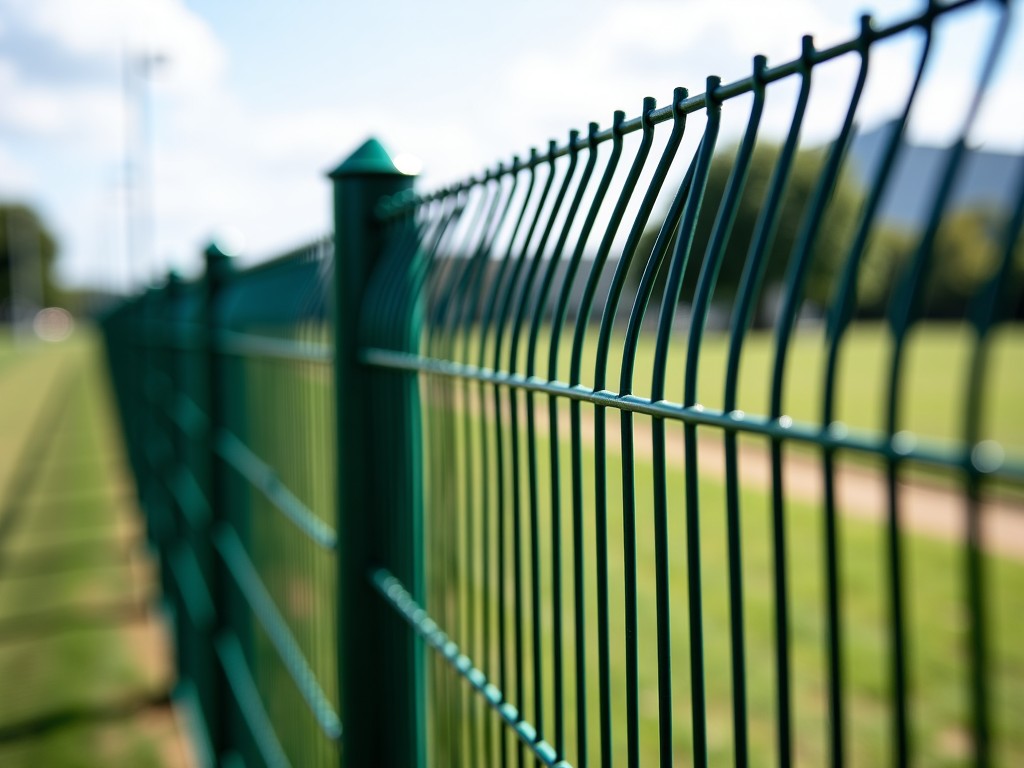
B2B Durable Wire Mesh Fence Company
Wire mesh fences are engineered barriers formed by intersecting steel wires welded or woven at regular intervals, creating a uniform aperture pattern that balances visibility with containment. The
B2B Durable Wire Mesh Fence Solutions
Overview
Wire mesh fences are engineered barriers formed by intersecting steel wires welded or woven at regular intervals, creating a uniform aperture pattern that balances visibility with containment. The structural integrity depends on wire diameter, tensile strength of the steel, and the method of joint formation, which together determine load resistance and service life.
Material and Construction
The base material is typically low-carbon steel wire, selected for its ductility and ability to undergo cold‑working without brittleness. Wire diameters commonly range from 2.0 mm to 4.5 mm, with larger diameters providing higher impact resistance. Aperture sizes vary from 12 mm × 12 mm for small‑animal exclusion to 100 mm × 100 mm for perimeter security.
Joint integrity is achieved either by electric resistance welding at each crossover or by weaving the wires into a crimped mesh. Welded joints deliver shear strength exceeding 350 MPa, while woven meshes rely on tensile interlock and are suited for flexible installations.
Surface protection is applied post‑fabrication; hot‑dip galvanizing provides a zinc coating weight of 275 g/m², delivering a corrosion rate below 5 µm/year in temperate atmospheres. For aggressive environments, a PVC over‑coat adds a 0.5 mm polymer layer that resists chemical splash and UV degradation.
Performance Specifications
| Property | Typical Value | Unit |
|---|---|---|
| Wire Diameter | 2.0 – 4.5 | mm |
| Tensile Strength of Wire | 450 – 550 | MPa |
| Aperture Size | 12 × 12 to 100 × 100 | mm |
| Roll Height | 0.9 – 3.0 | m |
| Zinc Coating Weight (Hot‑Dip) | 275 | g/m² |
Customization Options
Projects often require non‑standard dimensions or additional features; the manufacturing process accommodates these through adjustable loom settings and post‑forming operations.
- Custom roll widths from 0.5 m to 3.0 m, with length increments of 5 m.
- Selection of wire diameter and aperture to match specific load or containment criteria.
- Alternative coatings: hot‑dip galvanized, galvanized‑then‑PVC, or stainless‑steel (grade 304/316) for marine exposure.
- Integrated accessories such as tension bars, bottom rails, and post brackets fabricated to match fence height.
- Pre‑punched holes for rapid installation on concrete or steel substrates.
Typical Applications
In agricultural settings, 25 mm × 25 mm apertures with 2.5 mm wire deter livestock while allowing airflow and light penetration, reducing heat stress in confined paddocks.
For industrial perimeter security, a 50 mm × 50 mm mesh with 3.5 mm wire and PVC over‑coat provides a climb‑deterrent barrier that maintains visibility for CCTV monitoring and resists corrosion from nearby chemical storage.
Transport infrastructure uses high‑tensile welded mesh (4.0 mm wire, 100 mm × 100 mm apertures) as anti‑throw protection on overpasses, where the mesh absorbs impact energy and prevents debris from falling onto roadways.
Quality Control and Testing
Each production lot undergoes dimensional verification using laser gauges to confirm wire diameter and aperture tolerance within ±0.1 mm. Tensile tests on random wire samples validate that the ultimate tensile strength meets the specified 450 MPa minimum.
Coating thickness is measured by magnetic induction; galvanized lots are accepted when the average zinc weight exceeds 250 g/m². For PVC‑coated products, adhesion is assessed via cross‑hatch tape testing, requiring no coating removal after 100 cycles.
Final inspection includes a visual check for weld continuity and a pull‑test on a 300 mm sample length to ensure joint strength exceeds 2 kN, providing confidence that the fence will sustain design loads over its service life.
Frequently Asked Questions
- Can dimensions be customized?
- Yes. Roll height, width, wire diameter, and aperture are all adjustable per project specifications; custom lengths are available in 5 m increments.
- What information is required before quotation?
- Required inputs include desired height, aperture size, wire diameter, coating type, total linear meters, and any accessory items such as posts or tension wires.
- What materials are available?
- Standard low‑carbon steel with hot‑dip galvanizing, PVC over‑coat, and stainless‑steel grades 304 or 316 for corrosive environments.
- How is quality inspected?
- Inspection includes dimensional checks, tensile strength testing, coating weight verification, and joint strength pull‑tests as outlined in the quality control section.
- What packaging methods are available?
- Fence rolls are wrapped in UV‑stabilized polyethylene film, placed on wooden pallets, and secured with steel straps; custom crating is offered for overseas shipments.
- How are export shipments protected?
- Pallets are fitted with corner protectors and the entire load is covered with a waterproof tarp; fumigation‑free wooden pallets comply with ISPM 15.
- What is the typical production lead time?
- Lead time ranges from 10 to 20 working days after receipt of approved drawings, depending on coating complexity and order volume.
- How are samples arranged?
- Sample sections up to 1 m × 1 m can be dispatched via express coupons; sample cost is credited against the first order.
Contact for Technical Inquiry
To discuss your specific requirements, request a detailed quotation, or obtain engineering datasheets, please reach out to our technical sales team.