
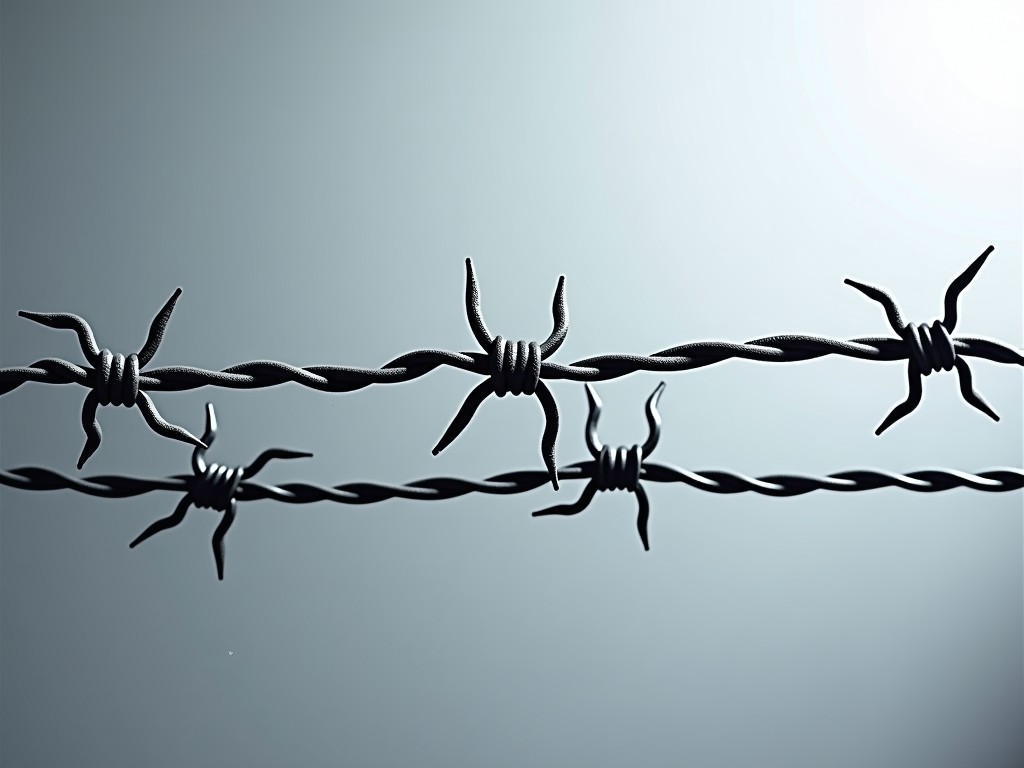
Oem Durable Razor Barbed Wire Manufacturer
This product consists of cold‑drawn steel wire formed into helical coils with sharp barbs positioned at regular intervals. The geometry and tensile properties are selected to resist cutting and
OEM Durable Razor Barbed Wire
This product consists of cold‑drawn steel wire formed into helical coils with sharp barbs positioned at regular intervals. The geometry and tensile properties are selected to resist cutting and climbing attempts while maintaining flexibility for installation.
Key Technical Characteristics
Typical wire diameters range from 2.0 mm to 3.0 mm, providing a balance between handling ease and load‑bearing capacity. Tensile strength commonly falls between 1500 MPa and 1800 MPa, depending on the steel grade and cold‑work level. Barb length is usually set between 12 mm and 20 mm, with a tip radius under 0.2 mm to ensure effective deterrence. The center‑to‑center spacing of barbs can be adjusted from 80 mm to 150 mm to suit different security levels.
| Parameter | Typical Range | Notes |
|---|---|---|
| Wire diameter | 2.0 mm – 3.0 mm | Custom diameters available upon request |
| Tensile strength | 1500 MPa – 1800 MPa | Dependent on steel grade and cold work |
| Barb length | 12 mm – 20 mm | Tip radius ≤0.2 mm |
| Barb spacing | 80 mm – 150 mm | Adjustable per project requirement |
Material Options
The base wire can be produced from low‑carbon, high‑carbon, or stainless steel alloys. Surface treatments include hot‑dip galvanizing, zinc‑aluminum alloy coating, or polymer overcoats such as PVC or PE. Each combination influences corrosion resistance, mechanical properties, and cost.
- Low‑carbon steel wire (grade SAE 1008) – good ductility, lower cost
- High‑carbon steel wire (grade SAE 1070) – higher tensile strength, limited elongation
- Stainless steel wire (grade 304 or 316) – excellent corrosion resistance in aggressive environments
Manufacturing Considerations
Wire is first drawn to the target diameter through a series of dies, achieving the desired tensile strength via cold work. Barb formation is performed by pressing or cutting the wire at programmed intervals, followed by shaping to the specified tip geometry. Coating application occurs after barb formation; hot‑dip processes immerse the wire in molten zinc or zinc‑aluminum bath, while polymer coatings are applied by extrusion or dip‑coating and cured.
Applications and Functional Benefits
Razor barbed wire is selected when a physical barrier must resist both cutting and climbing. The sharp, closely spaced barbs increase the likelihood of snagging clothing or skin, thereby raising the effort required to breach the fence. Compared with conventional barbed wire, the reduced pitch and enhanced tip sharpness provide a higher deterrent effect without a substantial increase in material weight.
- Perimeter security for industrial facilities, warehouses, and power substations
- Livestock containment and predator deterrence in agricultural settings
- Correctional facility barriers and high‑risk site perimeters
Customization Parameters
Key variables that can be tailored to project specifications include wire diameter, tensile class, barb length, barb spacing, coating type, and coil length. Adjusting these parameters allows the product to meet specific load requirements, environmental exposure levels, and handling constraints.
- Barb length (typically 12 mm – 20 mm)
- Barb spacing (center‑to‑center 80 mm – 150 mm)
- Coating type (hot‑dip galvanized, Zn‑Al alloy, PVC)
- Tensile class (standard, high‑strength)
Quality Assurance and Testing
Each production lot undergoes mechanical and visual verification to confirm conformance with the agreed specifications. Tensile strength is measured using a universal testing machine according to ASTM A370. Barb sharpness is assessed under magnification to ensure tip radius remains within limits. Coating adhesion is evaluated by cross‑cut tape testing (ASTM D3359) to verify that the protective layer remains intact under mechanical stress.
| Inspection Item | Method | Acceptance Criteria |
|---|---|---|
| Tensile strength | Universal testing machine (ASTM A370) | Meets specified tensile class (±5%) |
| Barb sharpness | Visual and tactile inspection under 10x magnification | No burrs, edge radius ≤0.2 mm |
| Coating adhesion | Cross‑cut tape test (ASTM D3359) | Rating 5B (no removal) |
Packaging and Logistics
Finished coils are wound onto steel or plastic spools with inner diameters ranging from 300 mm to 500 mm. The coils are wrapped in stretch film, fitted with corner guards, and stacked on pallets. Strapping secures the load, and typical pallet weights are kept below 2000 kg to facilitate safe handling with forklifts or pallet jacks.
- Coils wound on steel or plastic spools (inner diameter 300 mm – 500 mm)
- Protective stretch film and corner guards
- Palletized loads with strapping, max weight 2000 kg per pallet
Ordering Information
To receive a quotation, please provide the following technical details: wire diameter, tensile class, coating type, barb length and spacing, coil length, total quantity, and preferred delivery terms (Incoterms).