
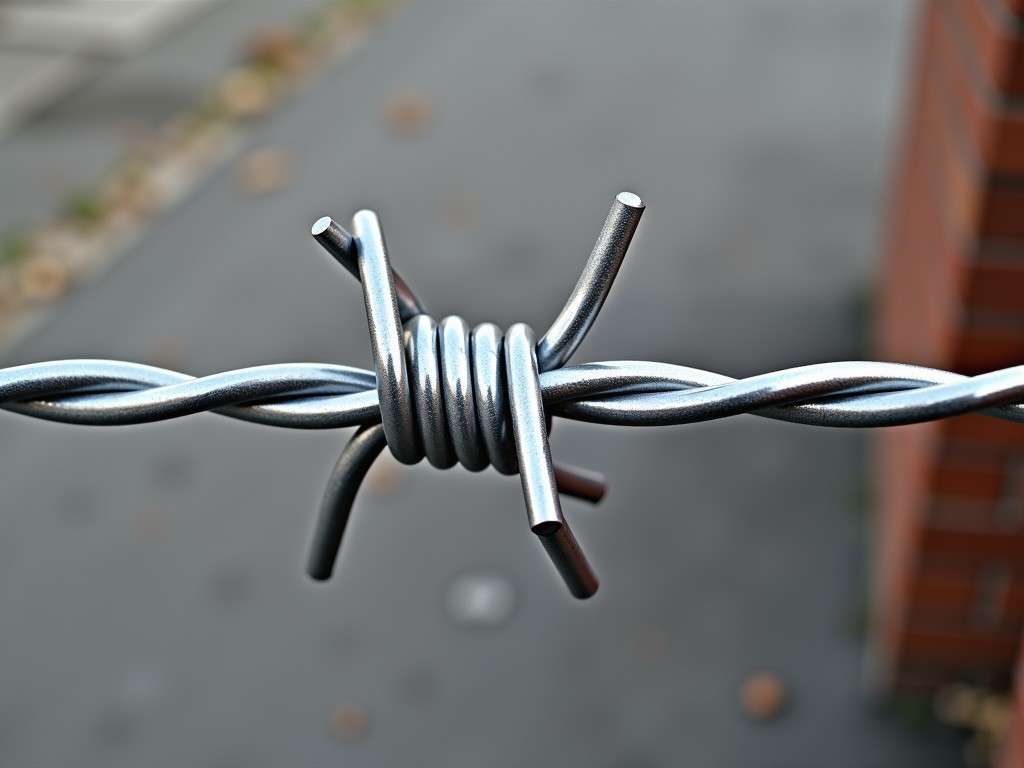
Custom Oem Double Barbed Wire Manufacturer
Double barbed wire consists of two helical strands with uniformly spaced barbs, providing enhanced tensile resistance and deterrent capability compared to single‑strand designs. As an OEM supplier,
Custom OEM Double Barbed Wire Manufacturer
Double barbed wire consists of two helical strands with uniformly spaced barbs, providing enhanced tensile resistance and deterrent capability compared to single‑strand designs.
Product Overview
As an OEM supplier, we produce the wire to exact customer specifications, integrating the barbing operation directly into the drawing and stranding lines to maintain dimensional consistency.
Material Specifications
The core wire is typically cold‑drawn low‑carbon steel (grades SAE 1006–1010) with a tensile strength range of 350–550 MPa, selected for its balance of ductility and fatigue resistance.
- Hot‑dip galvanized coating: 55–85 g/m² zinc, conforming to ASTM A123.
- PVC overcoat: thickness 0.3–0.5 mm, UV‑stabilized, available in black or green.
- Stainless steel core: AISI 304, tensile strength 520–720 MPa, for corrosive environments.
Manufacturing Process
The process begins with wire drawing to the target diameter, followed by simultaneous twisting of two strands and inline barb formation using precision‑cut dies.
Customization Options
Customers specify barb spacing (typically 75–150 mm), barb length (12–20 mm), and finish (galvanized, PVC, or stainless) to match environmental exposure and installation method.
Technical Parameters
| Parameter | Typical Value | Notes |
|---|---|---|
| Wire Diameter | 2.0 mm – 3.5 mm | Customizable per load requirements |
| Barb Spacing | 75 mm – 150 mm | Adjustable via die set |
| Barb Length | 12 mm – 20 mm | Determines penetration resistance |
| Tensile Strength (wire) | 350–550 MPa (low‑carbon) | Higher grades available on request |
| Coating Adhesion | ≥ 2.5 MPa (ASTM D4541) | For galvanized and PVC finishes |
Applications
The dual‑strand configuration increases radial stiffness, making the wire suitable for high‑tension perimeter security where resistance to cutting and climbing is critical. In livestock fencing, the closely spaced barbs deter animal pressure without causing excessive injury, reducing maintenance cycles. Temporary construction barriers benefit from the wire’s ease of installation and re‑tensioning, allowing rapid deployment and removal.
Quality Assurance
Each batch undergoes dimensional verification with laser micrometers (± 0.02 mm), tensile testing per ASTM A370, and coating adhesion tests (ASTM D4541) before release. Traceability is maintained via lot numbers linked to raw material certifications and process parameters.
Frequently Asked Questions
- Can dimensions be customized? Yes, wire diameter, barb spacing, barb length, and coating type are all adjustable to meet project specifications.
- What information is required before quotation? Required details include wire diameter, desired finish, barb geometry, total length, and any applicable standards (e.g., ASTM, ISO).
- How is quality inspected? In‑process checks include diameter monitoring, barb uniformity visual inspection, and final mechanical testing as described above.
- What packaging methods are available? Standard packaging consists of waterproof‑wrapped coils on wooden pallets; custom options include reels, crates, or VCI‑treated wrapping for export.
- What is the typical production lead time? Lead time ranges from 2–4 weeks for standard specifications; custom finishes or non‑standard diameters may extend to 6 weeks, confirmed at quote stage.