
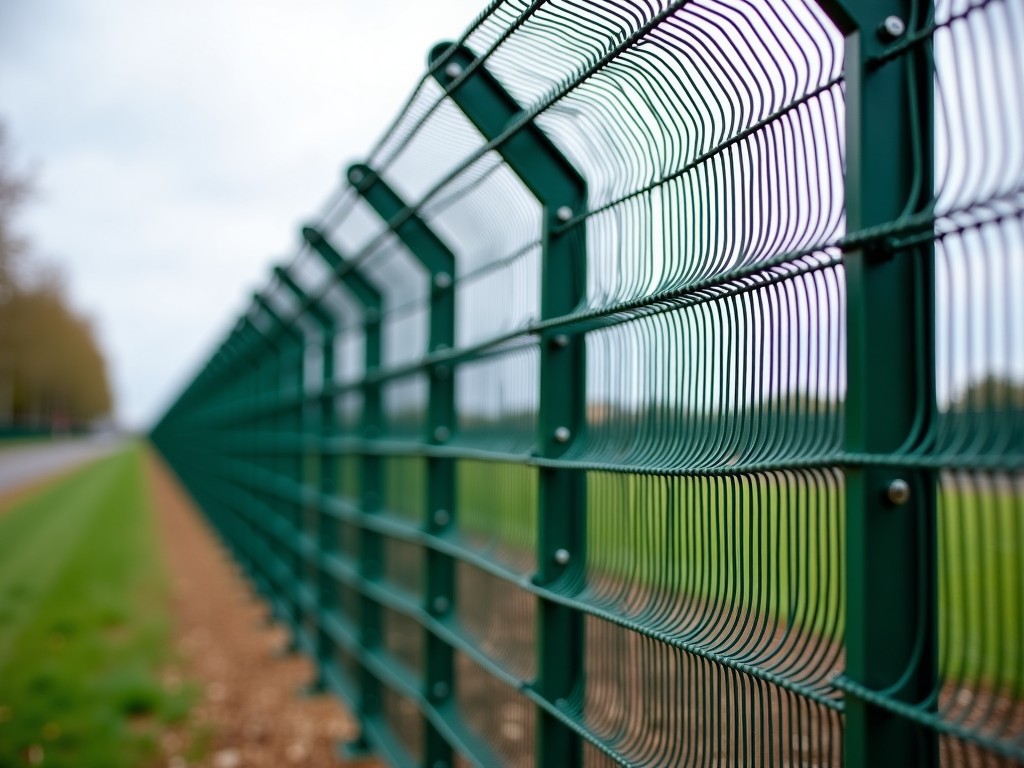
Custom Durable Fence With Razor Wire Supplier
This product combines a welded steel mesh barrier with integrated razor‑wire deterrents to create a perimeter system that resists climbing, cutting, and vehicular intrusion. Design decisions are
Custom Durable Fence with Razor Wire
This product combines a welded steel mesh barrier with integrated razor‑wire deterrents to create a perimeter system that resists climbing, cutting, and vehicular intrusion. Design decisions are driven by measurable parameters such as wire diameter, coating mass, and blade geometry rather than vague quality claims.
Key Technical Specifications
| Parameter | Typical Value | Customizable Options |
|---|---|---|
| Fence height | 2.4 m (standard) | 1.8 m – 3.0 m in 0.1 m increments |
| Mesh wire diameter | 3.0 mm low‑carbon steel | 2.5 mm – 4.0 mm; optional high‑tensile grade |
| Razor‑wire type | Concertina tape, 0.5 mm thickness, 12 mm blade length | Flat wrap, spiral, varying blade length 8 mm–18 mm |
| Coating | Hot‑dip galvanized Zn 270 g/m² | PVC over‑coat 0.3 mm (colors: black, green, gray); duplex galvanized+PVC |
| Post spacing | 2.5 m centers | 2.0 m – 3.5 m depending on load |
| Tensile strength of mesh | ≥ 550 MPa (standard grade) | Up to 650 MPa with S355JR steel |
| Corrosion resistance (per ISO 9223) | C4 (medium) for galvanized only | C5 (high) with duplex coating; marine grades available |
Material Options
- Structural steel grades: S235JR (yield ≈ 235 MPa) for standard sections; S355JR (yield ≈ 355 MPa) for higher load environments.
- Zinc coating methods: hot‑dip (typical 270 g/m²), electro‑galvanized (thinner, suitable for ornamental finishes), or zinc‑aluminum alloy for extended life.
- PVC over‑coat thickness: 0.2 mm–0.5 mm; UV‑stabilized pigments to match site aesthetics.
- Razor‑wire tape alloys: standard steel, stainless‑steel grade 304 for chloride‑rich atmospheres, or coated with polymer for reduced friction.
Customization Logic
Selection begins with threat assessment: required delay time determines blade length and spacing; environmental corrosivity dictates coating class; installation geometry (uneven terrain, existing structures) informs post spacing and panel height. Each variable is adjusted independently while maintaining structural continuity, allowing the fence to meet specific performance criteria without over‑specifying.
Typical Applications
Utility substations use this system to prevent unauthorized access to live equipment, where a delayed breach could cause safety hazards or service interruption. Correctional facilities rely on the combined deterrent of mesh resistance and razor‑wire lethality to satisfy regulatory perimeter standards. Data‑center campuses adopt the fence when site‑specific risk analyses indicate a need for both physical delay and visible psychological deterrence, reducing the likelihood of opportunistic intrusion attempts.
Quality Control Philosophy
Dimensional tolerances are verified on each panel using laser‑scanned profiles (±2 mm). Coating thickness is measured with magnetic induction probes on a minimum of five points per square meter. Tensile samples are extracted from production batches and tested to confirm compliance with the specified grade. Razor‑wire edges are inspected under 10× magnification to ensure uniform blade geometry and absence of burrs that could compromise safety during handling. All tests are documented with batch traceability tags attached to each pallet.
Frequently Asked Questions
- Can dimensions be customized? Yes, height, wire gauge, post spacing, and razor‑wire geometry are all adjustable per project requirements; detailed drawings are needed before quotation.
- What information is required before quotation? Site plan showing perimeter length, terrain variations, desired security level (delay time), and any environmental factors (e.g., salt exposure, industrial pollutants).
- How is quality inspected? See the Quality Control Philosophy section; inspections include dimensional scan, coating thickness, tensile testing, and visual razor‑wire check.
- What packaging methods are available? Panels are bundled with protective edge guards, stacked on wooden pallets, and wrapped in UV‑stabilized polyethylene film; custom crating is offered for overseas shipments.
Contact for Inquiry
To discuss your specific perimeter security needs and receive a technical quotation, please request a quotation. Our engineering team will review your requirements and propose a configuration that balances performance, durability, and cost.