
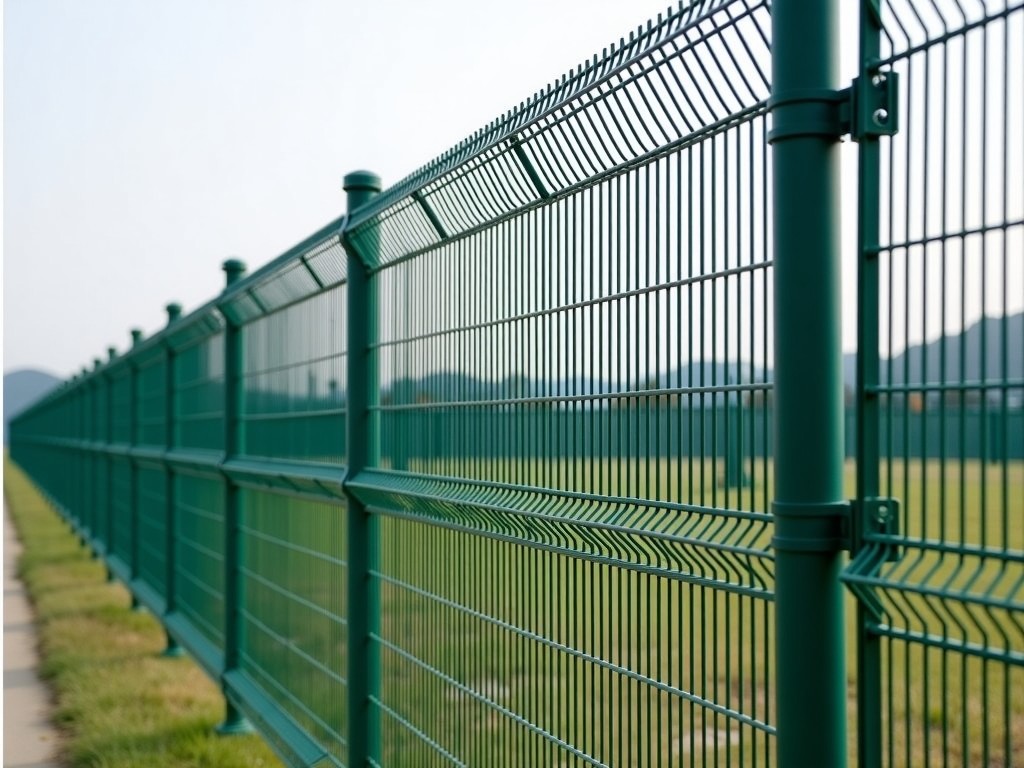
China Blade Wire Fencing Top Supplier
Blade wire fencing, also known as razor wire or concertina wire, consists of high‑tensile steel wires formed with sharp, angular blades that are helically wound around a core wire. The geometry
Blade Wire Fencing – Technical Overview
Blade wire fencing, also known as razor wire or concertina wire, consists of high‑tensile steel wires formed with sharp, angular blades that are helically wound around a core wire. The geometry creates a continuous barrier that resists cutting and climbing while maintaining flexibility for installation on uneven terrain.
Material Composition and Mechanical Properties
The core wire is typically manufactured from cold‑drawn low‑carbon steel (SAE 1008/1010) with a tensile strength ranging from 550 MPa to 650 MPa. The blades are punched from the same steel stock, then formed to a 45° angle with a blade height of 22 mm and a thickness of 0.8 mm. After forming, the assembly undergoes hot‑dip galvanizing to achieve a zinc coating thickness of 55 µm ± 5 µm, providing corrosion resistance in outdoor environments.
| Parameter | Typical Value | Notes |
|---|---|---|
| Wire diameter (core) | 2.5 mm | Cold‑drawn steel |
| Blade height | 22 mm | Measured from core axis |
| Blade thickness | 0.8 mm | Uniform across blade |
| Tensile strength | 550‑650 MPa | ASTM A370 test |
| Zinc coating | 55 µm ± 5 µm | Hot‑dip galvanized |
| Maximum operating temperature | 120 °C | Without coating degradation |
Design Considerations for Industrial Perimeter Security
The helical arrangement allows the fence to expand and contract with temperature changes without losing tension, which reduces the need for frequent re‑tensioning. The sharp blade geometry creates a deterrent effect: attempts to cut the wire require specialized tools, and the likelihood of snagging on clothing or equipment increases the perceived risk for intruders. In addition, the low profile (overall diameter ≈ 30 mm) enables installation on top of existing walls or fences with minimal visual impact.
Installation typically involves securing the fencing to steel or concrete posts using pre‑drilled brackets or clamps spaced at 600 mm intervals. The flexibility of the coil permits following curved surfaces, and the ends can be terminated with a loop‑and‑clamp fastener to maintain continuous tension.
Customization Options
- Wire diameter: 2.0 mm to 3.0 mm (step 0.2 mm)
- Blade angle: 30°, 45°, or 60° relative to core axis
- Blade height: 18 mm to 28 mm
- Coating: hot‑dip galvanized, zinc‑aluminum alloy (Galvalume), or PVC over‑coat
- Panel length: standard 6 m coils, custom lengths up to 12 m upon request
- Post spacing: adjustable from 400 mm to 900 mm to match site conditions
Quality Control and Testing
Each production lot undergoes dimensional verification using laser micrometers, with tolerances of ±0.1 mm for wire diameter and ±0.5 mm for blade height. Coating thickness is measured by magnetic induction probes on a minimum of five random samples per batch. Mechanical properties are validated by tensile testing of three specimens per lot, ensuring the average strength meets the specified range. Visual inspection checks for blade uniformity, absence of burrs, and proper helix pitch.
Finished coils are wrapped in UV‑stabilized polyethylene film, then placed in corrugated cardboard cores with end caps to prevent deformation during transit. For export shipments, coils are stacked on pallets and secured with polyester strapping, meeting ISPM‑15 wood‑packaging standards when applicable.
Frequently Asked Questions
| Question | Answer |
|---|---|
| Can the blade angle be modified? | Yes, the blade angle is a selectable parameter; common options are 30°, 45°, and 60°, with other angles available as a special order. |
| What information is required for a quotation? | Required details include wire diameter, blade height, coating type, total length, and any specific post‑spacing or end‑termination requirements. |
| How is quality inspected before shipment? | Each lot undergoes dimensional checks, coating thickness measurement, tensile testing, and visual inspection as described in the quality control section. |
| What packaging methods protect the fencing during transport? | Coils are wrapped in UV‑stabilized polyethylene film, placed in rigid cores, and palletized with strapping to prevent movement and damage. |
| What is the typical production lead time? | Lead time varies with order size and coating selection; standard galvanized coils typically ship within 10‑15 working days after receipt of approved drawings. |
Contact for Technical Inquiry
For detailed specifications, customization requests, or a formal quotation, please reach out to our technical team.
Request Quotation or Datasheet