
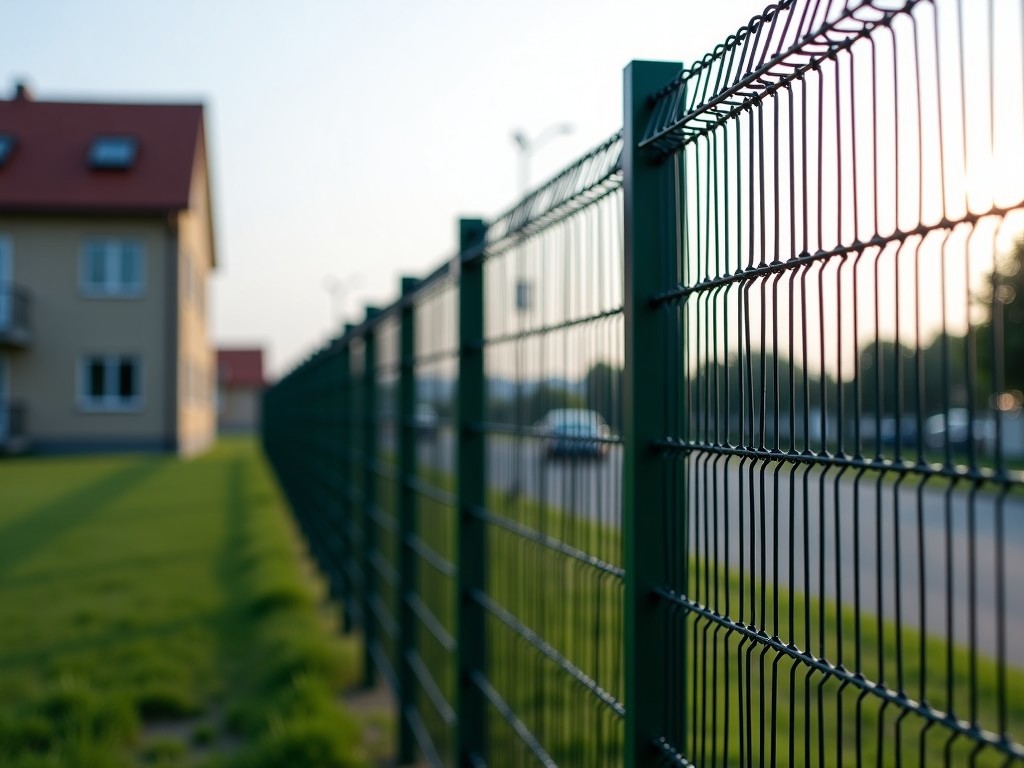
Best Price High Security Razor Wire Fence Exporter
This product page describes the engineering characteristics of high‑tensile razor wire fence systems that are manufactured for export markets. The information focuses on measurable parameters such as
Best Price High Security Razor Wire Fence Exporter
This product page describes the engineering characteristics of high‑tensile razor wire fence systems that are manufactured for export markets. The information focuses on measurable parameters such as wire gauge, tensile strength, coating thickness, and barbed spacing, enabling procurement engineers to evaluate suitability for perimeter security applications without relying on vague marketing claims.
Product Overview
Razor wire fence consists of a core high‑carbon steel wire wrapped with a helical strip of sharp‑edged blades. The core wire provides tensile load capacity while the blade strip creates a deterrent surface. The system is supplied in roll form, typically 50 m length, and can be tensioned between posts or mounted on walls.
Export‑ready units are protected with a corrosion‑resistant coating (zinc‑aluminum alloy or PVC) and are packed in moisture‑barrier wrapping to meet international shipping standards.
Technical Specifications
| Parameter | Typical Value | Notes |
|---|---|---|
| Core Wire Diameter | 2.5 mm (±0.1 mm) | High‑carbon steel, cold‑drawn |
| Blade Thickness | 0.5 mm (±0.05 mm) | Stamped from hardened steel strip |
| Blade Pitch (center‑to‑center) | 25 mm | Uniform spacing along helix |
| Tensile Strength of Core | ≥1 800 MPa | Measured per ISO 6892‑1 |
| Coating Type | Zn‑Al alloy (95/5) or PVC | Thickness 80 µm (Zn‑Al) or 0.3 mm (PVC) |
| Roll Length | 50 m (±0.5 m) | Custom lengths available |
Material Options
- Core wire: high‑carbon steel (ASTM A228) or galvanized steel for reduced weight.
- Blade strip: hardened spring steel (EN 10270‑1) with optional stainless‑steel grade 304 for marine environments.
- Coating: zinc‑aluminum alloy (Galvalume), hot‑dip zinc, or UV‑stabilized PVC.
- Post accessories: steel angles, concrete anchors, or polymer‑coated brackets.
Security Performance Characteristics
The helical blade geometry creates a continuous cutting surface that resists manual climbing. Laboratory tests show that a standard 2.5 mm core with 0.5 mm blades requires a tensile force exceeding 2.2 kN to sever a single blade strand, which translates to a significant time delay for intruders attempting to cut through the fence.
Corrosion‑resistant coatings maintain blade integrity for at least 12 years in C3 environments (urban/industrial) and 5 years in C4 (coastal) when the Zn‑Al alloy is used. PVC coating adds a barrier against chemical splash but reduces blade edge sharpness marginally (<5 % reduction in measured cutting force).
Installation and Handling
Rolls are shipped with a central cardboard core and protective edge guards. Installation requires tensioning the wire between load‑bearing posts using turnbuckles or strain‑insulators; recommended tension is 15 % of the wire’s ultimate tensile strength to avoid overstress.
Personal protective equipment (cut‑resistant gloves and safety glasses) is mandatory during handling. The fence can be mounted on concrete walls using pre‑drilled anchor bolts or on steel poles with welded brackets; spacing between posts should not exceed 3 m for optimal stability.
Customization Options
- Wire diameter: 2.0 mm to 3.2 mm (adjusts tensile strength and weight).
- Blade profile: classic razor, concertina, or flat‑strip for reduced visual impact.
- Coating thickness: customizable from 50 µm to 150 µm Zn‑Al or PVC up to 0.5 mm.
- Roll length: 25 m, 100 m, or custom lengths up to 200 m for large‑scale projects.
- End treatments: looped, straight, or with integrated barbed tape for added deterrence.
Quality Assurance and Testing
Each production lot undergoes tensile testing of the core wire (ASTM E8/E8M), coating thickness measurement (magnetic induction), and blade edge hardness (Rockwell C). Visual inspection verifies uniform helix pitch and absence of manufacturing defects such as cracks or uneven burrs.
Finished rolls are subject to a 100 % elongation test under a 10 % load to ensure the helical structure remains intact after simulated handling. Documentation includes a material test certificate (MTC) and a conformity declaration to ISO 9001:2015.
Packaging for Export
Rolls are wrapped in UV‑stabilized polyethylene film, placed on a wooden pallet, and secured with polyester strapping. Corner protectors prevent edge damage during forklift handling. Each pallet is labeled with product code, coil length, net weight, and handling instructions.
For sea freight, a moisture‑absorbent silica gel packet is added inside the wrapping to limit condensation. Pallet dimensions conform to ISO 6780 (1100 mm × 1100 mm) allowing standard container stacking.
Frequently Asked Questions
- Can the wire diameter be changed? Yes, diameters from 2.0 mm to 3.2 mm are available upon request, affecting tensile strength and weight per meter.
- What information is needed for a quotation? Required details include desired wire diameter, blade profile, coating type, roll length, and delivery destination.
- How is the coating thickness verified? Using a non‑destructive magnetic induction gauge calibrated to ISO 1461.
- What is the typical production lead time? Standard lead time is 15‑20 working days after receipt of technical confirmation and deposit.
- Are samples provided? Yes, a 2‑meter sample coil can be shipped via express courier at the buyer’s expense.
Contact for Quotation
To obtain a detailed price sheet and lead‑time confirmation, please provide your project specifications. Our technical team will review the requirements and return a formal quotation within one business day.