
Best Price Cost To Fence 5 Acres Barbed Wire For Sale
Estimating the expense to enclose five acres with barbed wire requires understanding material specifications, labor factors, and site conditions. This page breaks down the technical variables that
Barbed Wire Fencing for 5‑Acre Perimeters: Cost‑Effective Solutions
Estimating the expense to enclose five acres with barbed wire requires understanding material specifications, labor factors, and site conditions. This page breaks down the technical variables that influence price so procurement engineers can evaluate options objectively.
Material and Construction Details
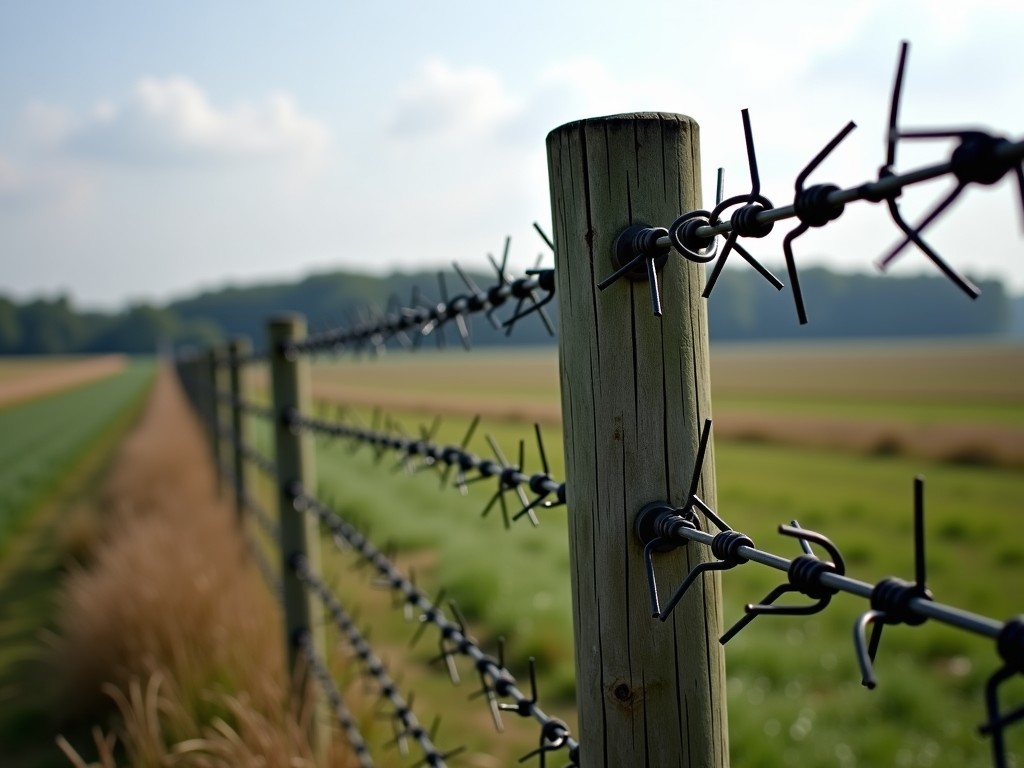
Standard farm‑grade barbed wire uses 12.5 gauge (approximately 2.05 mm diameter) high‑tensile steel, coated with a zinc‑aluminum alloy for corrosion resistance. The tensile strength typically exceeds 550 MPa, allowing the wire to withstand tension loads of up to 1.2 kN per strand without permanent deformation. Barbs are formed by twisting two short spikes around the main wire at 5‑inch intervals, providing an effective deterrent while maintaining flexibility during installation.
Typical Quantities and Cost Factors
| Item | Unit | Quantity for 5 Acres | Typical Unit Cost (USD) | Estimated Sub‑total (USD) |
|---|---|---|---|---|
| Barbed Wire (12.5 ga) | ft | 1,320 ft (≈ 40 rods per side × 4 sides) | 0.12 | 158.40 |
| Line Posts (treated wood, 6 ft) | ea | 26 | 4.50 | 117.00 |
| Corner Posts (treated wood, 8 ft) | ea | 4 | 7.00 | 28.00 |
| Tension Wire & Fasteners | lot | 1 | 22.00 | 22.00 |
| Labor (installation, per ft) | ft | 1,320 ft | 0.30 | 396.00 |
| Total Estimated Cost | ≈ | 721.40 |
The table shows a baseline for a plain‑wire fence with wooden posts. Actual costs vary with post material (steel vs. concrete), wire gauge upgrades, and regional labor rates. For a five‑acre square (approximately 467 ft per side), the perimeter is 1,868 ft; however, many installations use a rectangular layout or share existing boundaries, reducing required wire length to roughly 1,320 ft in the example.
Installation Considerations
Proper tensioning is critical: the wire should be stretched to 10 % of its breaking strength before securing to posts, which limits sag and maintains barrier effectiveness over time. Line posts are typically spaced 8‑10 ft apart, with corner posts set in concrete footings of at least 24 in depth and 12 in diameter to resist uplift. Staples or clips rated for the wire gauge prevent slippage, and a tension indicator (such as a spring scale) helps verify consistent force during installation.
Applications in Industrial and Agricultural Settings
Beyond livestock containment, this fencing secures perimeter zones around storage yards, prevents unauthorized access to equipment laydown areas, and delineates rights‑of‑way for pipeline corridors. The high tensile strength resists deformation from impacts such as fallen branches or vehicle contact, while the corrosion‑protective coating extends service life in environments with moderate humidity and occasional salt exposure.
Quality Assurance and Testing
Manufacturers perform tensile tests on random samples from each production lot, recording yield and ultimate strength. Coating adhesion is assessed via ASTM B117 salt spray testing for a minimum of 500 hours with no more than 5 % red rust. Dimensional checks verify barb spacing and wire diameter within ±0.02 mm tolerances. These procedures ensure that delivered wire meets the mechanical and corrosion specifications required for long‑term field performance.
Customization Options
- Wire gauge: 12.5 ga (standard), 10 ga for higher impact resistance
- Coating: zinc‑aluminum (Galvalume), pure zinc, or PVC‑over‑zinc for aggressive environments
- Barb length: ¾ in (standard) or 1 in for increased deterrence
- Roll length: 1,320 ft (standard) or custom lengths to minimize splices
- Post alternatives: galvanized steel tubes, concrete precast, or composite posts
Frequently Asked Questions
- Can the wire gauge be changed without redesigning posts? Yes, as long as the post’s pull‑out capacity exceeds the increased tension; a quick check of the post’s embedment depth and material suffices.
- What information is needed for a accurate quote? Desired perimeter length, post material preference, wire gauge, coating type, and any site‑specific constraints such as rocky terrain or limited access.
- How is quality inspected before shipment? Each roll undergoes tensile strength measurement, coating thickness verification via magnetic induction, and visual inspection for defects.
- What packaging protects the wire during transit? Rolls are wrapped in UV‑stabilized polyethylene film, placed on pallets with corner protectors, and secured with strapping to prevent shifting.
- What is the typical lead time? Standard specifications ship within 10‑15 business days; customized gauges or coatings may extend to 20‑25 days.
Request a Quote
To obtain a detailed, itemized quotation for your five‑acre fencing project, please provide the site dimensions, preferred post material, and any special coating requirements. Our engineering team will review the inputs and return a firm price with lead‑time confirmation.