
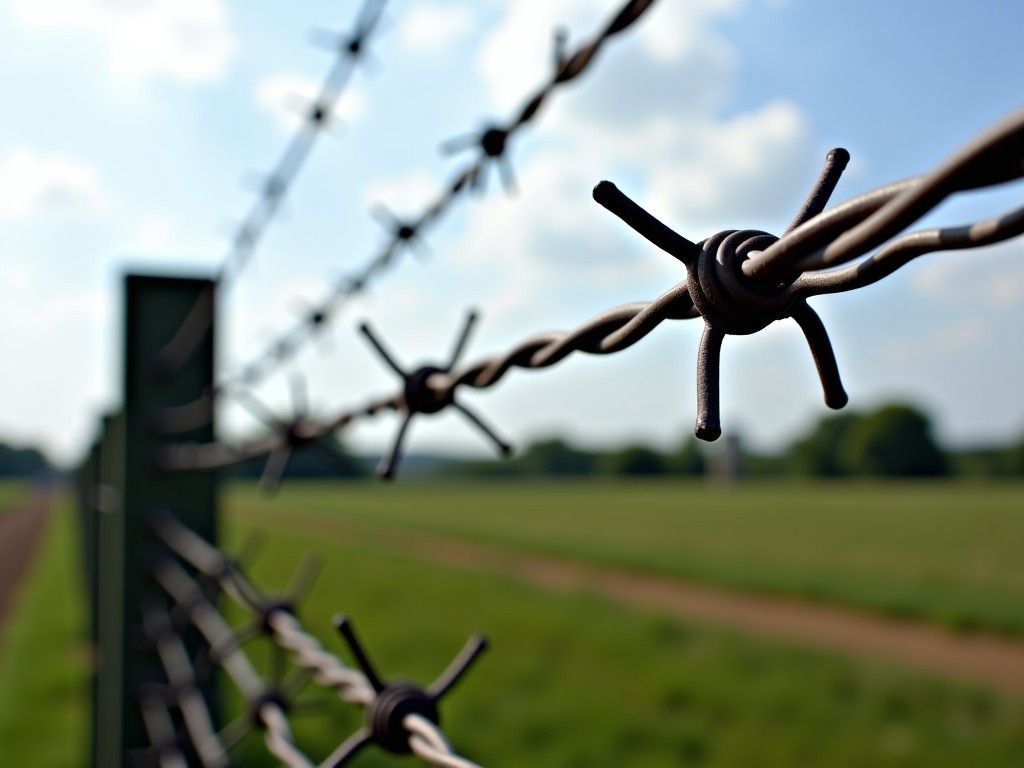
B2B Types Of Razor Barbed Wire Fencing Supplier
Razor barbed wire fencing consists of high‑tensile steel wire formed with sharp barbs or tape that deter climbing and cutting. In industrial procurement the selection hinges on mechanical properties,
B2B Types of Razor Barbed Wire Fencing
Razor barbed wire fencing consists of high‑tensile steel wire formed with sharp barbs or tape that deter climbing and cutting. In industrial procurement the selection hinges on mechanical properties, corrosion resistance, and ease of installation rather than branding.
Material and Construction Basics
The core is typically low‑carbon steel wire drawn to diameters between 2.0 mm and 3.5 mm. Barbs are created by pressing a second wire or tape onto the core at controlled intervals, producing a helical or flat profile. Post‑forming, the wire undergoes hot‑dip galvanizing (Zn coating ≥ 270 g/m²), PVC coating (thickness 0.5 mm–1.0 mm), or austenitic stainless steel (grade 304/316) for aggressive environments.
Common Razor Barbed Wire Types
- Concertina coil – core wire formed into alternating large and small loops, providing high tensile strength and rapid deployment.
- Flat razor tape – steel core encapsulated in a flattened steel strip with barbs on both edges, offering low profile and reduced snag risk.
- Spiral razor wire – single helix with uniform barb spacing, used where flexibility around corners is required.
- Welded mesh razor panel – longitudinal and transverse wires welded at intersections, then fitted with razor tape, delivering a rigid barrier.
Technical Comparison of Types
| Type | Wire Diameter (mm) | Barb Spacing (mm) | Tensile Strength (MPa) | Standard Coating | Typical Use |
|---|---|---|---|---|---|
| Concertina coil | 2.5 – 3.5 | 100 – 150 | ≥ 550 | Hot‑dip galvanized | Perimeter of warehouses, utility substations |
| Flat razor tape | 2.0 – 3.0 | 50 – 80 | ≥ 500 | PVC or galvanized | Low‑visibility fencing around data centers |
| Spiral razor wire | 2.2 – 3.2 | 75 – 120 | ≥ 520 | Galvanized | Temporary site enclosures, event security |
| Welded mesh panel | 2.0 – 2.8 (mesh) + tape | 40 – 60 (tape) | ≥ 480 | Galvanized/PVC | High‑security prisons, military bases |
Application Considerations
Concertina coils deploy quickly over uneven terrain because the loops self‑tension when uncoiled, reducing labor on large flat sites such as solar farms. Flat tape presents a minimal protrusion, which lowers the chance of accidental injury to personnel performing routine inspections along fence lines, making it suitable for areas where staff movement is frequent.
Spiral wire’s uniform helix allows it to follow curved contours without kinking, advantageous for securing the perimeters of curved retaining walls or circular storage tanks. Welded mesh panels provide a rigid barrier that resists deformation under impact, thus preferred where vehicular ramming attempts are a concern, such as at gatehouses of chemical plants.
Quality Control and Testing
Tensile strength is verified per ASTM A370 on sampled wire before forming. Coating thickness is measured with magnetic‑induction probes; galvanized layers must meet ISO 1461 minimums. Adhesion of PVC coating is assessed by cross‑cut tape testing (ASTM D3359) to ensure no delamination under temperature cycling from –30 °C to +70 °C.
Barb sharpness is inspected visually and with a standardized force gauge; the force required to deflect a barb tip by 2 mm must exceed 15 N to guarantee effective deterrence. Each batch receives a dimensional report listing coil diameter, loop pitch, and weight per meter, enabling customers to reconcile against order specifications.
Customization Options
- Wire diameter adjustable from 1.8 mm to 4.0 mm to meet specific load‑bearing requirements.
- Barb geometry selectable as conventional sharp‑point, reverse‑bent, or flat‑tape profiles.
- Coating choices include hot‑dip galvanizing, aluminized coating, PVC (various colors), or duplex galvanized‑PVC for extended service life.
- Coil inner diameter can be set between 450 mm and 750 mm to match standard deployment equipment.
- Length per coil customizable from 10 m to 100 m, with options for pre‑cut lengths for panel integration.
Packaging and Logistics
Coils are wound onto corrosion‑resistant steel or wooden spools, then wrapped in UV‑stabilized polyethylene film to prevent moisture ingress during transit. Spools are stacked on heat‑treated pallets (ISPM‑15 compliant) and secured with polyester strapping. For overseas shipments, each pallet receives a corrosion‑inhibitor vapor‑phase capsule and is placed inside a weatherproof container.
Flat tape and welded mesh panels are packed flat in corrugated cardboard boxes with edge protectors, then palletized. Boxes are labeled with bar‑code tags that encode coil diameter, coating type, and length, facilitating warehouse scanning and inventory control.
Frequently Asked Questions
- Can the barb spacing be altered without changing the wire diameter? Yes, the spacing is set during the forming stage and can be adjusted independently of core diameter.
- What information is required for a quotation? Provide required length, wire diameter, coating type, barb style, coil inner diameter, and any certifications (e.g., ISO 9001, CE).
- Which materials are available for corrosive offshore environments? Austenitic stainless steel (grade 316) or duplex galvanized‑PVC combinations are standard options.
- How is quality inspected before shipment? Each lot undergoes tensile, coating thickness, adhesion, and barb sharpness tests, with results supplied in a mill test certificate.
- What packaging methods protect the finish during handling? UV‑stabilized film wrap, edge guards, and moisture‑absorbing desiccants inside the spool packaging.
- How are export shipments secured against shifting? Pallets are strapped, corner‑protected, and stabilized with load‑bars inside containers.
- What is the typical production lead time? Standard galvanized coils ship within 3‑4 weeks; custom coatings or stainless steel extend to 5‑6 weeks.
- Are samples available for evaluation? Yes, sample lengths of up to 5 meters can be arranged upon request, with shipping costs borne by the requester.
Contact for Technical Inquiry
Provide your project specifications—dimensions, coating preference, and installation environment—to receive a detailed quotation and lead‑time confirmation. Our engineering team will review the data and respond with feasible options and compliance documentation.