
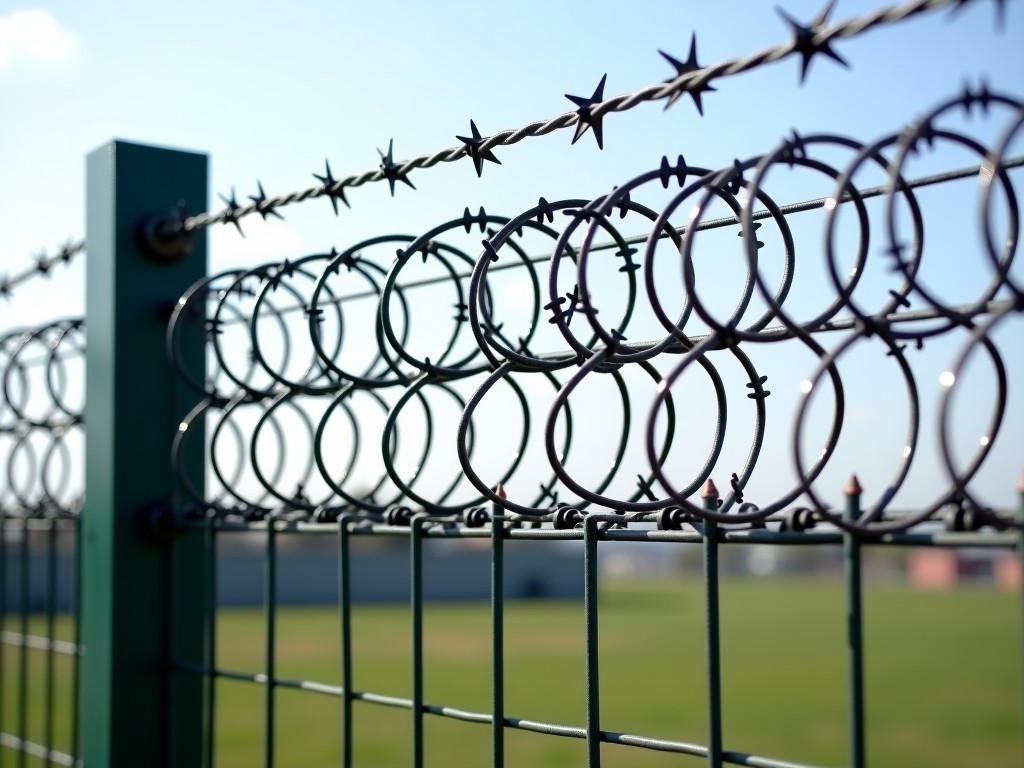
B2B Razor Wire Fence Custom Company
Razor wire fences combine high-tensile steel wire with sharp-edged barbs to create a formidable physical barrier. In B2B contexts, the design must meet specific load, corrosion, and installation
Custom Razor Wire Fence Solutions for B2B Applications
Razor wire fences combine high-tensile steel wire with sharp-edged barbs to create a formidable physical barrier. In B2B contexts, the design must meet specific load, corrosion, and installation requirements dictated by site regulations and risk assessments.
Overview
Manufacturers produce razor wire in coils or flat panels, then integrate them with posts, brackets, and tensioning hardware. The performance of the fence depends on wire diameter, coil pitch, barb geometry, and protective coating.
Key Technical Specifications
| Parameter | Typical Range | Notes |
|---|---|---|
| Wire Diameter | 2.0 mm – 3.0 mm | Affects tensile strength and handling. |
| Coil Pitch (spacing) | 45 mm – 75 mm | Determines barrier density. |
| Barb Length | 15 mm – 25 mm | Influences deterrent effect. |
| Tensile Strength | ≥ 1500 MPa | Ensures resistance to cutting. |
| Coating Options | Hot‑dip galvanized, PVC‑coated, stainless steel | Selected per environmental exposure. |
Customization Options
- Fence height: 1.2 m – 3.0 m, adjustable by post length.
- Number of razor wire coils per panel: single, double, or triple layers.
- Coating: galvanized for standard corrosion resistance; PVC‑coated for added UV protection and color coding; stainless steel for marine or chemical environments.
- Barb configuration: conventional sharp barbs, reversed barbs, or flat‑tape designs.
- Mounting hardware: U‑brackets, Y‑posts, concrete anchors, or welded frames.
Industrial Applications and Benefits
Perimeter security at power substations, water treatment plants, and logistics hubs relies on razor wire to delay intrusion attempts. The sharp barbs increase the time required for a breach, giving security personnel additional response time.
In high‑value storage yards, the fence acts as a visual deterrent while maintaining a low visual profile compared to solid walls. The open coil design allows wind passage, reducing wind load on the structure.
Customizable coating and wire grade enable the fence to meet specific environmental standards, such as ISO 12944 for corrosion protection in offshore installations.
Quality Assurance and Testing
Each production lot undergoes tensile testing to verify wire strength exceeds the specified minimum. Coating adhesion is assessed via cross‑hatch and salt‑spray methods, ensuring the protective layer remains intact under prolonged exposure.
Dimensional inspection uses laser gauges to confirm coil pitch and barb length within ±0.5 mm tolerance. Final assemblies are checked for proper tension and secure fastening before packaging.
FAQ
- Can dimensions be customized? Yes, fence height, coil count, and wire diameter are tailored to project specifications. For a detailed quote, provide site dimensions and load requirements; you can start the process here.
- What information is required before quotation? We need the intended height, number of razor wire layers, coating preference, post type, and any applicable standards (e.g., ASTM, ISO). Environmental conditions such as salinity or UV exposure also influence material selection.
- How is quality inspected? In addition to tensile and coating tests, we perform visual inspections for defects, verify packaging integrity, and maintain traceability records for each batch.
Get a Quote
To discuss your specific perimeter security needs, share your project details with our engineering team. We will return a technical proposal including drawings, material certifications, and lead‑time estimates.
Request a Custom Quote