
B2B Double Barbed Wire Top Manufacturer
A double barbed wire top features two parallel steel strands, each equipped with uniformly spaced barbs, affixed to the top rail of a fence system. The dual‑strand arrangement raises the effective
Double Barbed Wire Top for Industrial Security Fencing
Overview
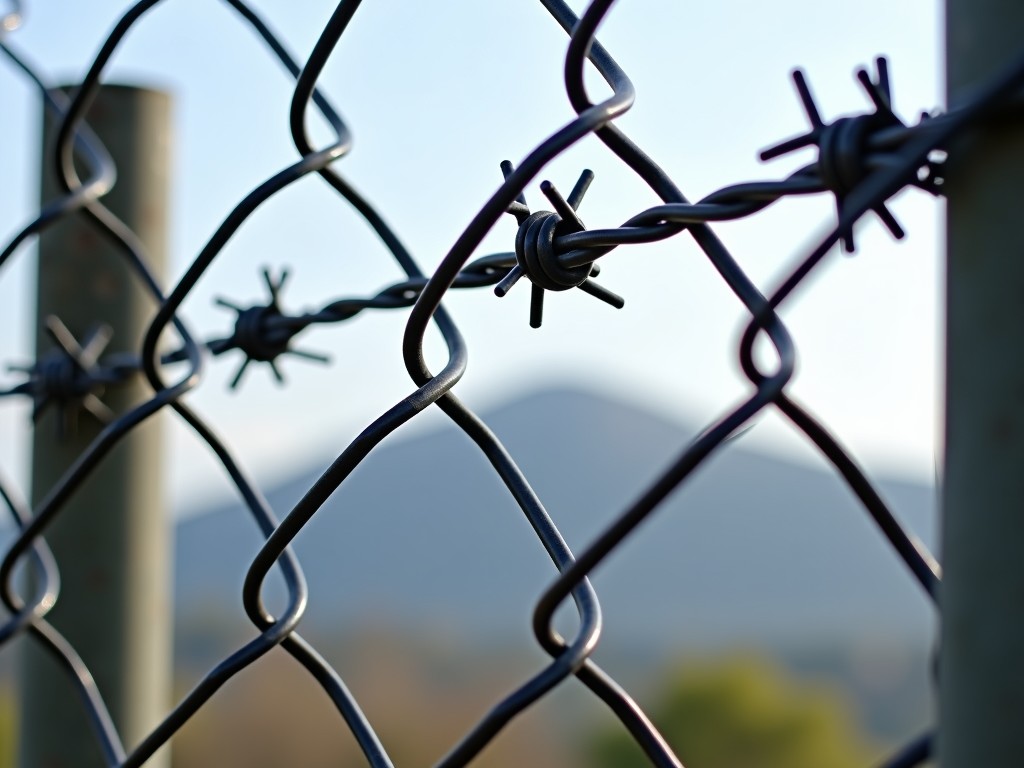
A double barbed wire top features two parallel steel strands, each equipped with uniformly spaced barbs, affixed to the top rail of a fence system. The dual‑strand arrangement raises the effective obstacle height and creates overlapping barb patterns that impede both manual climbing and cutting attempts.
Typical installations use this component on high‑security perimeters such as correctional facilities, substations, storage yards, and critical infrastructure sites where deterrence and delay are primary design goals.
Key Technical Specifications
| Parameter | Typical Value | Unit | Notes |
|---|---|---|---|
| Wire core diameter | 2.5 – 3.0 | mm | Cold‑drawn high‑carbon steel |
| Barb length | 15 – 20 | mm | Symmetrical on both strands |
| Barb spacing (center‑to‑center) | 100 – 150 | mm | Uniform along length |
| Tensile strength (minimum) | 1 200 | MPa | ASTM A228 equivalent |
| Coating thickness (galvanized) | 55 – 85 | µm | Hot‑dip Zn, EN ISO 1461 |
| Optional PVC over‑coat | 0.3 – 0.5 | mm | UV‑stabilized, color‑customizable |
Material Options
The base wire is produced from high‑carbon steel rod, drawn to the target diameter and then subjected to a controlled annealing cycle to achieve the required tensile‑yield balance. Two primary corrosion‑protection routes are offered:
- Hot‑dip galvanization meeting EN ISO 1461, providing a sacrificial zinc layer that extends service life in temperate and mildly aggressive atmospheres.
- Extruded PVC coating applied over the galvanized layer, available in standard colors (black, green, gray) and custom shades upon request, adding a barrier against chemical splash and UV degradation.
For environments with high chloride exposure (marine or industrial chemical zones), a duplex system—galvanized plus a specialized polymer topcoat—can be specified to meet ISO 12944‑5 C5‑M durability class.
Manufacturing Process
Production begins with wire drawing to the precise diameter, followed by inline barb forming where two opposing blades cut and twist the wire to create the characteristic pointed projections. The barbs are then set at a consistent pitch using a programmable roller system that ensures spacing tolerance within ±2 mm.
After forming, the double strands are helically twisted together at a lay length of approximately 200 mm to provide lateral stability while retaining flexibility for installation on uneven top rails. The assembled wire then passes through either a hot‑dip galvanizing bath or a PVC extrusion line, depending on the selected finish.
Final spooling occurs under controlled tension to prevent deformation, and each coil is labeled with heat number, coating weight, and barb pitch for traceability.
Applications and Functional Benefits
In correctional facilities, the double barbed wire top increases the time required for an intruder to breach the perimeter by presenting overlapping barb fields that snag clothing and tools, thereby extending the window for detection and response.
For electrical substations, the assembly acts as a visual and physical deterrent against unauthorized climbing, reducing the risk of accidental contact with live components. The conductive steel core is isolated by the coating, maintaining electrical safety.
Storage yards containing high‑value commodities benefit from the product’s low maintenance profile; the galvanized or PVC‑protected surface resists rust, reducing the need for frequent repainting or replacement compared with single‑strand alternatives.
Quality Control and Testing
Each production lot undergoes tensile testing on a sample length of wire to verify that the ultimate strength meets or exceeds the specified 1 200 MPa minimum. Barb retention is assessed by applying a lateral load of 50 N to a random barb and measuring deflection; acceptable deformation is less than 0.5 mm.
Coating adhesion is evaluated via ASTM D4541 pull‑off testing, with a minimum adhesion value of 3 MPa for galvanized layers and 2 MPa for PVC over‑coats. Visual inspection under 10× magnification confirms barb uniformity and absence of micro‑cracks.
All test results are recorded against the material batch number and made available to customers upon request, supporting ISO 9001 traceability requirements.
Customization Options
- Wire diameter: 2.0 mm to 3.5 mm (in 0.25 mm increments)
- Barb length: 10 mm to 25 mm
- Barb spacing: 75 mm to 200 mm
- Lay length (twist pitch): 150 mm to 300 mm
- Coating type: hot‑dip galvanization, PVC, or duplex polymer
- Color: standard RAL options or custom pigment matching
- Packaging: coiled on wooden reels, plastic spools, or flat‑packed lengths
Frequently Asked Questions
Can the wire dimensions be adjusted for a specific fence height?
Yes. Both wire core diameter and barb geometry can be tuned to match the structural capacity of the top rail and the desired obstacle height. Provide the rail specifications and target barb clearance during quotation.
What information is required before a formal quote can be issued?
We need the required wire diameter, barb length, barb spacing, lay length, coating preference, total linear meters, and any applicable standards (e.g., ASTM, EN, ISO). Delivery destination and preferred packaging also affect lead time and cost.
How is quality inspected for large orders?
Quality checks are performed at three stages: post‑drawing (diameter and tensile), post‑forming (barb geometry and spacing), and post‑coating (adhesion and thickness). Statistical process control charts are maintained, and a final lot certificate accompanies each shipment.
What packaging methods protect the wire during transit?
Standard packaging uses UV‑stabilized polyethylene film wrapped around coils, secured with strapping. For overseas shipments, coils are placed in ventilated wooden crates with moisture‑absorbing desiccant packs to prevent corrosion during transit.
Request for Quote
To obtain a detailed quotation or technical datasheet, please share your project parameters via the contact form. Our engineering team will review the specifications, confirm feasibility, and return a formal proposal within two business days.
Submit Inquiry