
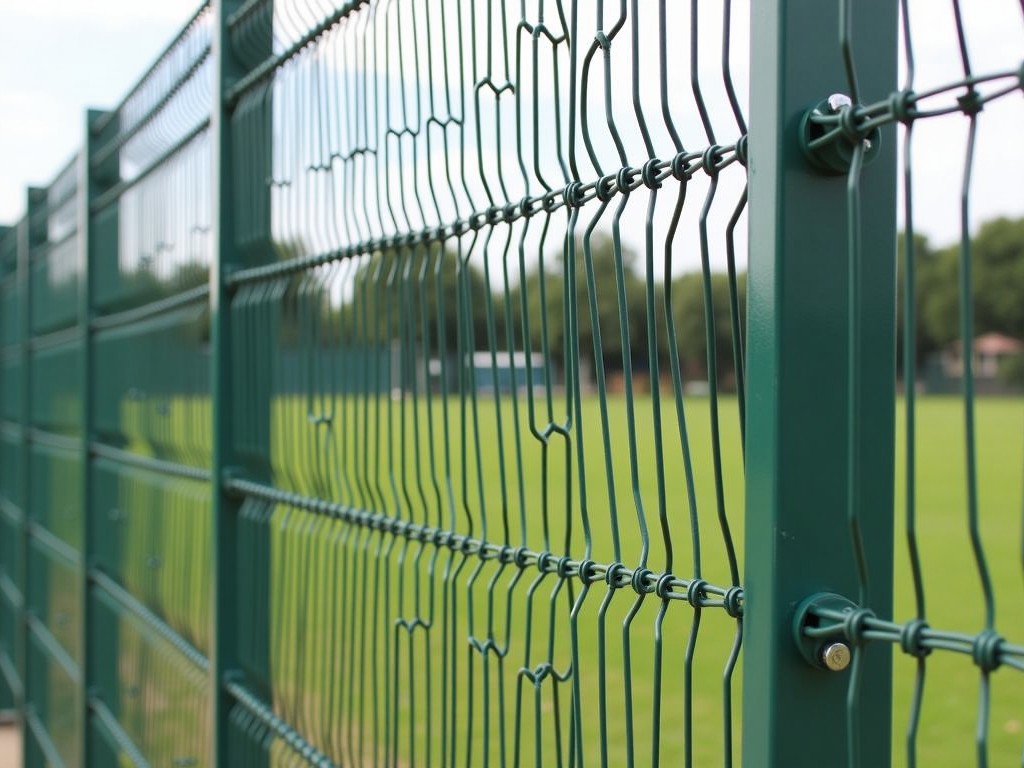
B2B Custom Ce Certified Double Barbed Wire Company
Double barbed wire consists of two parallel strands of steel wire, each fitted with uniformly spaced barbs that project outward at a 45‑degree angle. The dual‑strand configuration increases tensile
B2B Custom CE Certified Double Barbed Wire
Product Overview
Double barbed wire consists of two parallel strands of steel wire, each fitted with uniformly spaced barbs that project outward at a 45‑degree angle. The dual‑strand configuration increases tensile resistance and provides a more formidable obstacle than single‑strand barbed wire.
Typical wire diameters range from 2.0 mm to 3.0 mm, with barb lengths of 15 mm to 25 mm and barb spacing of 75 mm to 150 mm along each strand. The wires are helically twisted together, creating a balanced load distribution.
Key Technical Specifications (Typical Values)
| Parameter | Typical Range | Unit |
|---|---|---|
| Wire diameter | 2.0 – 3.0 | mm |
| Tensile strength (wire) | 550 – 700 | MPa |
| Barb length | 15 – 25 | mm |
| Barb spacing (pitch) | 75 – 150 | mm |
| Coating thickness (galvanized) | 55 – 85 | µm |
| Standard roll length | 50 – 200 | m |
Customization Options
Customers can specify wire diameter, tensile grade, barb geometry, spacing, and surface treatment to match site‑specific security levels and environmental conditions.
- Wire diameter: 1.8 mm to 3.5 mm (in 0.1 mm increments)
- Tensile strength: up to 950 MPa using high‑carbon steel
- Barb length: 10 mm to 30 mm; barb angle adjustable 30°–60°
- Barb spacing: 50 mm to 200 mm (custom pitch)
- Coating: hot‑dip galvanized (Zn), Zn‑Al alloy, or PVC‑over‑galvanized for colour and UV protection
- Roll length: 20 m to 500 m; optional spool or pallet packaging
CE Certification & Compliance
The product carries CE marking in accordance with the Machinery Directive 2006/42/EC and the relevant harmonized standard EN 10223‑3 for steel barbed wire. Conformity is verified through:
- Initial type testing of tensile strength, elongation, and barb retention
- Factory production control (FPC) with periodic tensile and coating adhesion tests
- Documentation of technical file and EU declaration of conformity
CE marking assures that the wire meets minimum safety requirements for use as a protective barrier in European Economic Area markets.
Typical Applications
Double barbed wire is selected when a higher deterrent effect is required compared to single‑strand products. The dual‑strand geometry distributes load across two cables, reducing sag over long spans and maintaining barrier integrity under wind or impact loads.
Common installations include:
- Perimeter security for industrial plants, warehouses, and data centers where climb‑prevention is critical
- Agricultural fencing for livestock containment, especially where predator pressure demands a robust barrier
- Correctional facility perimeters, where the increased tensile resistance reduces the risk of cutting or stretching
- Temporary construction site enclosures that require rapid deployment and re‑tensioning
Quality Control Philosophy
Each production lot undergoes a sequence of checks designed to verify dimensional consistency, mechanical performance, and coating integrity before release.
- Wire diameter measured with laser micrometers at 1 m intervals; tolerance ±0.02 mm
- Tensile tested on a 200 mm gauge length; acceptance ≥ 550 MPa
- Barb pull‑off force measured to ensure ≥ 150 N retention
- Coating thickness verified by magnetic induction; galvanized coating ≥ 55 µm
- Visual inspection for barb uniformity and twist tightness
Statistical process control (SPC) charts monitor key parameters; any drift beyond 2σ triggers corrective action.
Packaging & Logistics
To prevent damage during transit, the wire is wound onto corrosion‑resistant steel or plastic spools, then wrapped in UV‑stabilized polyethylene film. Spools are stacked on pallets and secured with stretch film and corner protectors.
- Standard spool diameter: 300 mm; core diameter 50 mm
- Maximum net weight per spool: 25 kg (adjustable per length)
- Pallet configuration: 20 spools per pallet, approx. 500 kg gross
- Container loading: 22 pallets per 40‑ft container, accommodating approximately 11 tons of product
Each pallet bears a label with product code, length, coating type, CE marking, and batch number for traceability.
Frequently Asked Questions
Can dimensions be customized?
Yes. Wire diameter, barb length, spacing, and tensile grade are all adjustable to meet project specifications.
What information is required before quotation?
Required data include: desired wire diameter, length per roll, barb geometry, coating type, and any applicable standards (e.g., EN, ASTM).
How is quality inspected?
Inspection follows the QC protocol outlined above, with tensile, dimensional, and coating tests performed on each lot.
What packaging methods are available?
Standard spool wrapping, palletizing, and optional wooden crates for overseas shipments.
What is the typical production lead time?
Lead time ranges from 10 to 25 working days, depending on order complexity and current capacity.
Ready to Discuss Your Requirements?
Provide your project details and we will return a detailed quotation, including lead time and compliance documentation.
Contact Sales Team